14th Century Sir Thomas Erdington & Wife Anne Harcourt
- Guinevere Jackson
- 26 November 2022
- 0 Comment
The Tomb of Sir Thomas Erdington and Anne Harcourt – A Forgotten Legacy in Stone
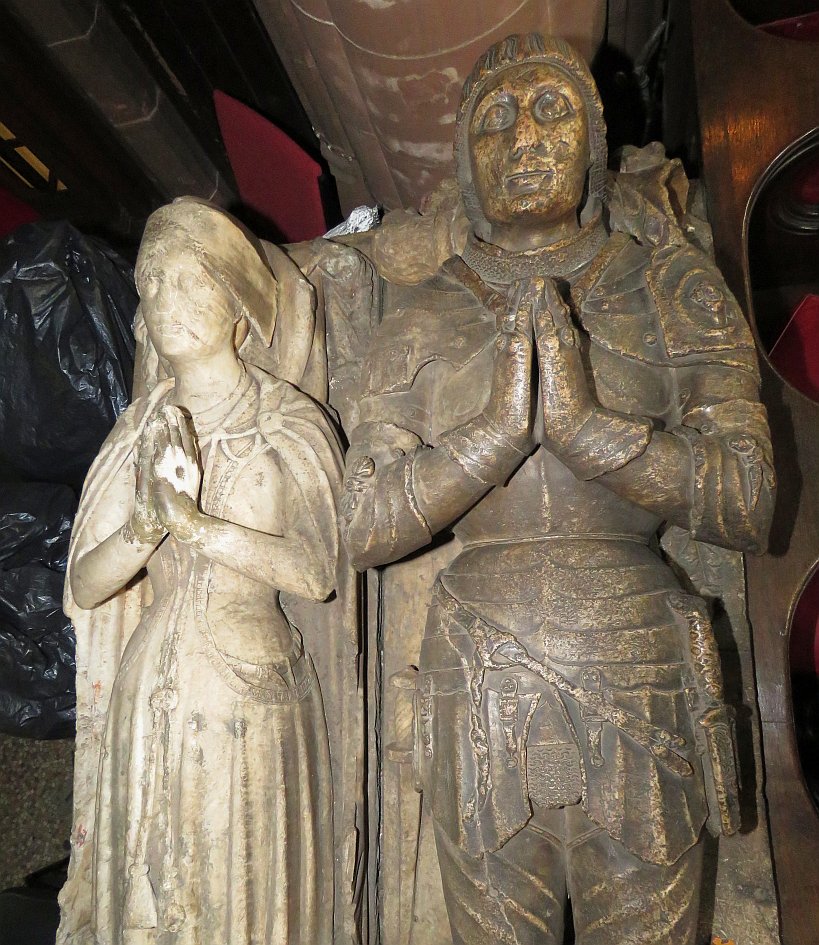
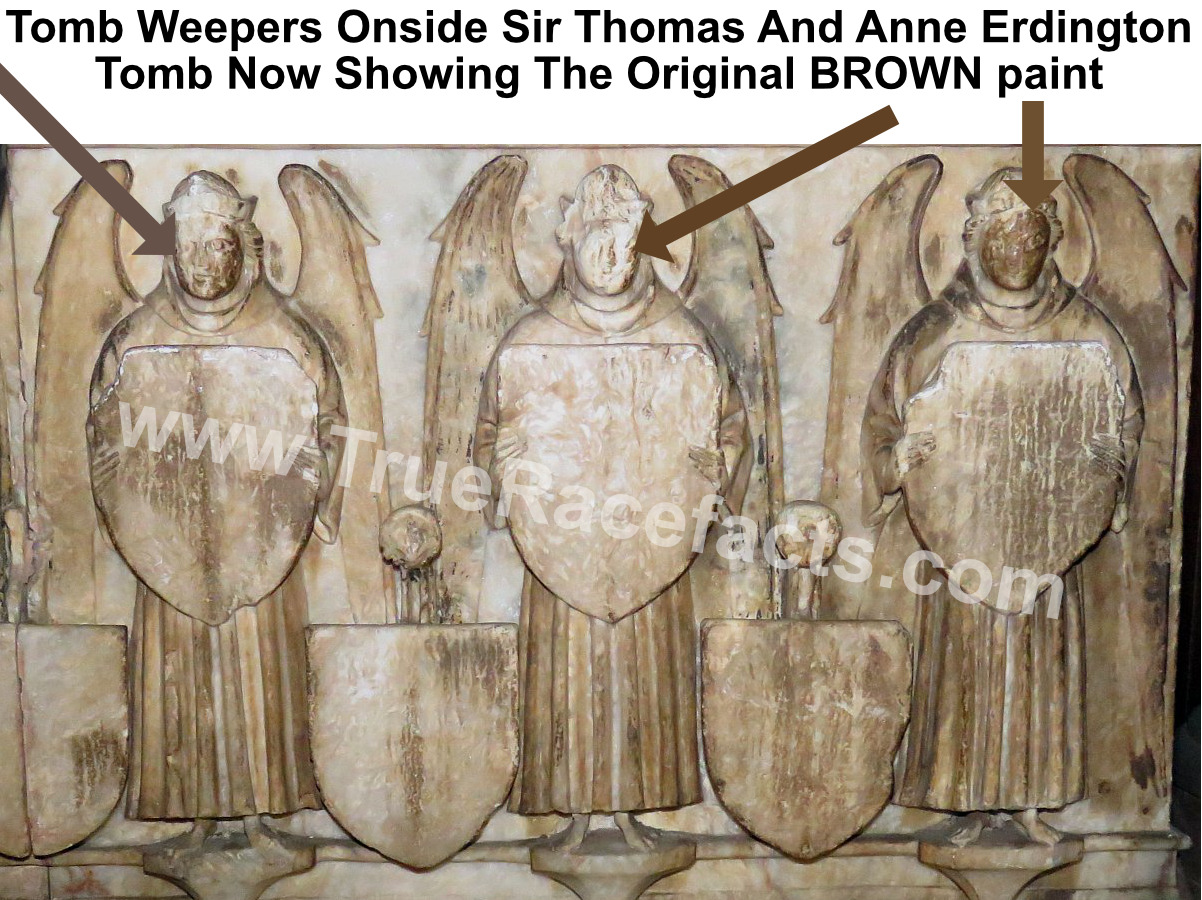
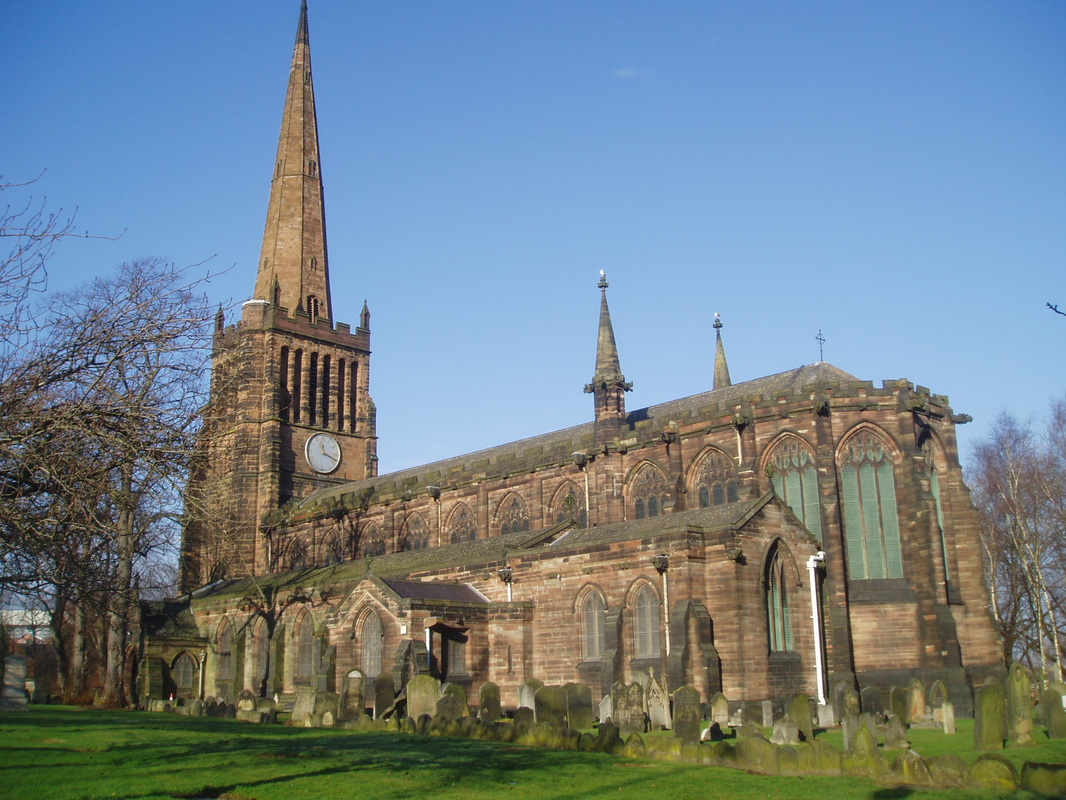
Hidden inside the serene Church of SS Peter & Paul in Aston, Birmingham, stands a monument that quietly disrupts the manufactured narrative of a uniformly white medieval Europe. The tomb of Sir Thomas Erdington and his wife Anne Harcourt is not just an artifact of medieval piety—it is a carved memory of a lineage whose physical features tell a story long buried, painted over, and misrepresented.
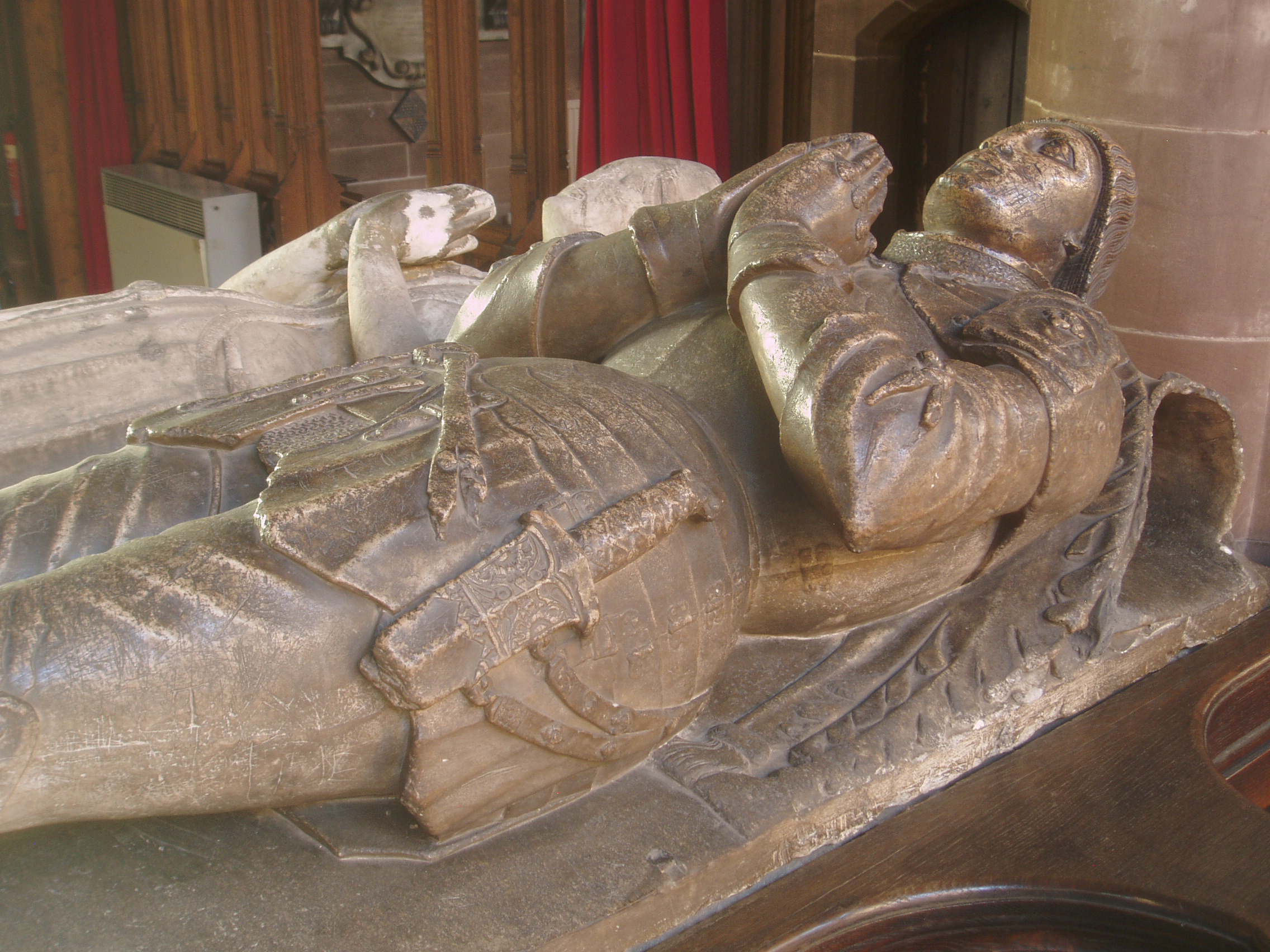
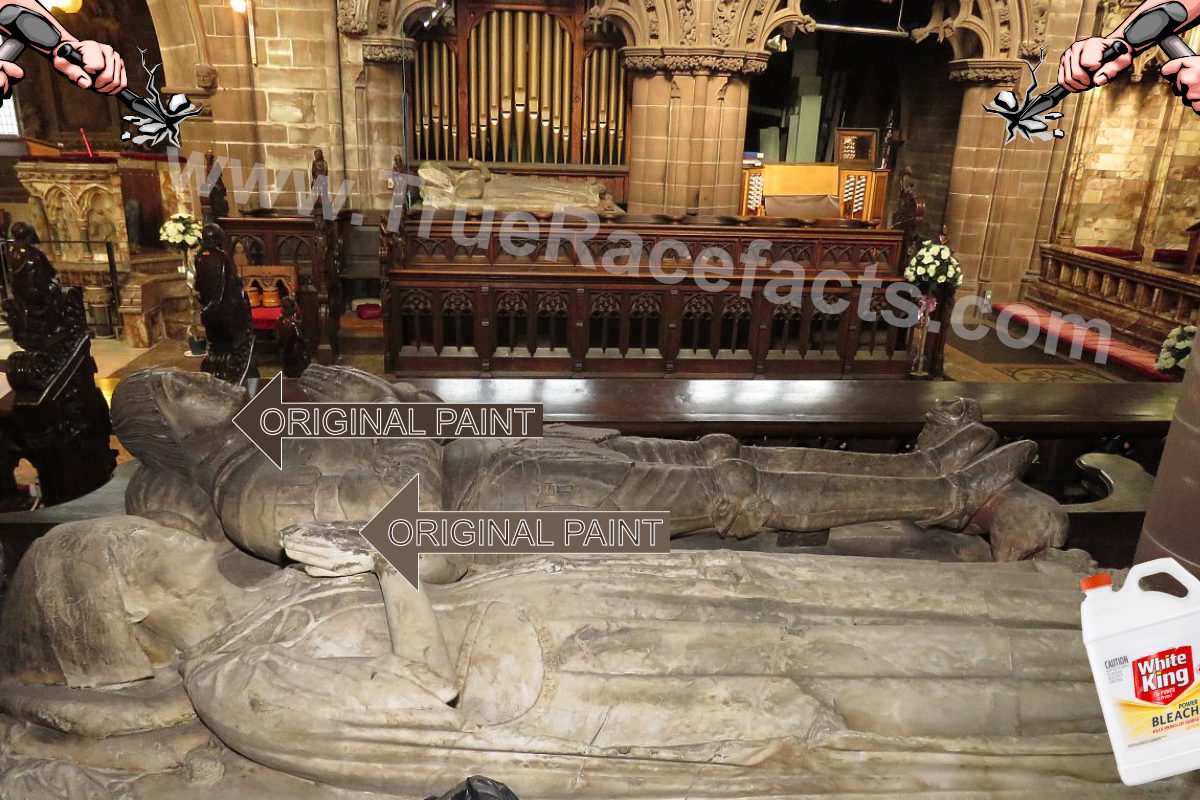
As visitors step into the church, the recumbent alabaster effigies of Sir Thomas and Anne immediately draw the eye. Sir Thomas lies in full knightly dignity—armored, noble, and unmistakably carved with the angular strength typical of 14th–15th century knightly sculpture. But it is Anne Harcourt’s effigy that summons deeper attention, and deeper questions.
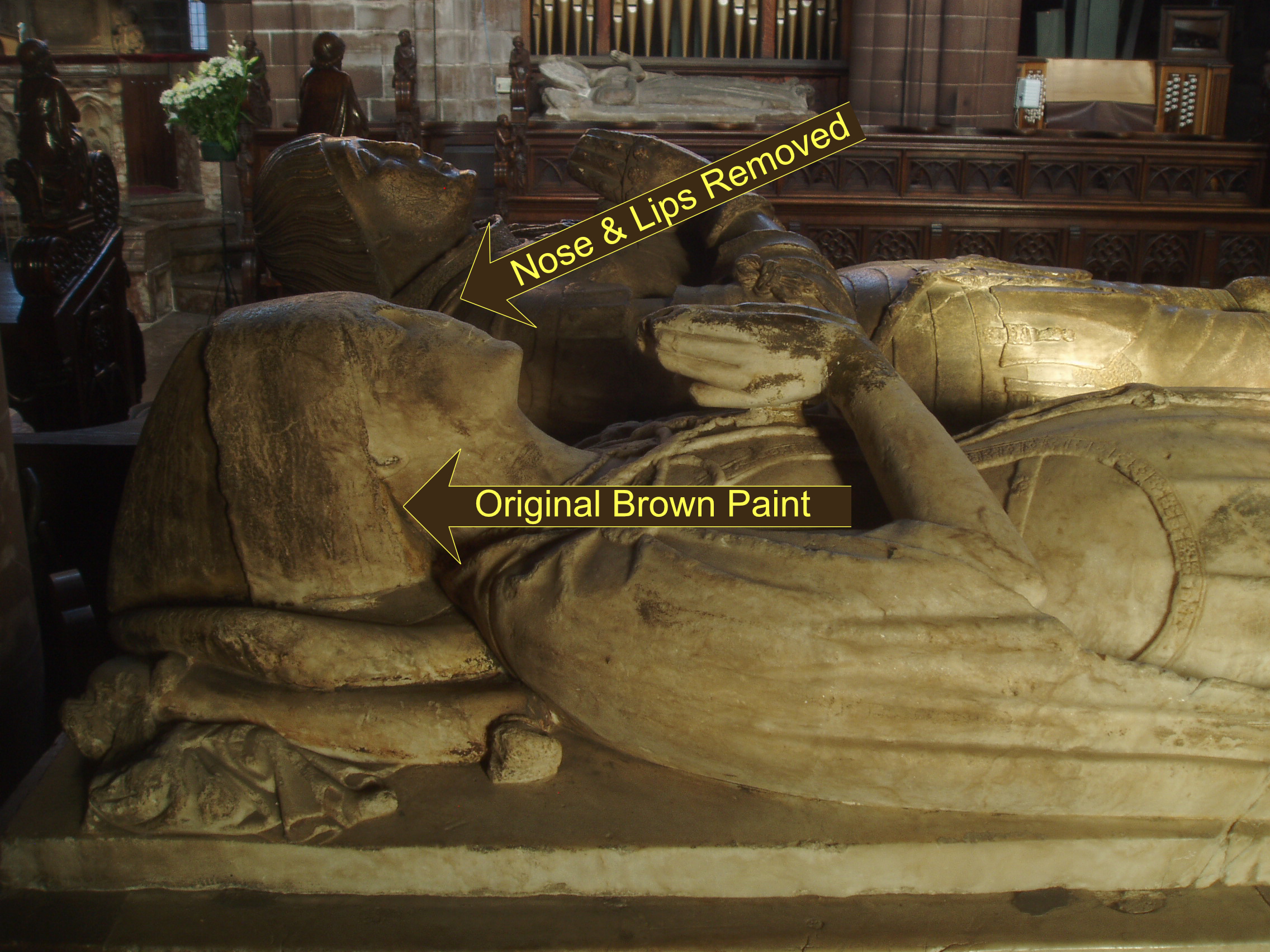
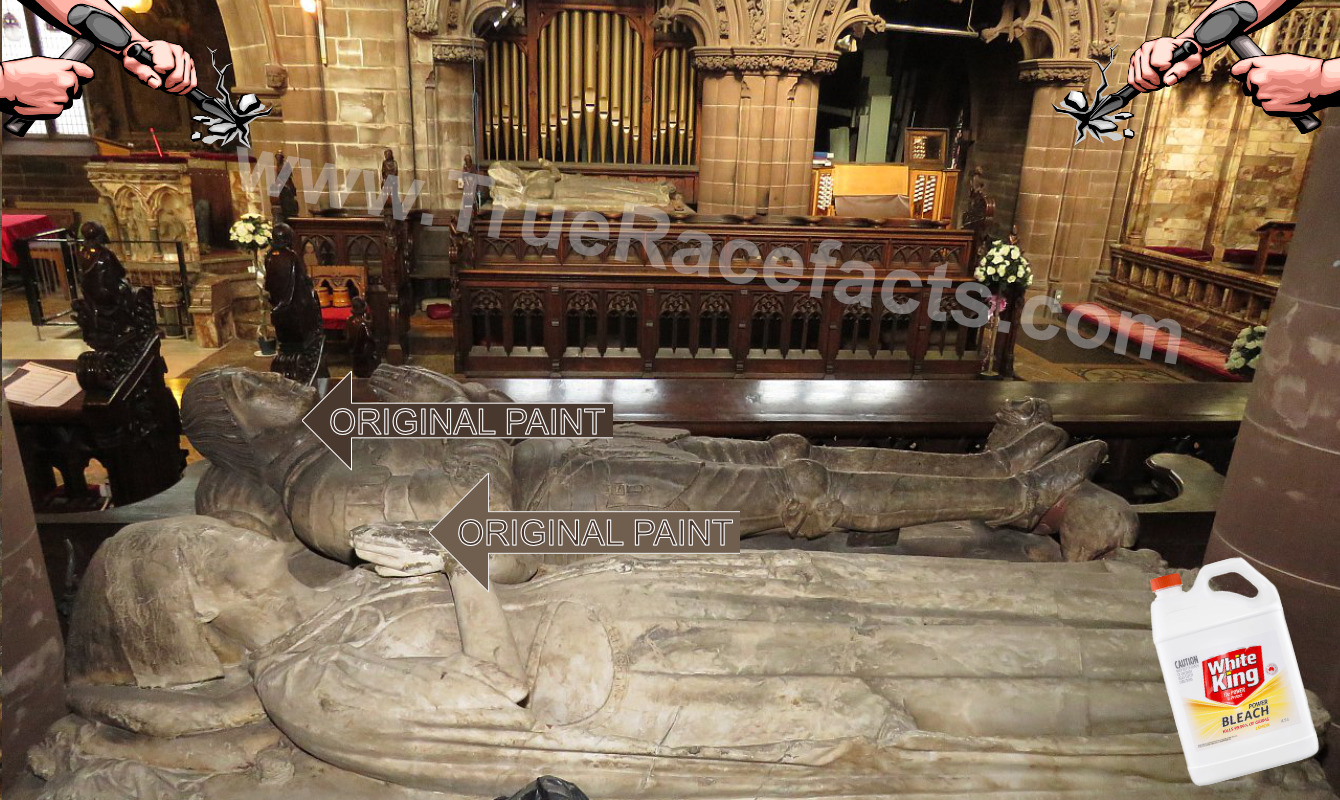
Despite centuries of weathering, restoration, and deliberate overpainting, Anne’s broad nose, fuller lips, and the remaining traces of dark brown pigment—still visible at her collarbone and inside her ears—reveal a truth that official narratives have tried to erase. These details are not incidental. Medieval sculptors were precise, intentional, and literal. They carved what they saw.
The presence of brown pigmentation on medieval effigies is not rare, but the willingness to acknowledge what it represents is. In Anne’s case, enough of the original color survives to challenge the imposed myth of a homogenous medieval aristocracy. These effigies were once vividly painted—skin tones, hair, fabrics, heraldry—all brought to life. And in life, Anne Harcourt was depicted with a deep brown complexion, matching the physical features carved into the stone.
This tomb becomes more than a monument; it becomes evidence. Evidence that Britain’s noble families—its knights, its ladies, its ruling-class bloodlines—were more diverse, more swarthy, and far more complex than the colonial narratives of later centuries allowed. Evidence that the medieval elites were not strangers to melanin but carriers of it.
The erasure was not accidental. Over centuries, “restoration” often meant whitening—removing paint, sanding faces, reinterpreting what had been carved. But Anne’s effigy is among the survivors. It refuses to be silenced. It refuses to conform.
Standing before the tomb, one feels not only the presence of two medieval nobles but also the echo of a story Britain would prefer to forget:
that dark-skinned nobility walked its halls, ruled its lands, shaped its history, and prayed in its sanctuaries.
In a world desperate to rewrite the past, this tomb stands as a witness.
A testimony in stone.
A quiet but unmovable rebuke to historical sanitization.
The bones of truth always push through.
- TITLE: Knight of the Shire for co. Warwick, 1411.
- TITLE: Sheriff of cos. Warwick and Leicester, 1420-1422.
- Property: Conveyed to him for life the manor of Erdington (in Aston parish), co. Warwick Erdington, Aston Warwickshire, England}, 1391.
- Property: Conveyed to him for life the manor of Corfe Mullen, Dorset Corfe Mullen, Dorset, England}, 1391.
- Property: The King took his homage for the manor of Barrow-on-Soar, co. Leicester {Barrow upon Soar, Leicestershire, England}, 1404/1405.
- Property: Had livery of the lands which mother held in fee tail or dower, 1404/1405.
Sir Thomas has a vast amount of land, which does not suddenly disappear, but due to the race wars during the 17th century, all lands belonging to the ancient dark Anglo-Saxons were confiscated, aka STOLEN. The original landowners were massacred or put into slavery.
“For there is nothing covered, that shall not be revealed; neither hid, that shall not be known.”
Luke 12:2 KJV
Citation: Images Speel.me.uk and Aidan McRae Thomson Flickr – Creative Commons Attribution-NonCommercial-ShareAlike 4.0 International (CC BY-NC-SA 4.0)
 Donate