Sir Gilbert Talbot (d.1274) Nobility, Alliance, and a Defaced Memory
- Guinevere Jackson
- 25 January 2026
- 0 Comment
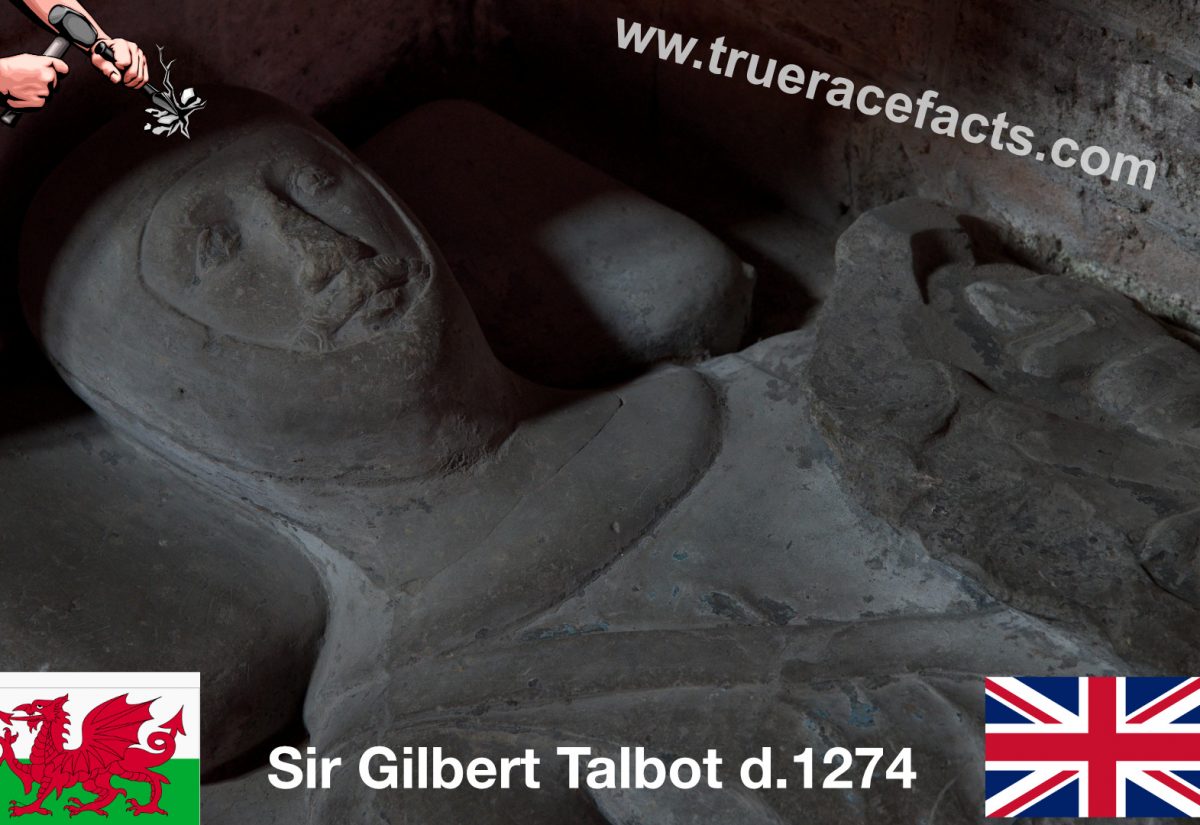
Sir Gilbert Talbot (d.1274): Nobility, Welsh Alliance, and a Defaced Memory
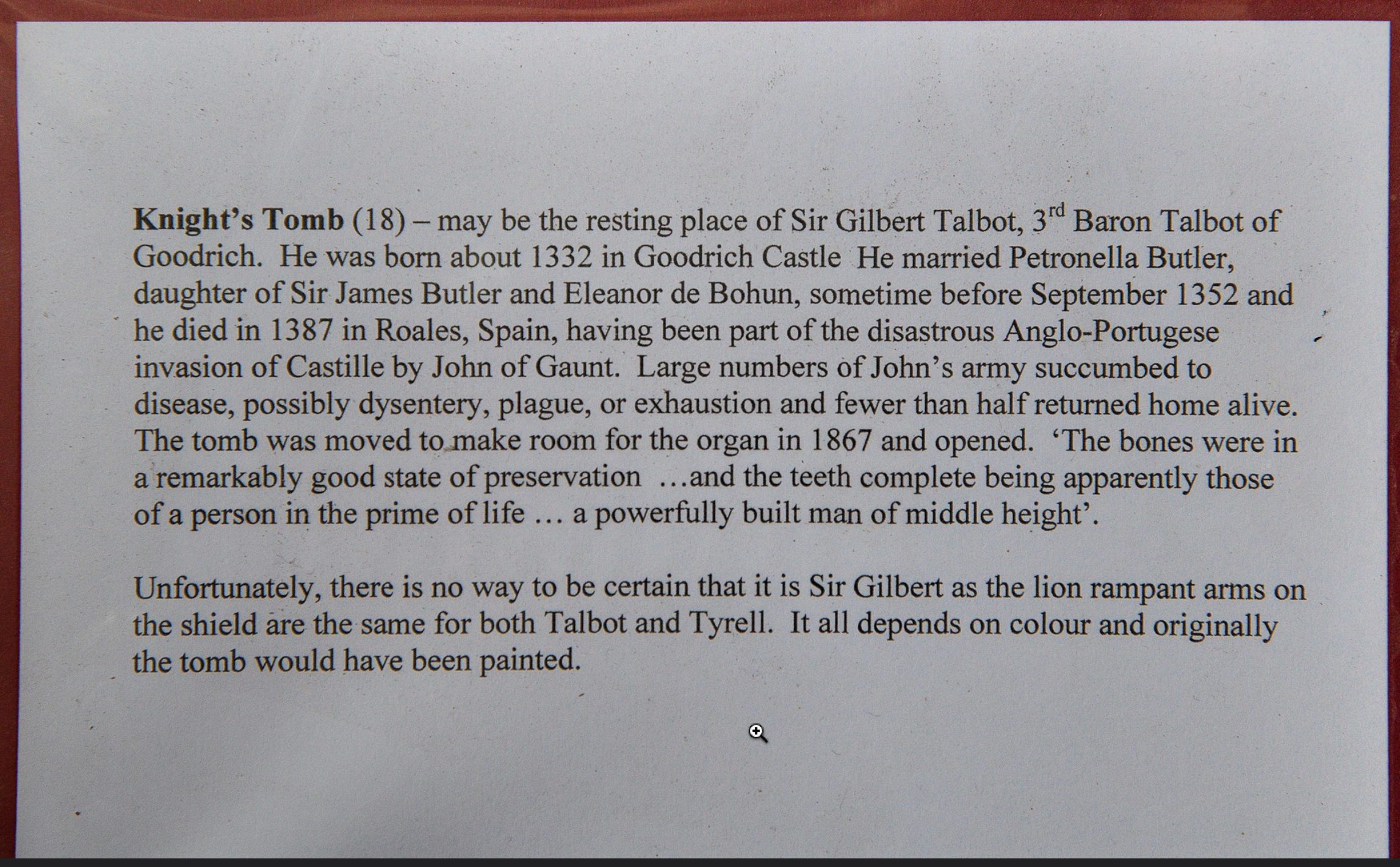
Possibly Sir Gilbert Talbot — identity, power, and the quiet alteration of medieval stone
Sir Gilbert Talbot, who died in 1274, occupied a position of considerable authority in the volatile borderlands between England and Wales. His world was not defined by rigid national identities, but by lineage, alliance, and inherited power. As a noble operating within this frontier elite, Talbot’s authority was shaped as much by Welsh princely connections as by English lordship — a fact often softened or overlooked in later retellings.
Historically, Sir Gilbert Talbot is connected to Prince Rhys Mechyll of Deheubarth, a powerful Welsh prince and heir to the ancient royal line of Rhys ap Gruffydd, known as The Lord Rhys. This connection places Talbot firmly within a hybrid Anglo-Welsh noble sphere, where bloodlines crossed borders and power depended on mutual recognition rather than modern racial or national constructs.
Such alliances were not incidental. They were deliberate, strategic, and rooted in shared aristocratic culture.
A Possible Effigy, a Familiar Pattern
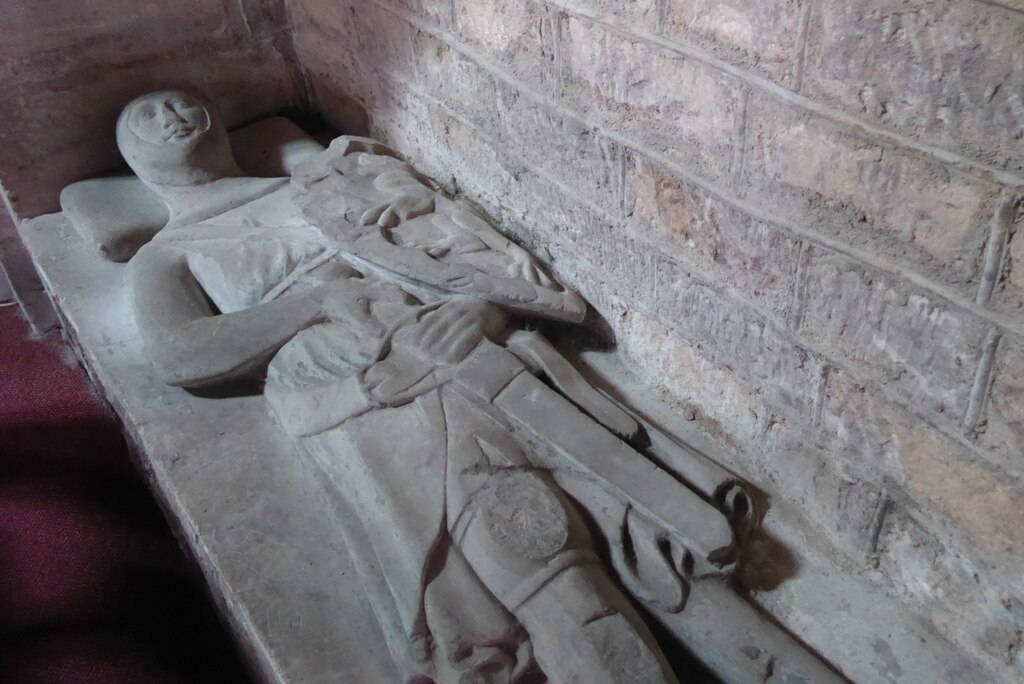
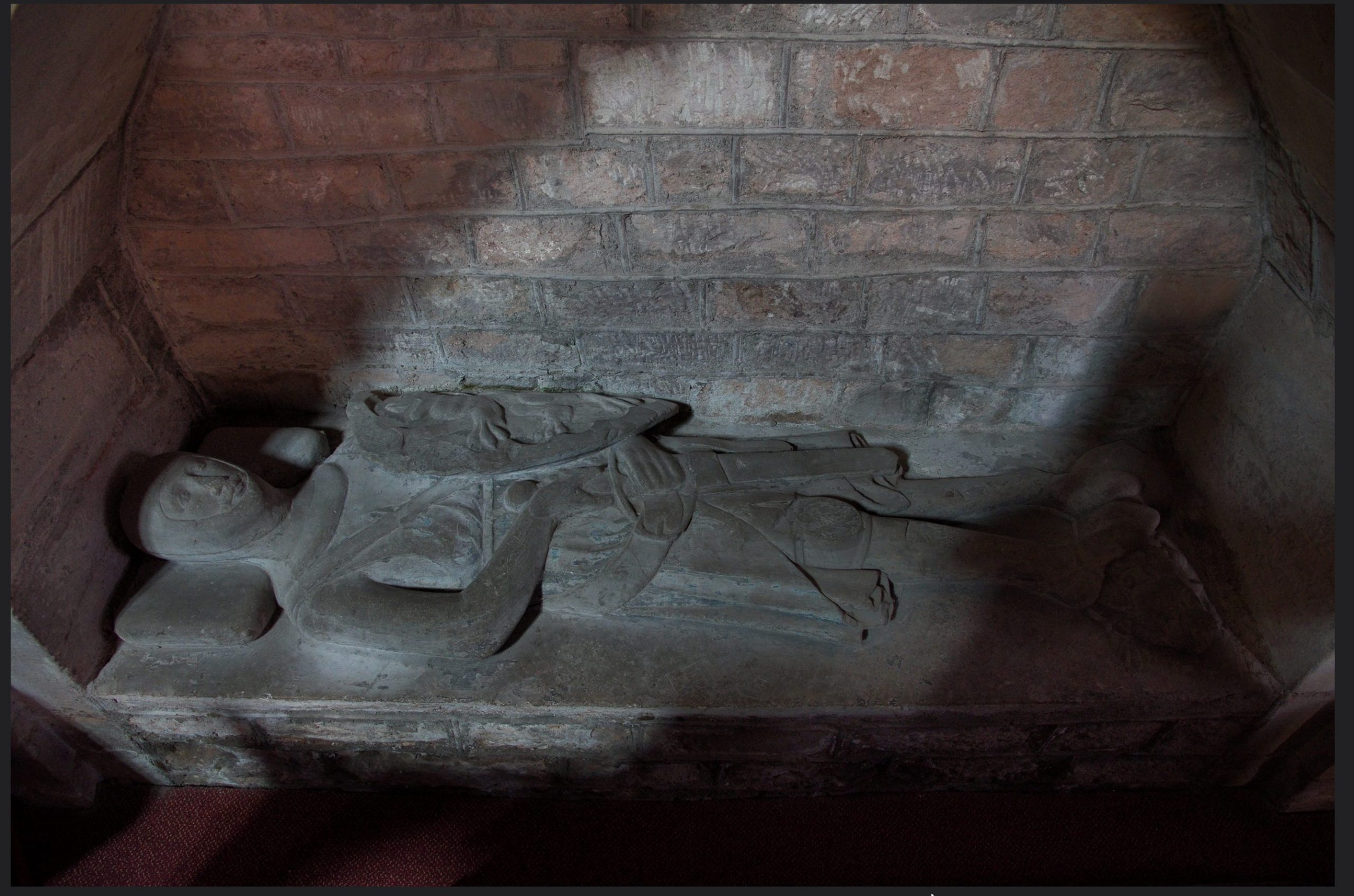
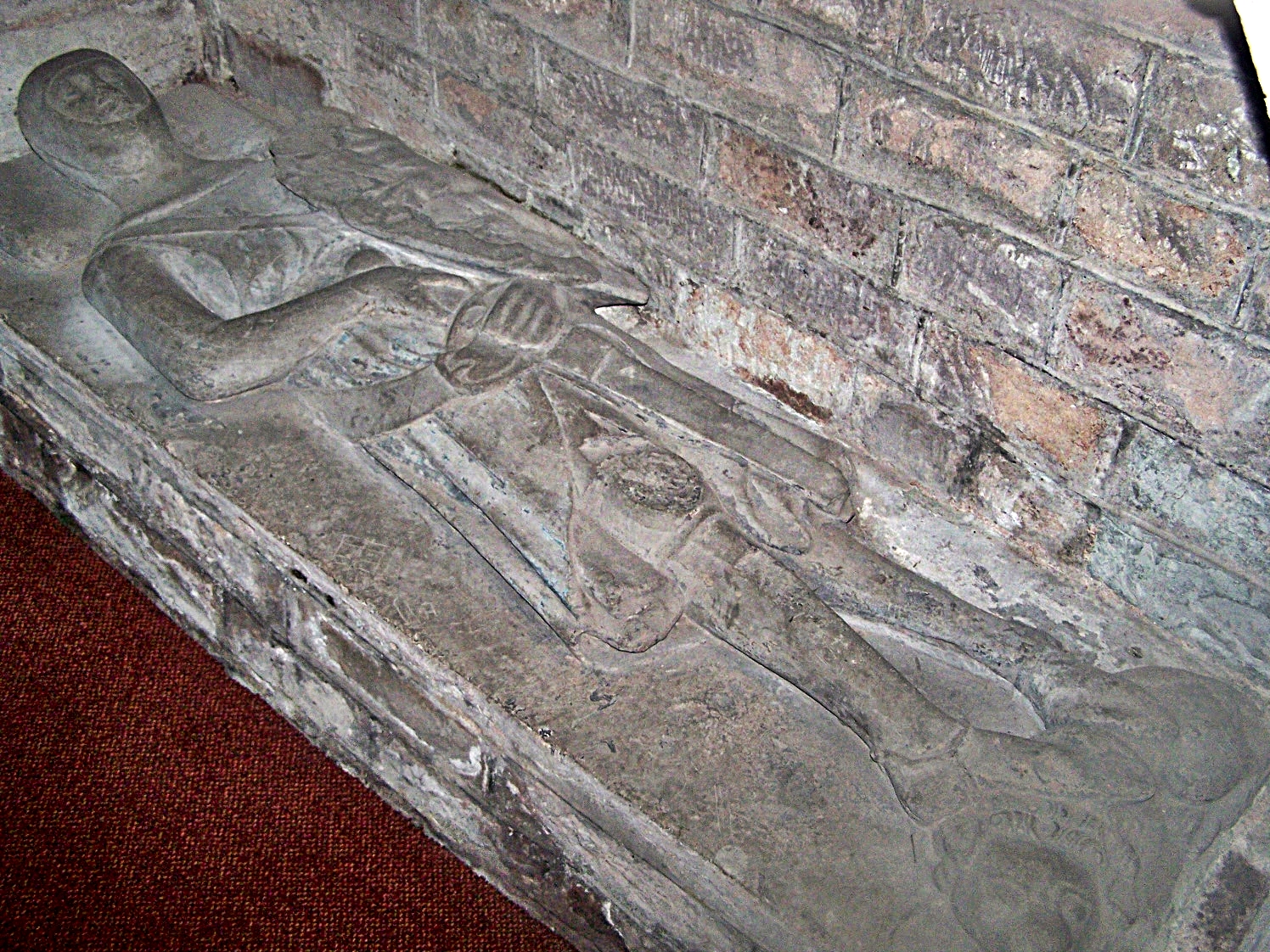
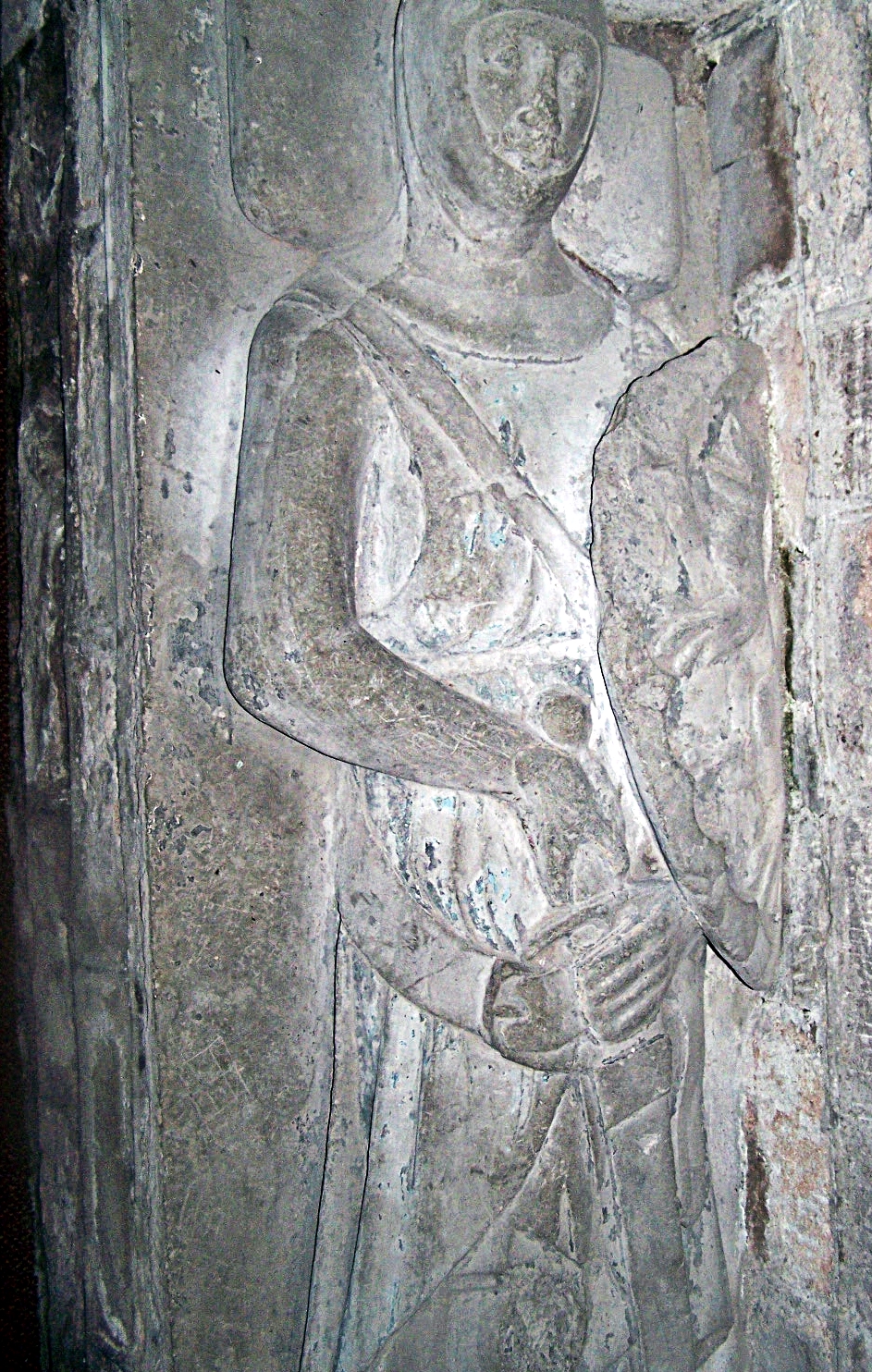
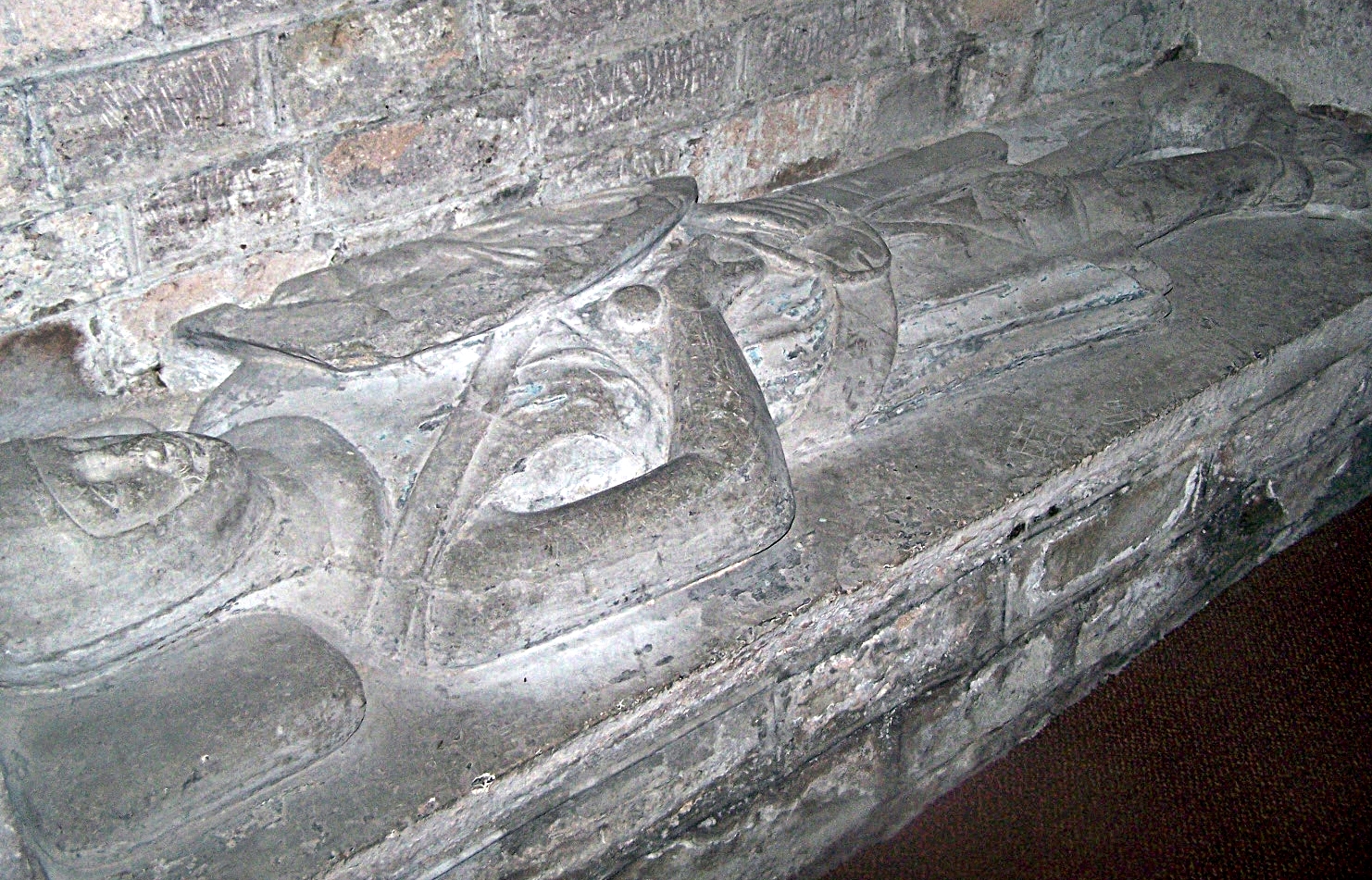
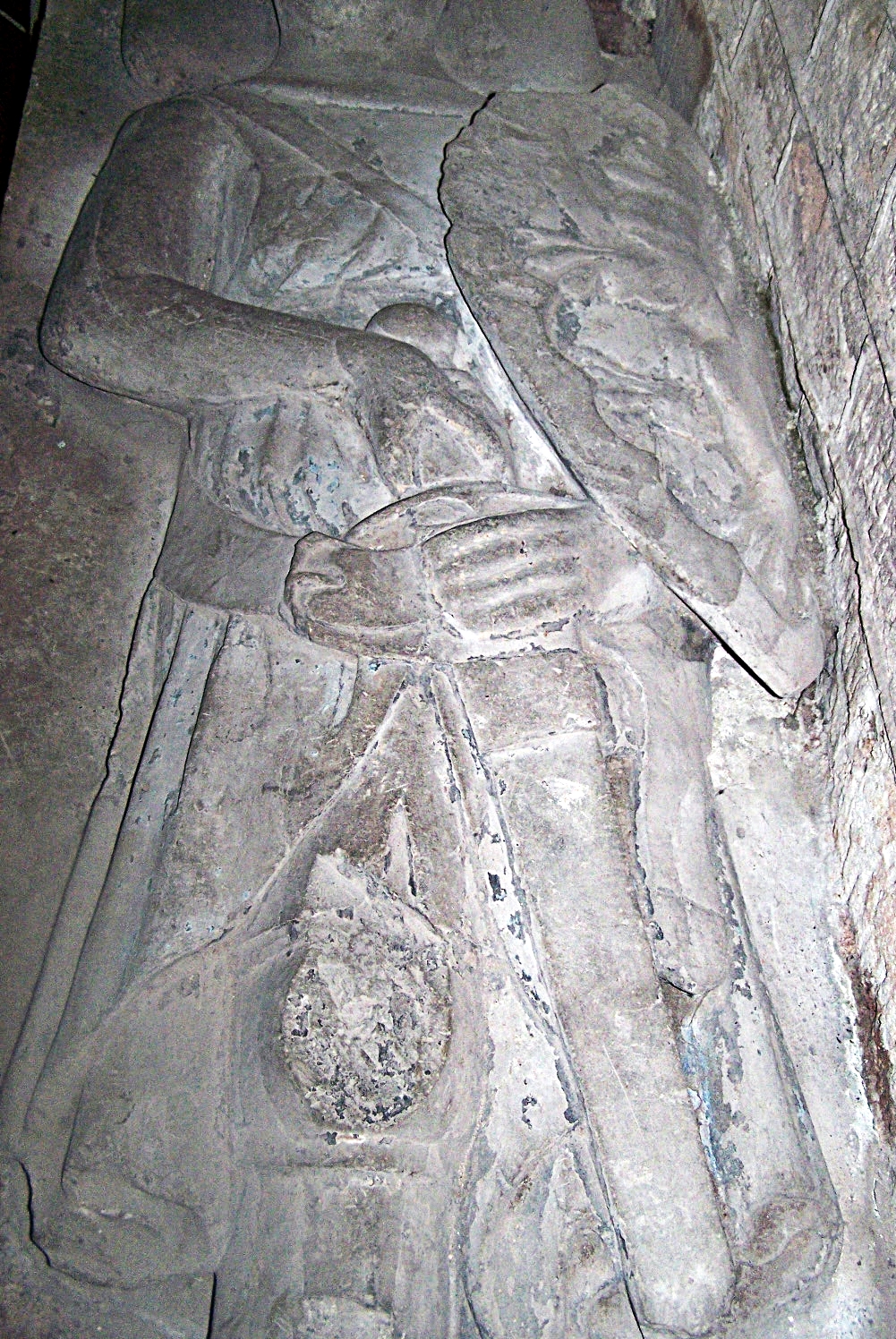
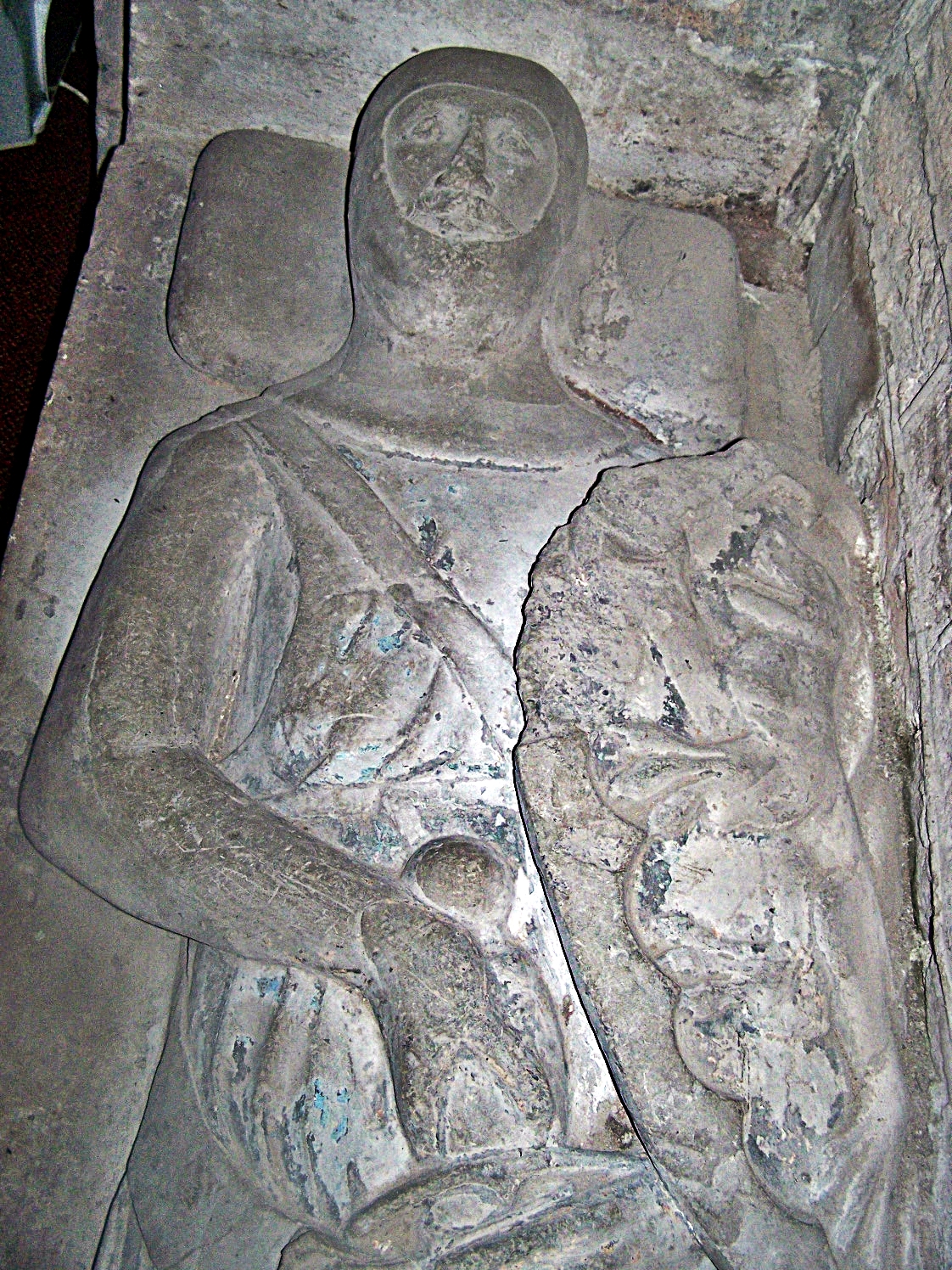
A surviving effigy — tentatively identified as possibly Sir Gilbert Talbot — reflects this same noble world. While its attribution cannot be stated with absolute certainty, the monument belongs unmistakably to the class and period Talbot inhabited.
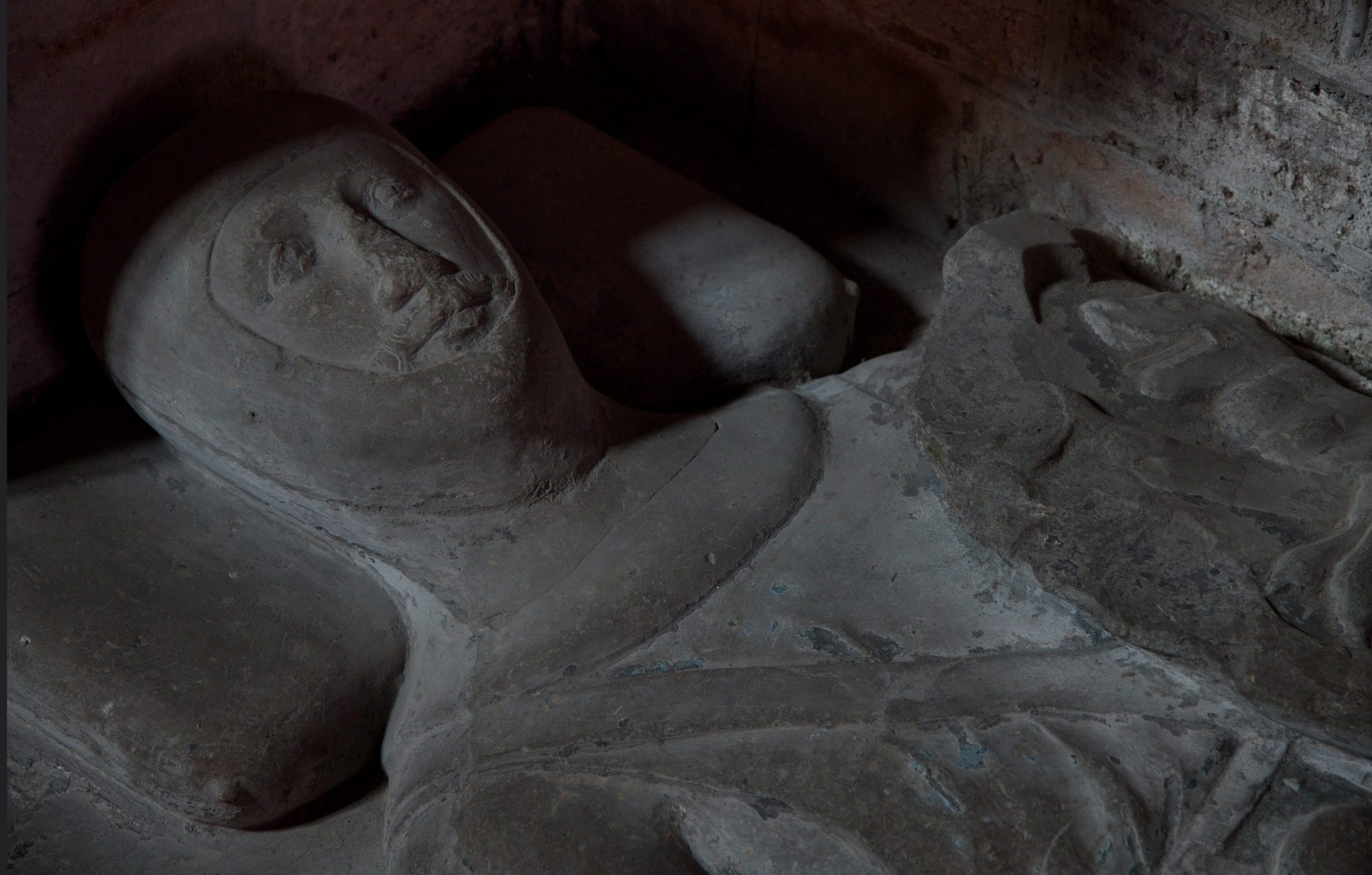
The condition of the effigy is striking. The original surface paint has been removed, and most notably, the nose and lips have been deliberately chiselled away. Yet even after this targeted damage, the underlying facial outline remains clearly legible. The surviving contours — broad nasal structure and full mouth proportions — preserve the unmistakable modelling of a swarthy medieval noble, what later centuries would reductively term “black.”
This is not random weathering. It is selective alteration.
The Lion Beneath the Feet
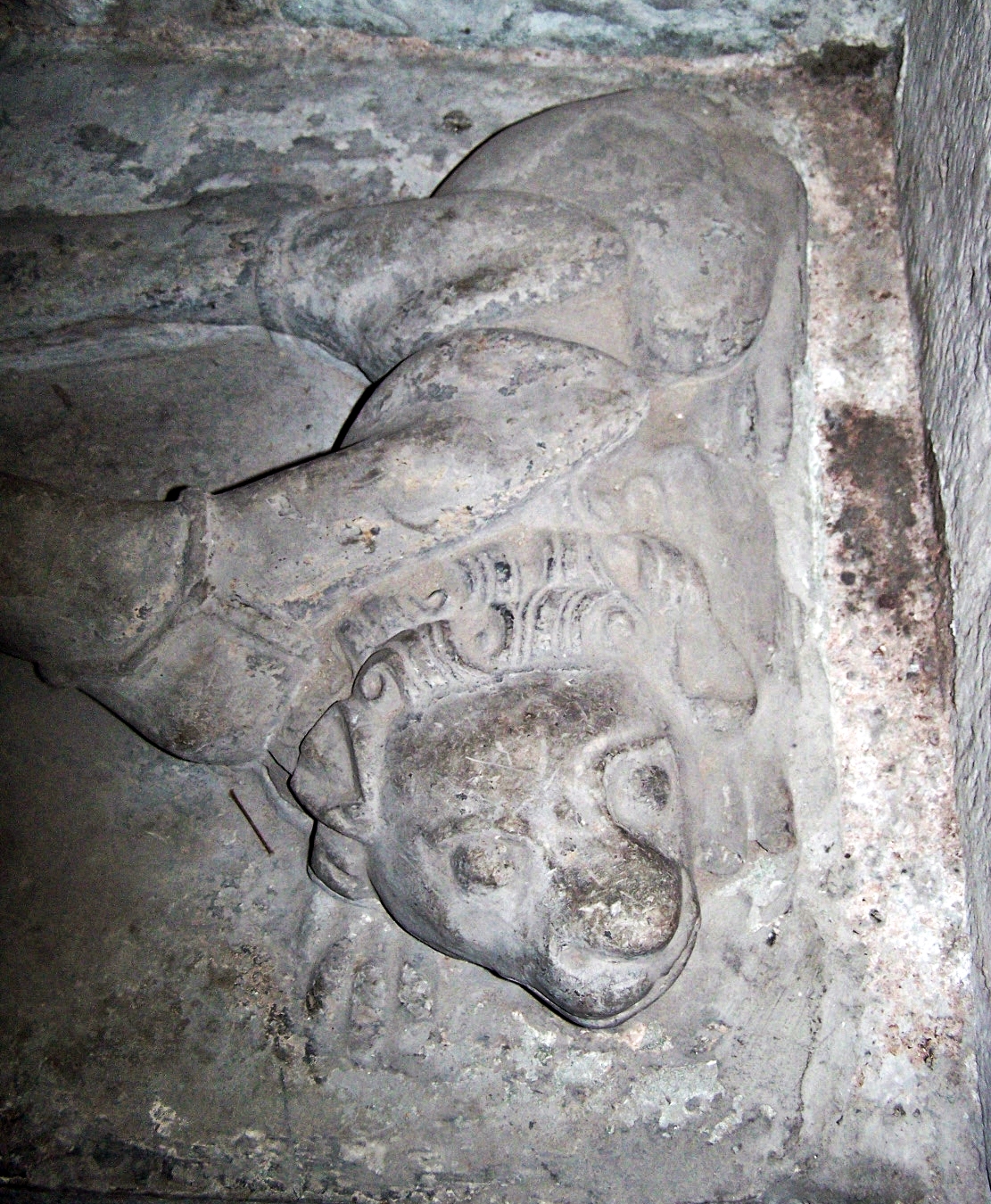
Equally revealing is the effigy’s iconography. The figure’s feet rest upon a lion, a symbol never applied casually in medieval funerary art. Far beyond a general emblem of courage, the lion carried deep biblical meaning — representing rulership, inheritance, and sacred kingship. In Christian theology, the Lion of Judah was a recognised symbol drawn from Genesis and Revelation, associated with divine lineage and rightful authority.
Medieval nobles were intensely biblically literate. Symbols were chosen with intention, not ornament. The presence of the lion beneath the feet signals an inherited understanding of authority grounded in sacred ancestry — a lineage understood, remembered, and displayed in stone.
When read alongside the effigy’s altered face, the message becomes unavoidable: the symbols of power were allowed to remain, while the face that carried them was attacked.
When Identity Becomes Inconvenient
Medieval effigies were not abstractions; they were portraits. Sculptors worked to preserve likeness, status, and memory. To remove the nose and lips — while leaving armour, posture, and sacred symbolism intact — is to target phenotype, not rank.
If this effigy does represent Sir Gilbert Talbot, then what we are witnessing is not mere damage, but a post-medieval correction — an attempt to reconcile visible truth with later expectations of what medieval nobility was supposed to look like.
Stone, however, resists complete obedience.
The outline remains.
The lion remains.
The contradiction remains.
A Cautious but Necessary Conclusion
Whether or not this monument can be definitively named as Sir Gilbert Talbot, it belongs undeniably to the noble culture he moved within — a world of Anglo-Welsh elites whose authority was both visible and symbolically reinforced.
The alteration of the face does not diminish that truth. It confirms it.
“They left the lion beneath his feet, but destroyed the face above it — because power could be remembered, while identity had to be corrected.”
Guinevere Jackson
Image citation Tomb Wikipedia & Flickr
 Donate