Possibly Sir Peter Middleton (d.1336) A Swarthy Noble and the Selective Silence of Stone
- Guinevere Jackson
- 1 February 2026
- 0 Comment
Possibly Sir Peter Middleton (d.1336): Nobility, Stone, and the Selective Silence of Memory
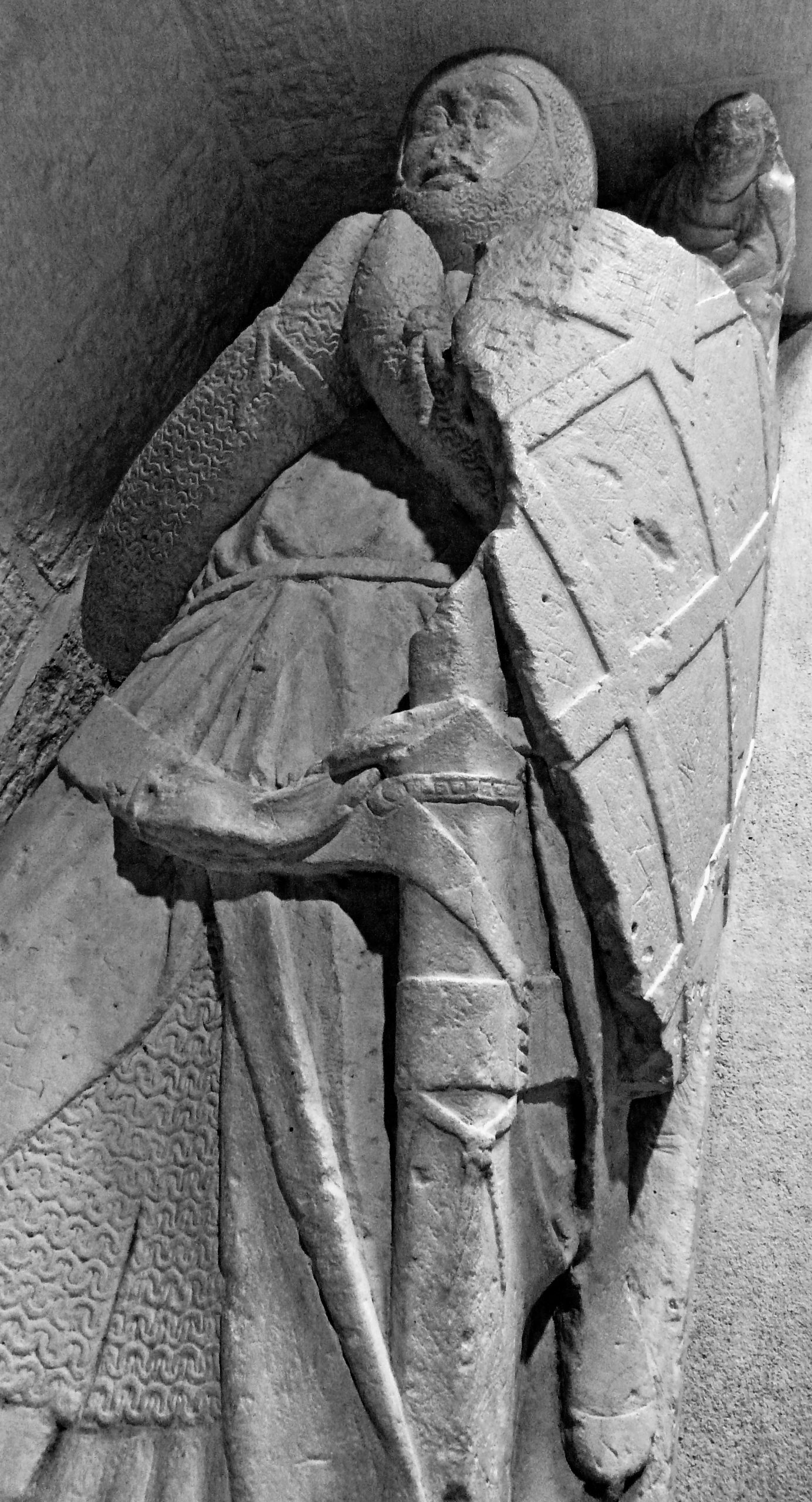
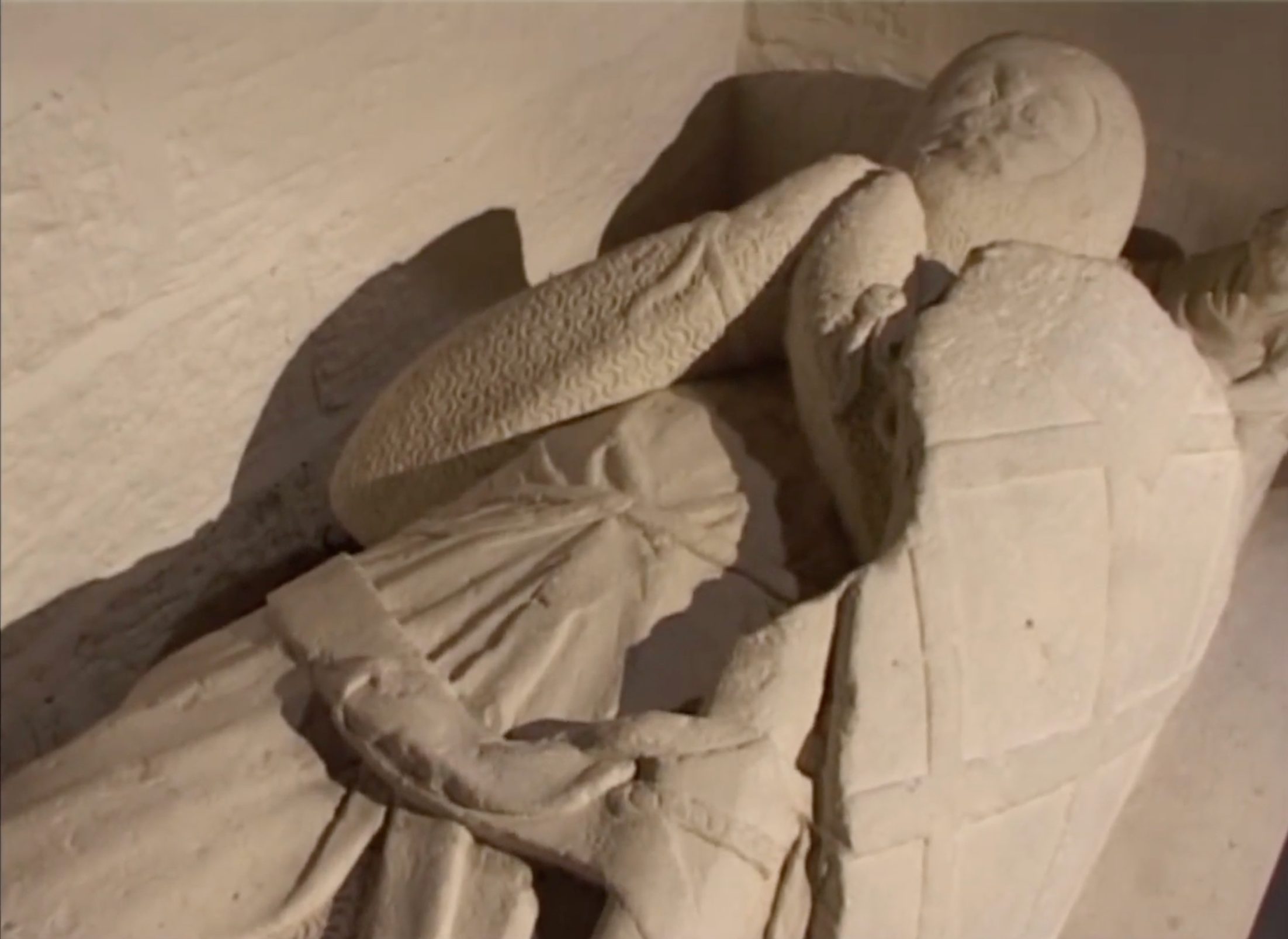
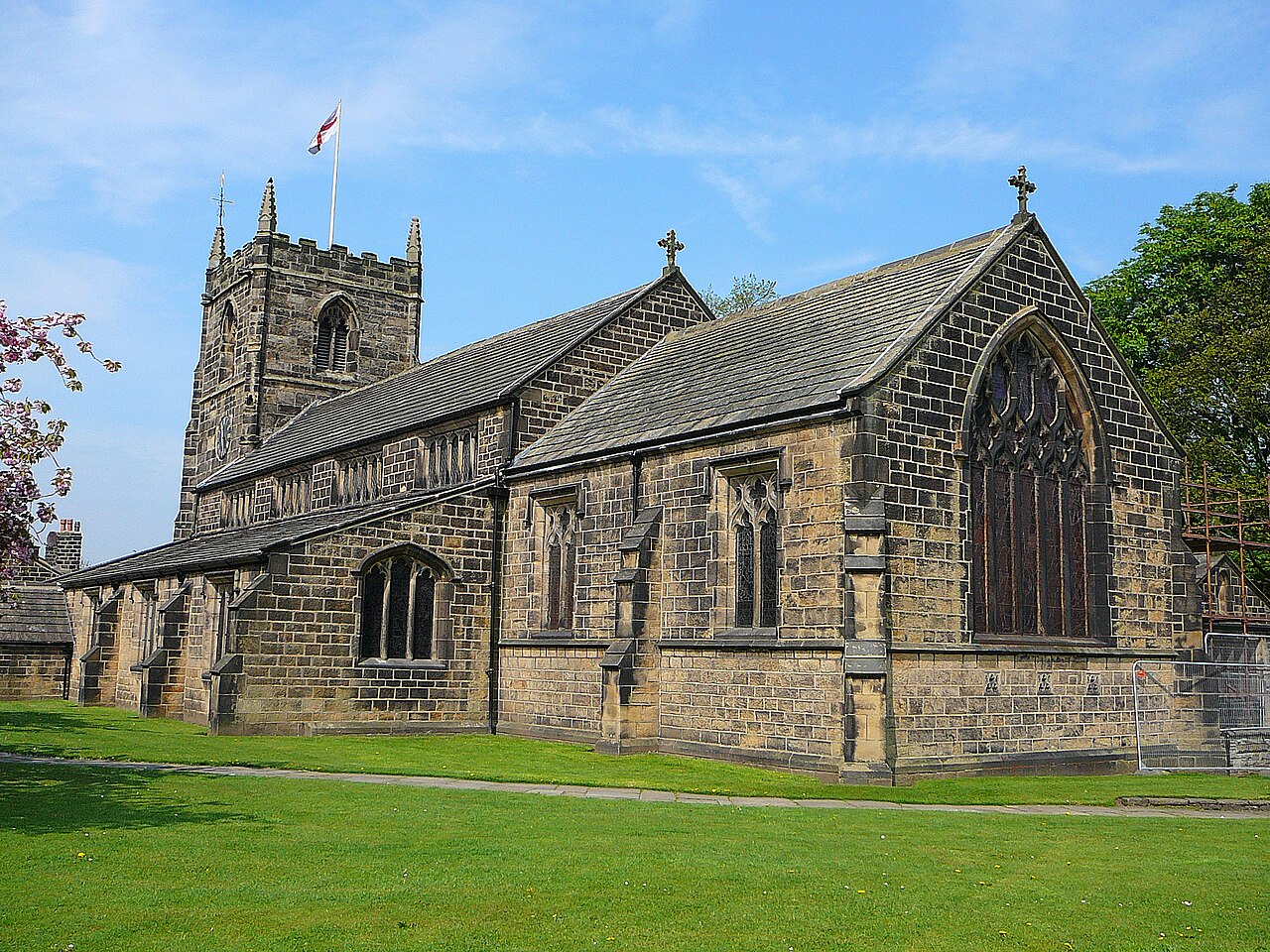
Within All Saints Church, Ilkley, rests a medieval effigy traditionally identified as possibly Sir Peter Middleton, who died in 1336. While images of the church itself are abundant and widely circulated, detailed photographs of this knight’s monument — particularly close views of the face — are notably scarce. This absence is striking, and it invites closer attention to what the stone itself reveals.
Sir Peter Middleton belonged to the local Yorkshire gentry, a class whose authority rested on landholding, lineage, and service rather than distant royal spectacle. Men of this rank were memorialised with care, their effigies intended to preserve not only status but likeness. Medieval funerary sculpture was not symbolic shorthand; it was portraiture.
A Face That Refuses to Disappear
The effigy attributed to Sir Peter Middleton remains largely intact. Armour, posture, and compositional elements survive in good condition. What draws the eye, however, is the face.
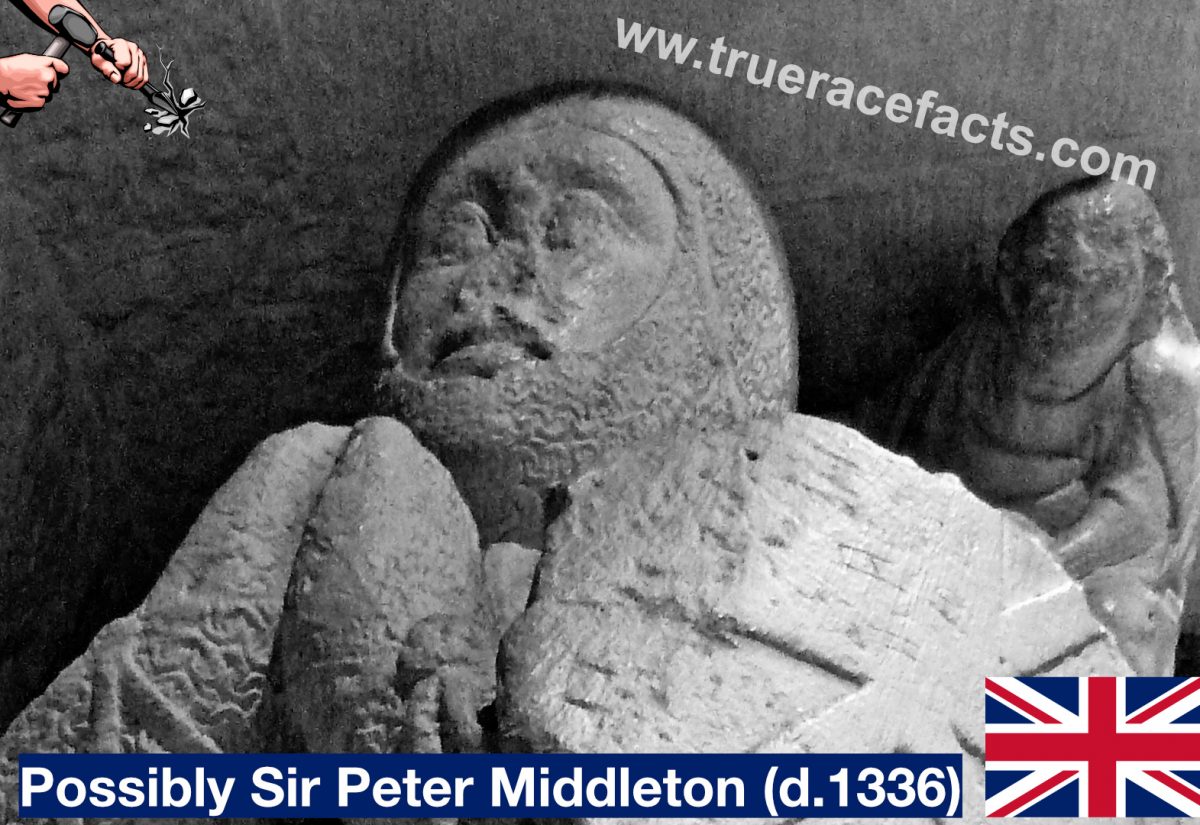
Unlike many later-altered monuments, the nose and lip outline on this effigy remain legible. Though surface detail has been worked down, the underlying modelling is unmistakable. The breadth of the nasal base and the full contour of the mouth preserve a facial structure characteristic of a swarthy medieval nobleman, what later centuries would anachronistically label “black.”
This is not conjecture based on paint alone. It is read directly from the stone.
Selective Iconoclasm
The treatment of the monument is uneven — and that unevenness matters.
The knight’s facial structure survives sufficiently to communicate identity, while adjacent figures tell a harsher story. The angel positioned beside the effigy has had its face completely destroyed, a pattern repeatedly encountered across medieval churches. Angels, like knights, were carved with human features, and their faces often reflected the same phenotypical norms of the communities that commissioned them.
The result is revealing:
Armour remains untouched
Composition remains intact
Sacred symbolism remains visible
Faces are targeted
This is not the erosion of time. It is selective intervention.
Why the Silence Around the Face?
Despite Ilkley being a well-photographed and frequently visited church, close-up images of this effigy’s face are conspicuously absent from public archives and guide materials. The reluctance to document what survives — rather than what has been destroyed — raises an uncomfortable question: what is being protected by omission?
Stone does not need interpretation when its form is clear.
And here, the form is clear enough.
Nobility Without Revision
Whether definitively Sir Peter Middleton or not, this effigy belongs undeniably to the fourteenth-century noble world of Yorkshire — a world that was visibly diverse, biblically literate, and unconcerned with later racial boundaries.
The monument does not ask to be reimagined.
It asks only to be looked at honestly.
The outline remains.
The posture remains.
The truth remains — even when images do not.
“When the face is altered but the monument remains, it is not time at work — it is intent.”
Guinevere Jackson
Image citation Wikipedia & Flickr
 Donate