Hubert Walter: 13c Archbishop, Statesman and the Faces of Medieval England
- 16 August 2026
- 0 Comment
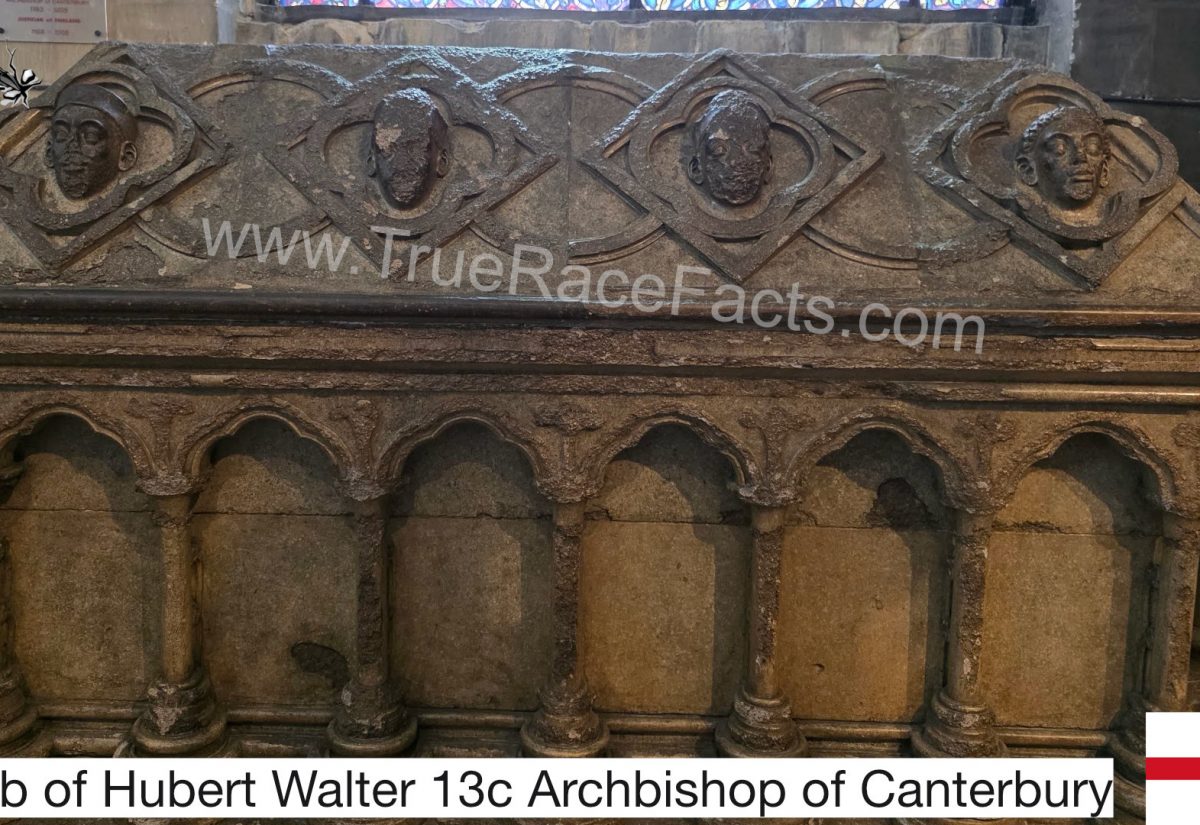
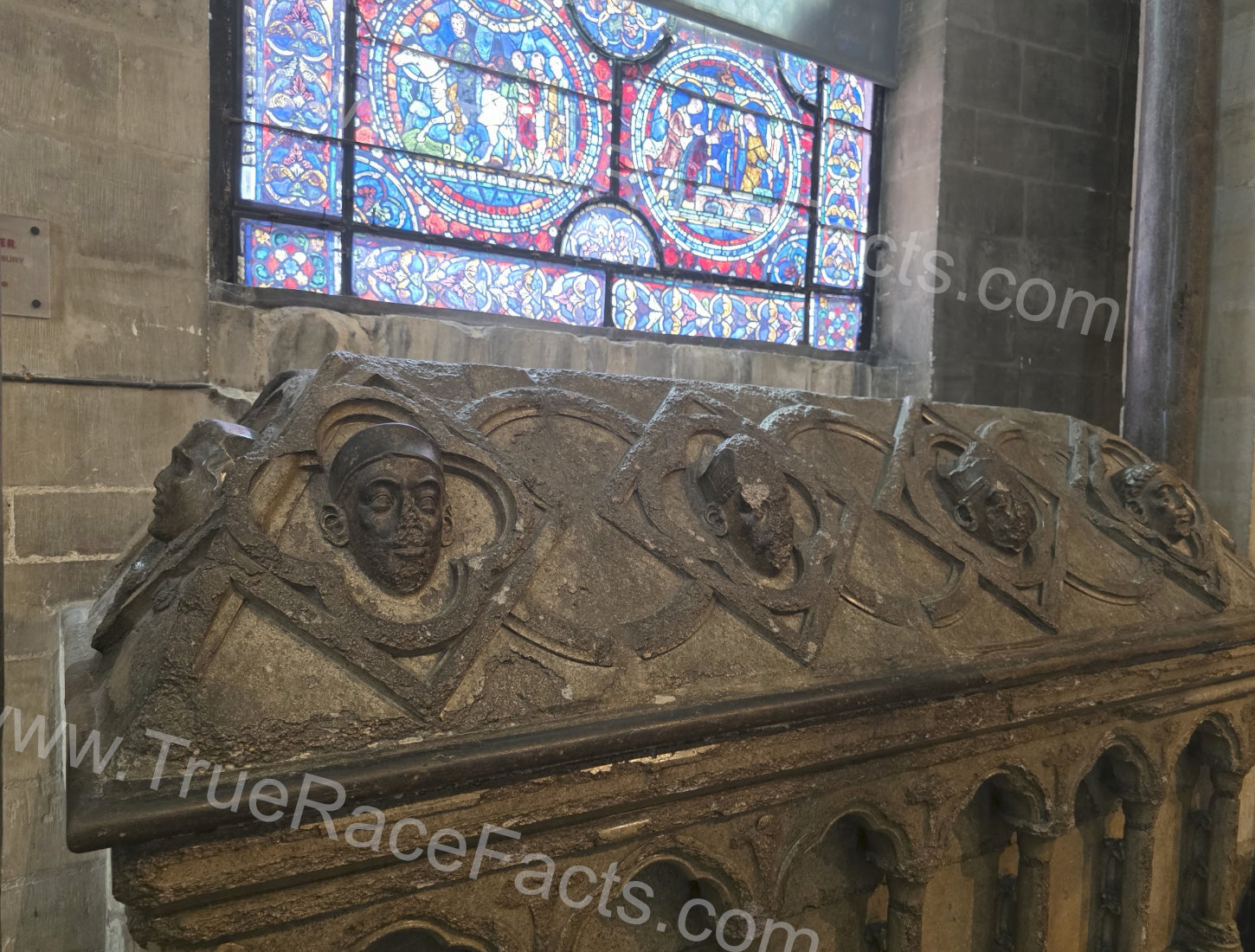
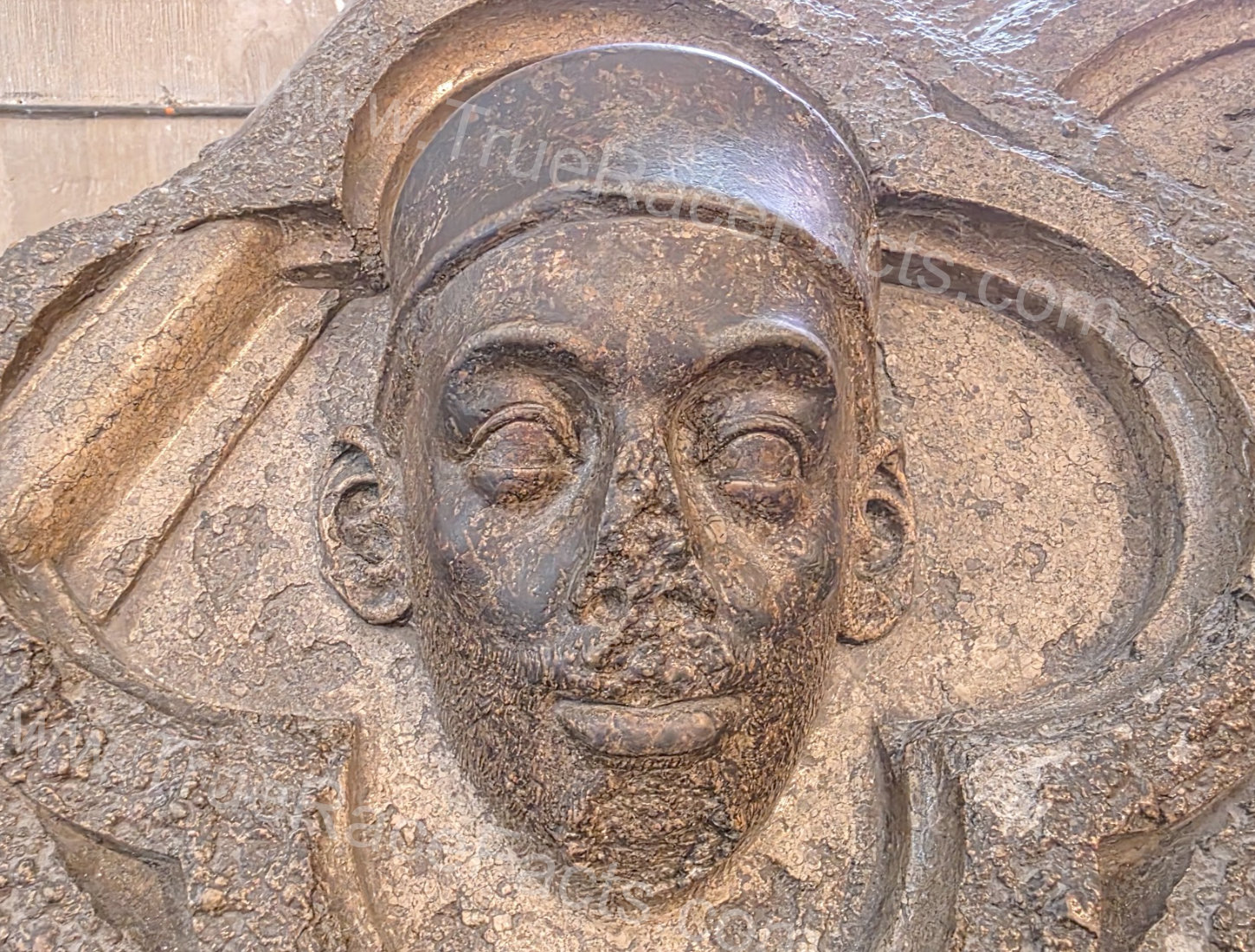
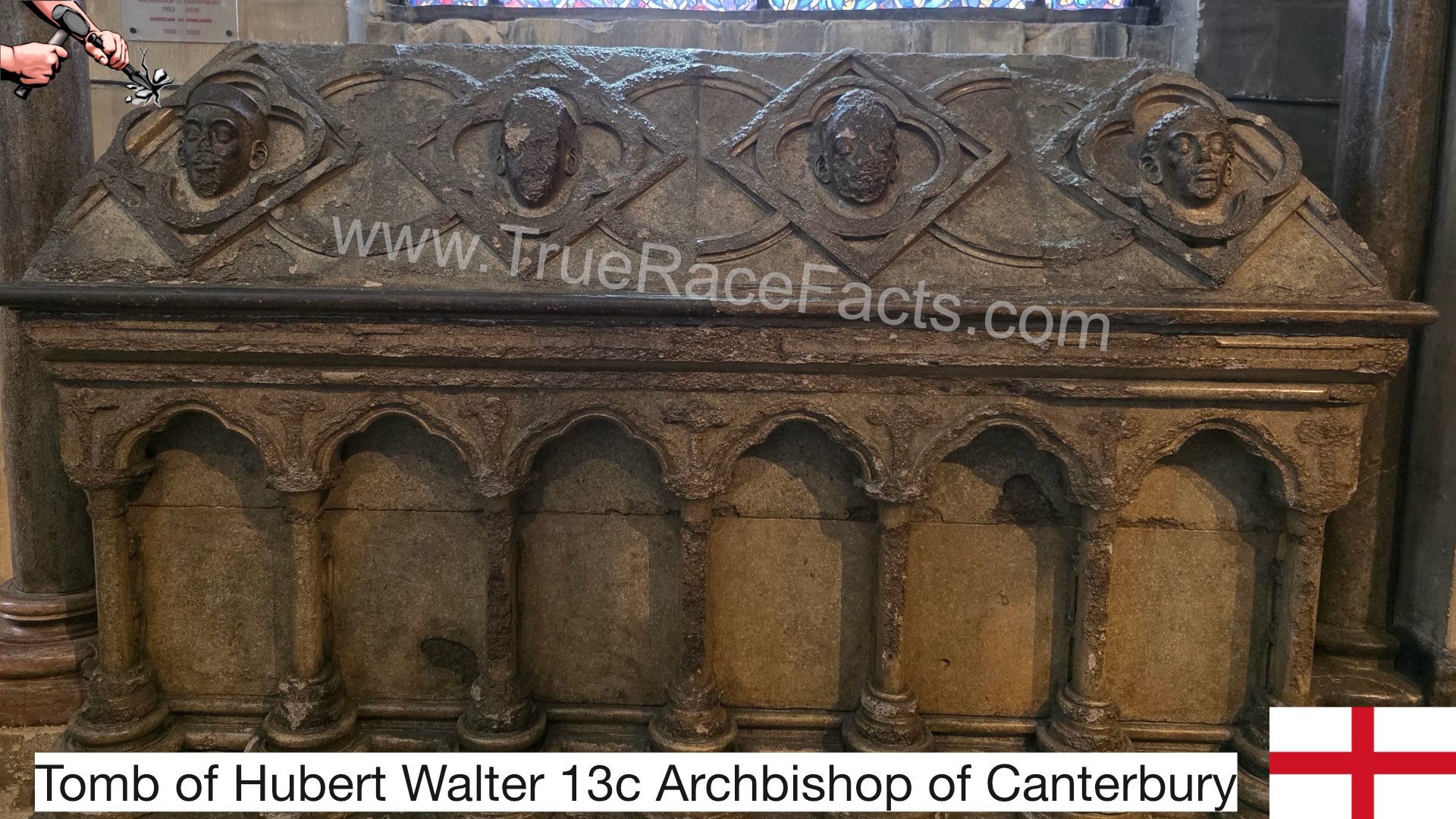
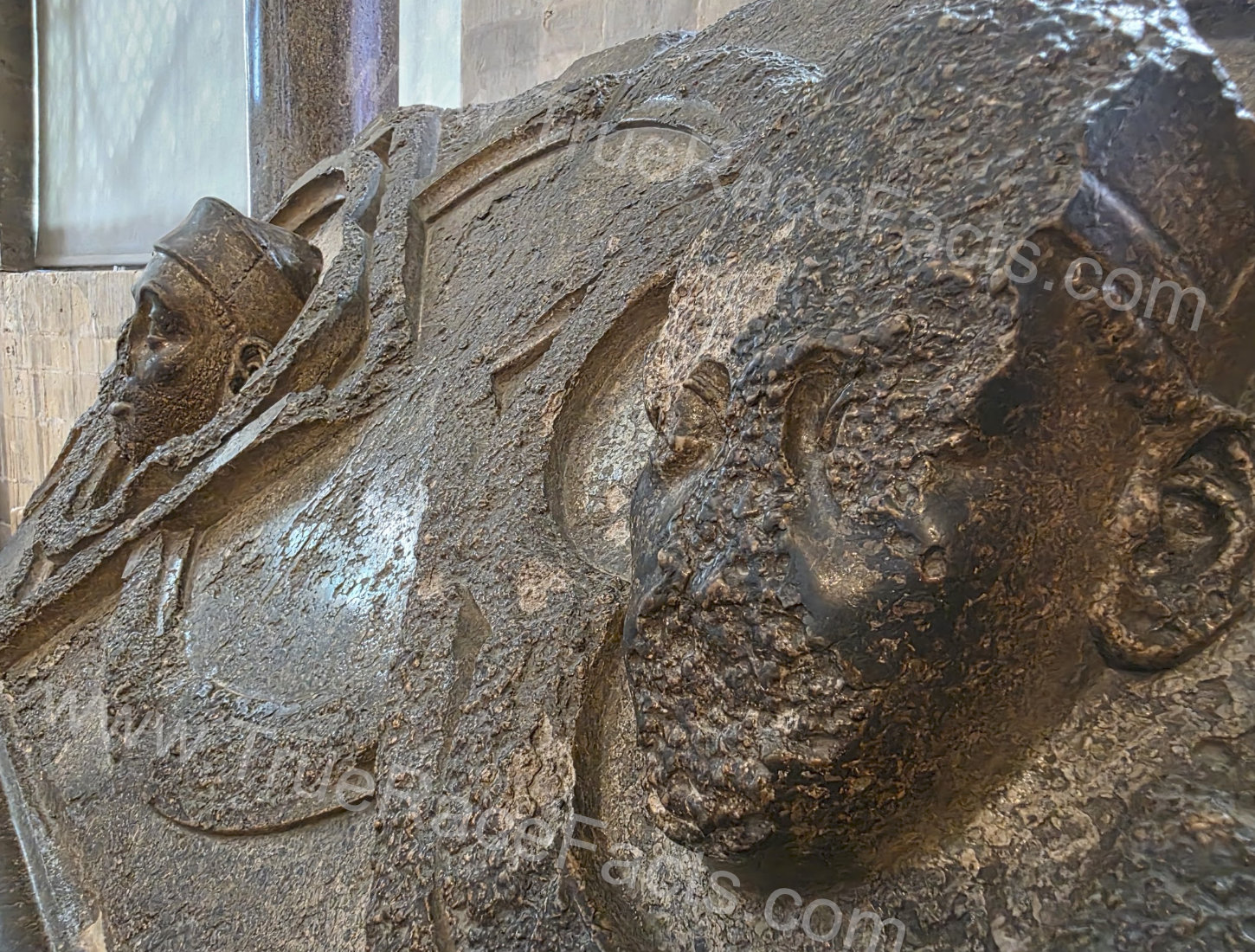
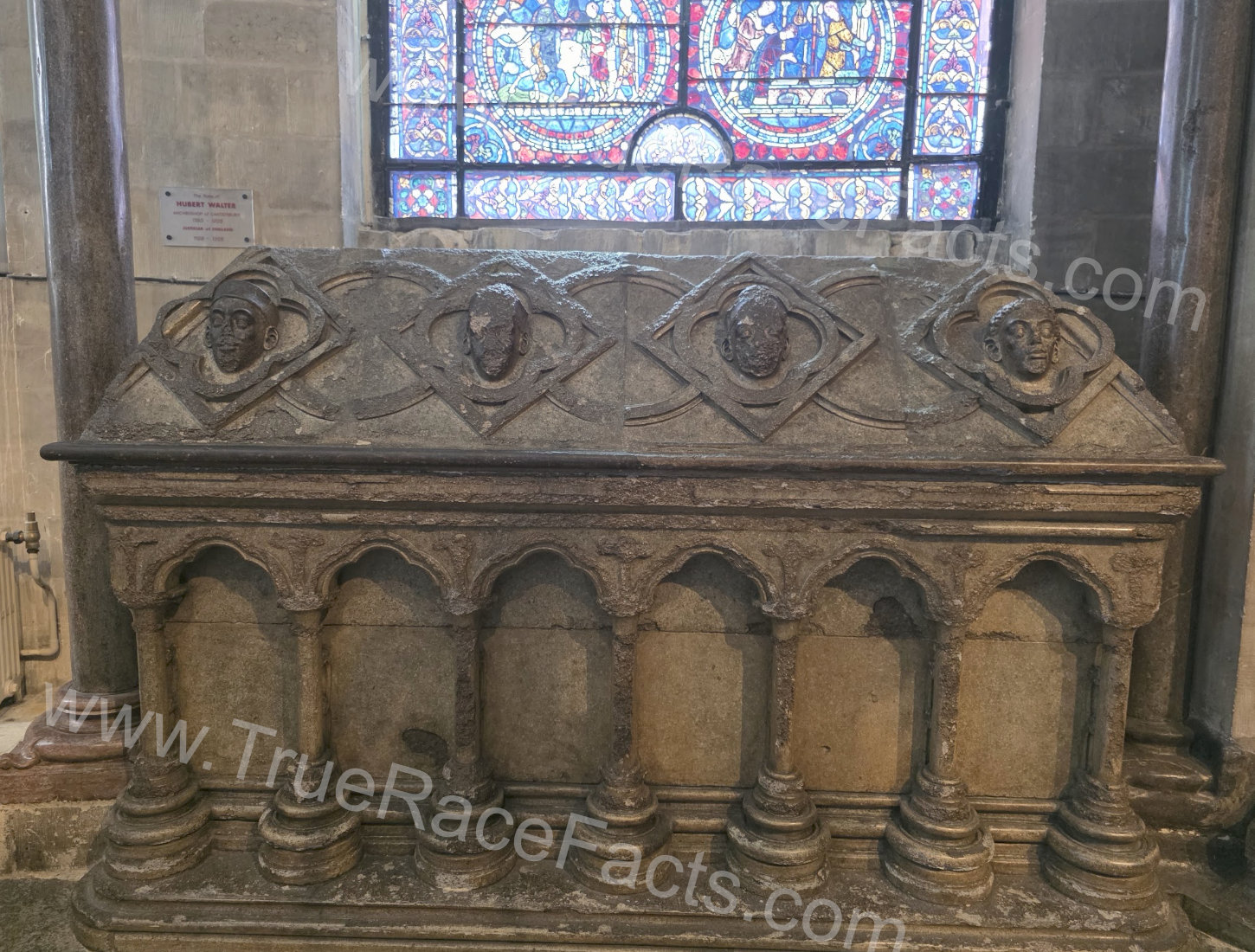
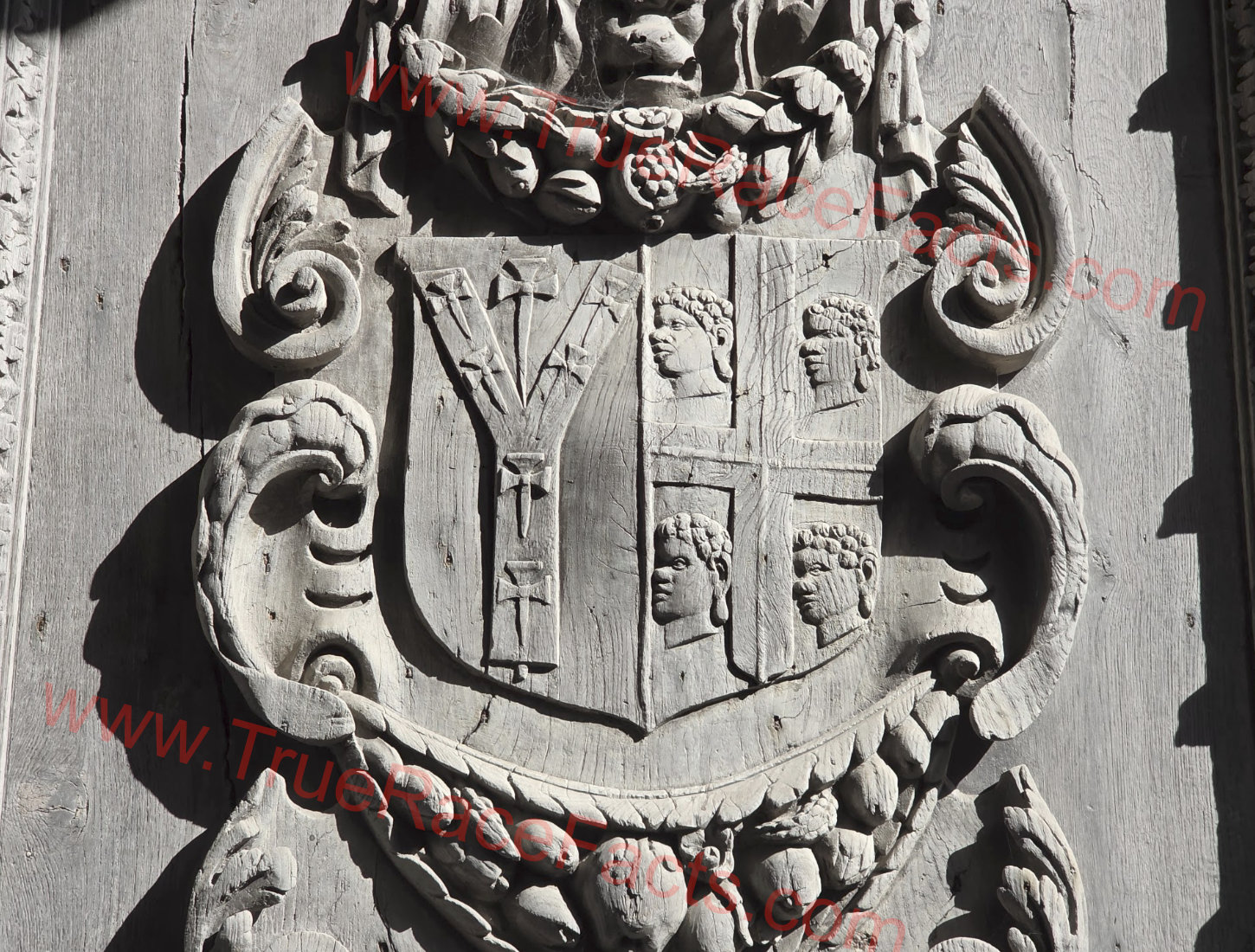
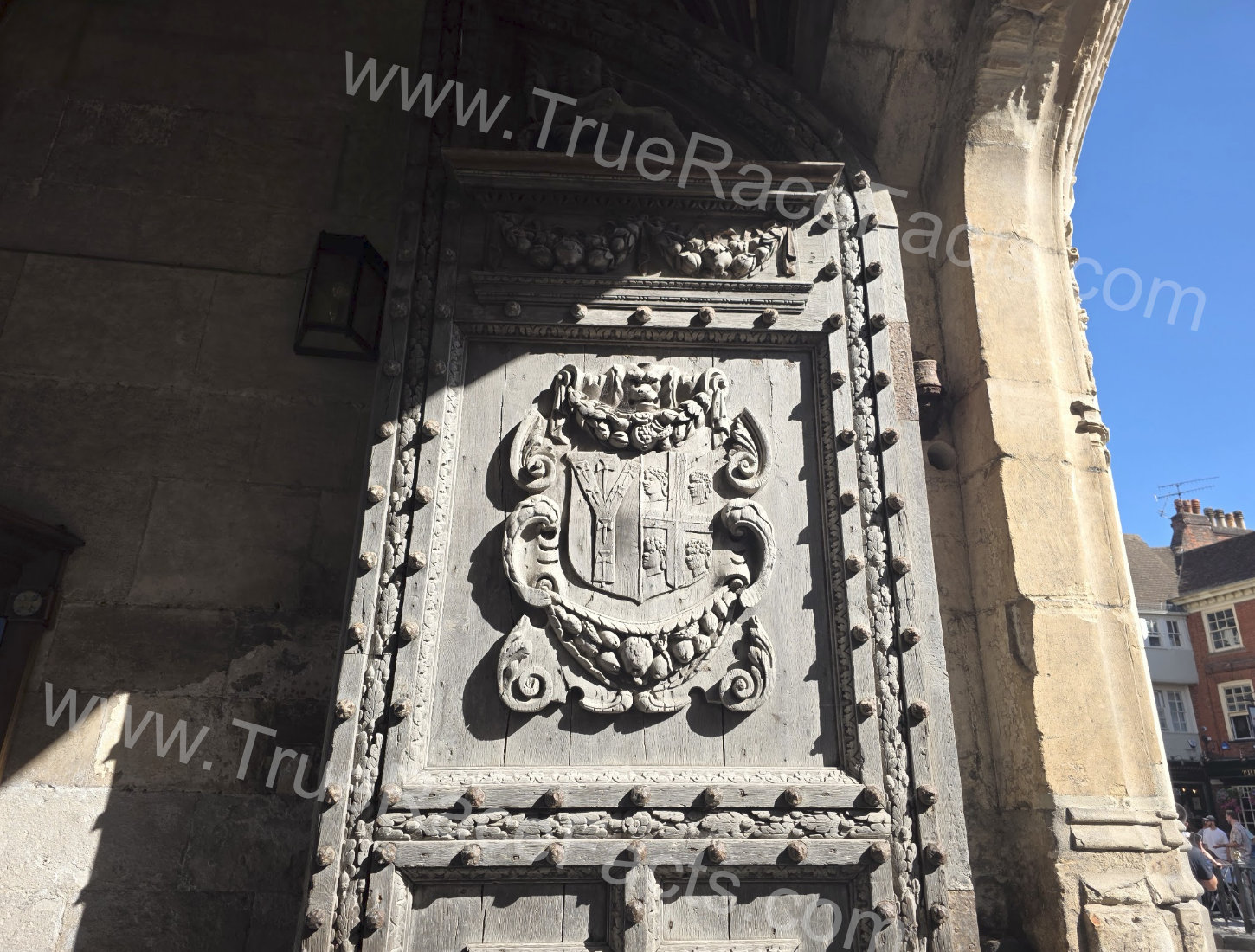
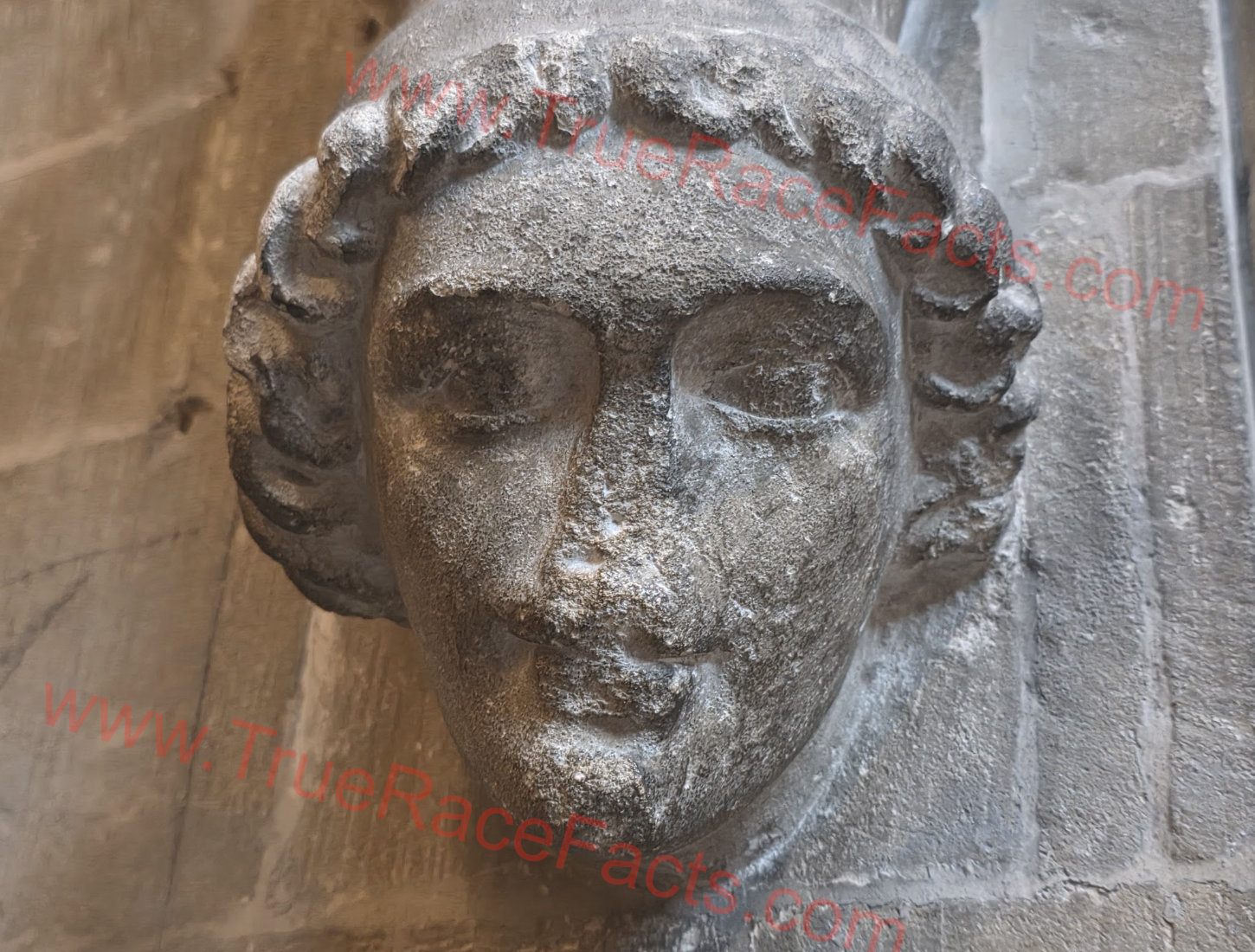
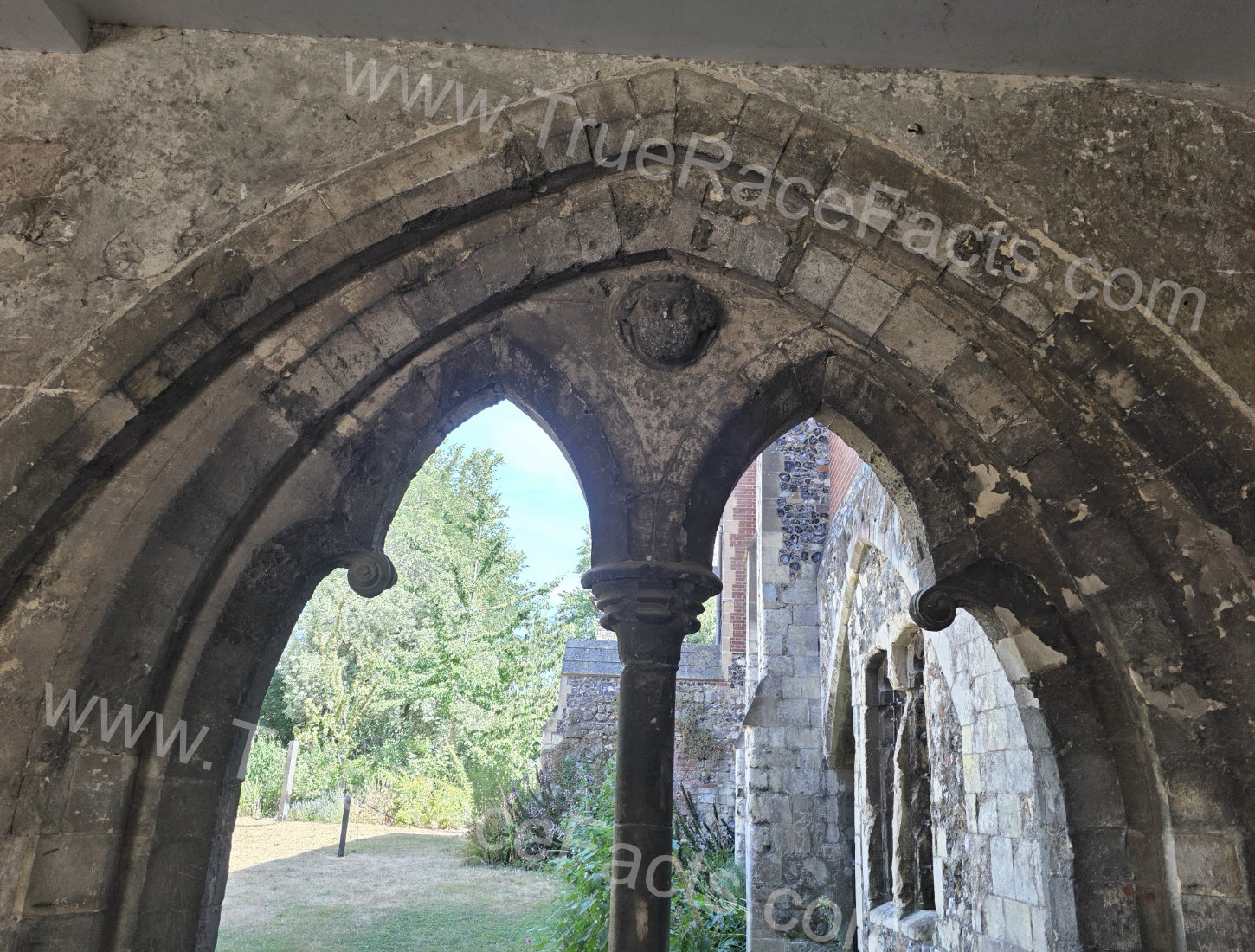
Inside Canterbury Cathedral lies one of the most remarkable surviving monuments from medieval England: the tomb of Hubert Walter, Archbishop of Canterbury, who died in 1205 after becoming one of the most powerful men in the kingdom. Made from Purbeck marble and regarded as the oldest surviving tomb in Canterbury Cathedral, the monument has survived for more than eight centuries. Yet what makes it particularly fascinating are the six human heads carved along its gabled ridge, representing a young man, a layman, two bishops, a monk and a wimpled woman. Two have suffered extensive facial destruction, while four remain sufficiently intact for their features to be examined. Before looking closely at those extraordinary faces, however, we must first understand the man whose tomb they decorate.
Hubert Walter was born around the middle of the twelfth century into a substantial landholding family. His father was Hervey Walter, while his mother, Maud de Valoignes, belonged to another important landed family and was a daughter and co-heiress of Theobald de Valoignes of Parham in Suffolk. Hubert therefore grew up within a network of families connected to land, wealth and royal administration rather than emerging from obscurity. One of the most important influences upon his early career was Ranulf de Glanvill, Chief Justiciar of England under King Henry II and one of the most powerful administrators in the kingdom. Hubert entered Glanvill’s household, giving the future archbishop an extraordinary education in royal government at precisely the time when English legal and administrative institutions were becoming increasingly sophisticated.
The importance of the Walter family extended far beyond Hubert himself. His brother Theobald Walter became the first hereditary Chief Butler of Ireland and established the family from which the enormously powerful Butler dynastydescended. In later centuries the Butlers became one of the greatest aristocratic houses in Ireland, producing the Earls and eventually Dukes of Ormonde and accumulating vast estates, political influence and military power. Hubert Walter therefore belonged to a family whose descendants would remain deeply embedded within the aristocratic history of Britain and Ireland for centuries.
Hubert’s own rise was exceptional even by the standards of his family. He entered royal service during the reign of Henry II and by 1186 had become Dean of York. When Richard I, better remembered as Richard the Lionheart, became king in 1189, Hubert’s career advanced rapidly and he was appointed Bishop of Salisbury that same year. Europe was preparing for the Third Crusade, and Hubert accompanied Richard and Baldwin, Archbishop of Canterbury, to the Holy Land. He was therefore present during one of the defining struggles of the medieval world, when Richard’s crusading forces confronted those of Saladin.
Hubert was far more than a ceremonial churchman accompanying an army. Contemporary accounts portray him as an administrator, diplomat and organiser who cared for poorer pilgrims and sick or wounded crusaders. Following Archbishop Baldwin’s death at Acre in 1190, Hubert emerged as one of the leading English ecclesiastical figures remaining on crusade. He became involved in negotiations surrounding the conclusion of Richard’s campaign and acted within the diplomatic world connecting the crusading forces and Saladin. His experiences in the eastern Mediterranean placed him in direct contact with peoples and cultures far beyond England and established his reputation as a churchman capable of operating at the highest international level.
Richard’s journey home from the crusade ended disastrously when he was captured and eventually handed over to Emperor Henry VI. An enormous ransom was demanded for the English king, creating one of the greatest financial and political crises of Richard’s reign. Hubert visited Richard during his captivity and subsequently became deeply involved in the enormous administrative effort required to secure his release. At the same time, England faced political instability as Prince John attempted to exploit his brother’s absence. Hubert’s loyalty, diplomatic ability and administrative skill made him increasingly indispensable to the Crown.
In 1193, Hubert Walter became Archbishop of Canterbury, placing him at the head of the English Church. Yet even this extraordinary position did not represent the height of his political influence. Shortly afterwards he became Chief Justiciar of England, effectively making him one of the principal administrators of the kingdom. Richard spent much of his reign outside England fighting to protect his continental territories, meaning that men such as Hubert were responsible for maintaining royal government in his absence. Hubert oversaw taxation, royal justice, local administration and the enforcement of royal authority, while written record-keeping and governmental organisation continued to develop under his administration. At one point, therefore, Hubert Walter stood simultaneously near the summit of both Church and State: Archbishop of Canterbury and Chief Justiciar of England.
Hubert eventually relinquished the justiciarship in 1198, but his political career was far from finished. Following Richard’s death in 1199 and the accession of King John, Hubert remained one of the most important figures in the kingdom and became Lord Chancellor of England. The chancery was becoming increasingly important as the administrative institution responsible for producing and preserving royal documents, and surviving chancery rolls begin during Hubert’s period as Chancellor. During a single lifetime he had therefore served as Bishop of Salisbury, travelled on the Third Crusade, participated in the political struggle surrounding Richard the Lionheart’s captivity, become Archbishop of Canterbury, governed England as Chief Justiciar and finally served as Lord Chancellor under King John. Hubert Walter was not a peripheral figure in medieval English history; he stood at its political and ecclesiastical centre.
When Hubert died on 13 July 1205, he was buried inside Canterbury Cathedral. His Purbeck marble monument survives and is generally regarded as the cathedral’s earliest surviving tomb. In 1890 the tomb was opened after uncertainty had arisen concerning the identity of its occupant. Inside was a stone coffin containing the remains of an archbishop, together with surviving objects associated with his ecclesiastical office. Most importantly, a lead identification plate confirmed that the burial was indeed that of Hubert Walter. After almost seven centuries, the identity of the man lying inside the monument was established beyond reasonable doubt.
The Faces on Hubert Walter’s Tomb
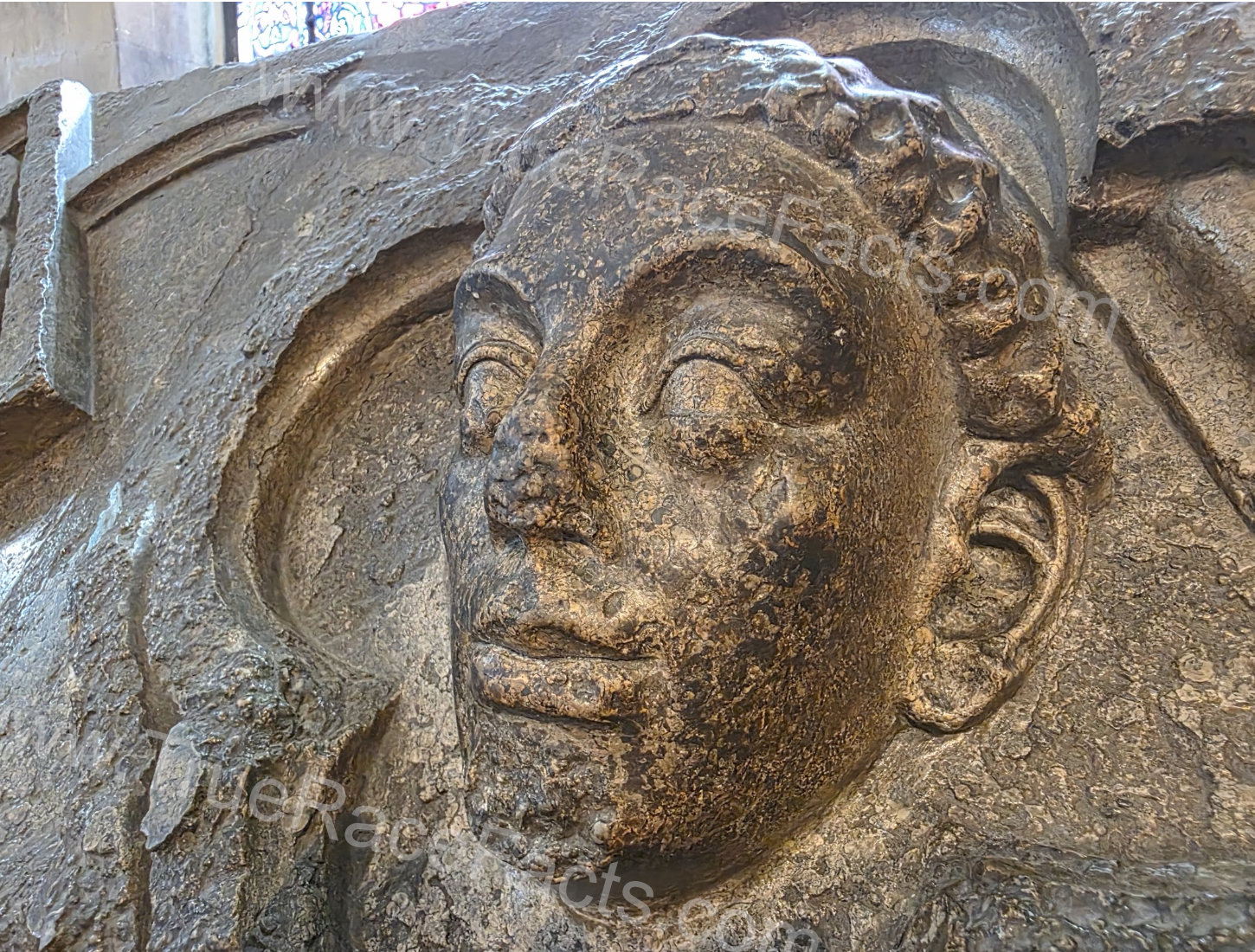
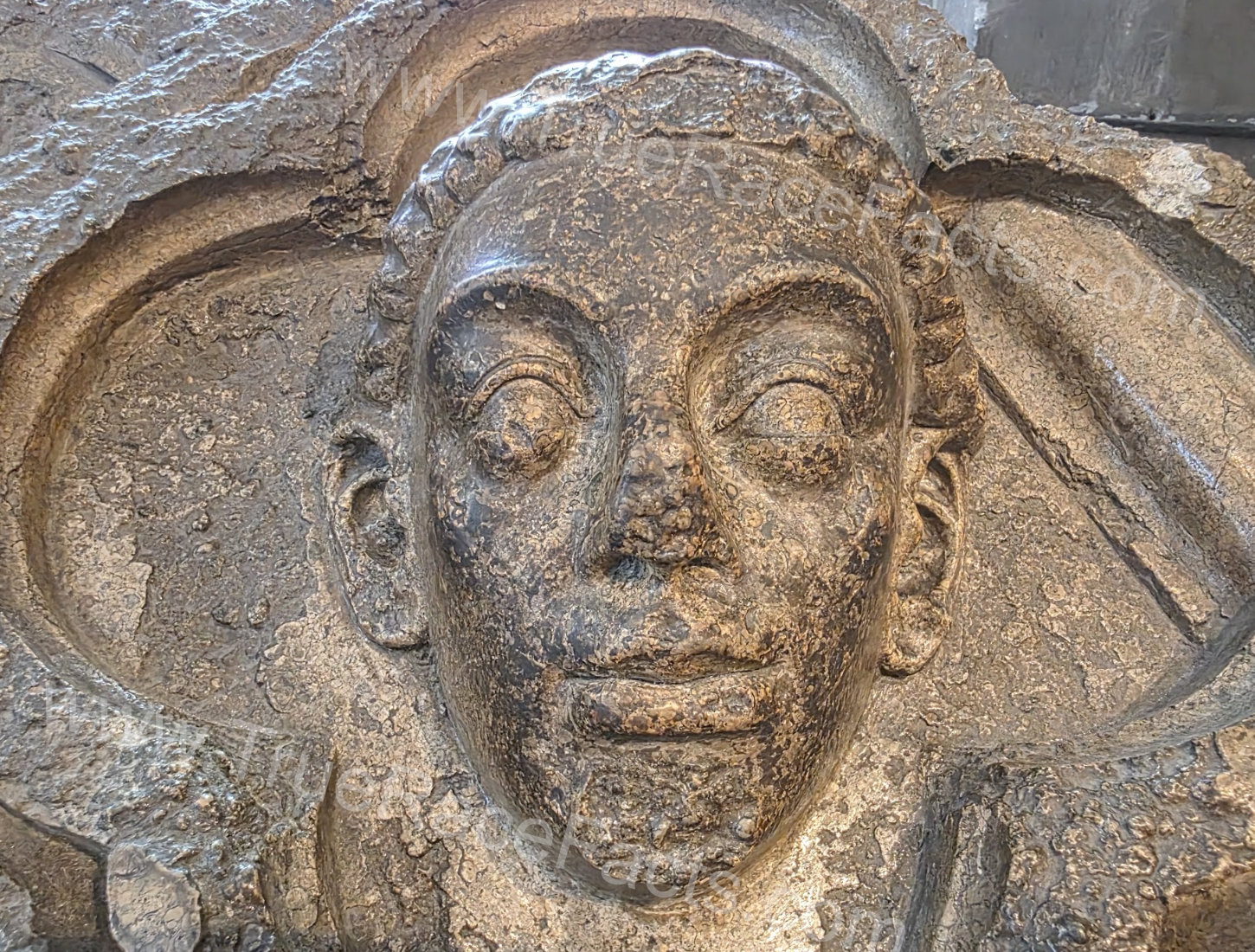
It is the exterior of this extraordinary tomb that deserves particular attention. Along its gabled ridge are six carved human heads, traditionally described as a young man, a layman, two bishops, a monk and a woman wearing a wimple. These figures represent different members of the secular and religious world of Hubert Walter’s lifetime, and four of the six retain enough of their original facial features to be examined clearly. Two others have suffered extensive destruction to their faces.
Look closely at those that survive. Several display broad noses, prominent mouths and noticeably full lips. These are not modern reconstructions, actors chosen for a television documentary or twenty-first-century artists attempting to imagine medieval England. They are medieval carvings placed upon the funerary monument of the Archbishop of Canterbury more than eight hundred years ago. For anyone seeking to understand the range of faces represented in England during Hubert Walter’s lifetime, these carvings are important visual evidence and deserve to be examined exactly as they survive.
We do not possess a securely identified contemporary portrait that establishes precisely what Hubert Walter himself looked like. Nevertheless, the people represented upon the monument created to commemorate him belonged to the human world associated with his time and office. It is therefore entirely reasonable to consider whether Hubert himself may have shared the phenotype visible among the surviving figures on his tomb. What should not happen is for these physical characteristics to be ignored while a modern European appearance is automatically projected backwards onto Hubert without comparable contemporary evidence. The monument does not give us every answer, but the evidence it does preserve should be allowed to speak for itself.
The destruction of two of the six faces makes the monument even more intriguing. We cannot know merely from looking at the tomb exactly when each face was damaged, who was responsible or what motivated the destruction. What remains, however, allows comparison between the surviving and damaged carvings. Four faces still preserve enough of their original form for their facial characteristics to be visible, while two have lost much of the very evidence that would have allowed their appearance to be examined in the same way.
The Tomb I Was Never Shown
I have personally visited Canterbury Cathedral on two separate occasions, and on neither visit did the guides draw my attention to Hubert Walter’s tomb. I find that extraordinary. Here lies a man who accompanied Richard the Lionheart on the Third Crusade, operated within the diplomatic world of Saladin, became Archbishop of Canterbury, served as Chief Justiciar and later became Lord Chancellor of England. His monument is regarded as the oldest surviving tomb in Canterbury Cathedral, yet on both of my visits I could easily have walked past without ever knowing its significance.
I cannot say why the guides on those particular visits did not discuss the monument, and I will not claim to know their motives. Nevertheless, had the tomb been pointed out to me, the faces would immediately have raised questions. Who are these people? Why were these particular faces carved upon the tomb of one of the most powerful men in thirteenth-century England? Why do the surviving figures display the features that they do? And what might they tell us about the range of faces represented in England during Hubert Walter’s lifetime? These are legitimate historical questions, and they begin not with speculation but with the physical artefact itself.
Perhaps that is what makes Hubert Walter’s tomb so important. Written histories can tell us about his offices, his political power, his family connections and his extraordinary career, but the monument gives us something words cannot: faces carved by people living within the medieval world itself. A young man, a layman, two bishops, a monk and a wimpled woman were considered appropriate figures to accompany the memory of an Archbishop of Canterbury in death. Four still retain enough of their features for us to look directly at what those medieval craftsmen chose to represent.
When attempting to reconstruct medieval Britain, chronicles and genealogies should never be our only evidence. We must also examine its tombs, effigies, manuscripts, paintings, coins, sculpture and surviving architecture. Nor should we decide beforehand what the people of medieval England ought to have looked like and then force the surviving evidence to conform to that expectation. Hubert Walter’s tomb has crossed eight centuries to reach us. Whatever conclusions individual readers ultimately draw from it, the faces carved upon it deserve to be seen, studied and included in the conversation.
Look at the monument. Look at the surviving faces. Then consider what they are telling us.
Because if we truly want to understand the faces of medieval England, we must be willing to look at the faces medieval England itself left behind.
Image Description
The early thirteenth-century Purbeck marble tomb of Hubert Walter, Archbishop of Canterbury, inside Canterbury Cathedral. Six medieval carved human heads along the gabled ridge represent a young man, a layman, two bishops, a monk and a wimpled woman. Two faces have suffered extensive destruction, while four retain visible facial characteristics including broad noses, prominent mouths and full lips.
“If we want to know the faces of medieval England, we must be willing to look at the faces medieval England left behind”
Guinevere Jackson
Image citation: All images featured were taken by author Guinevere Jackson
 Donate