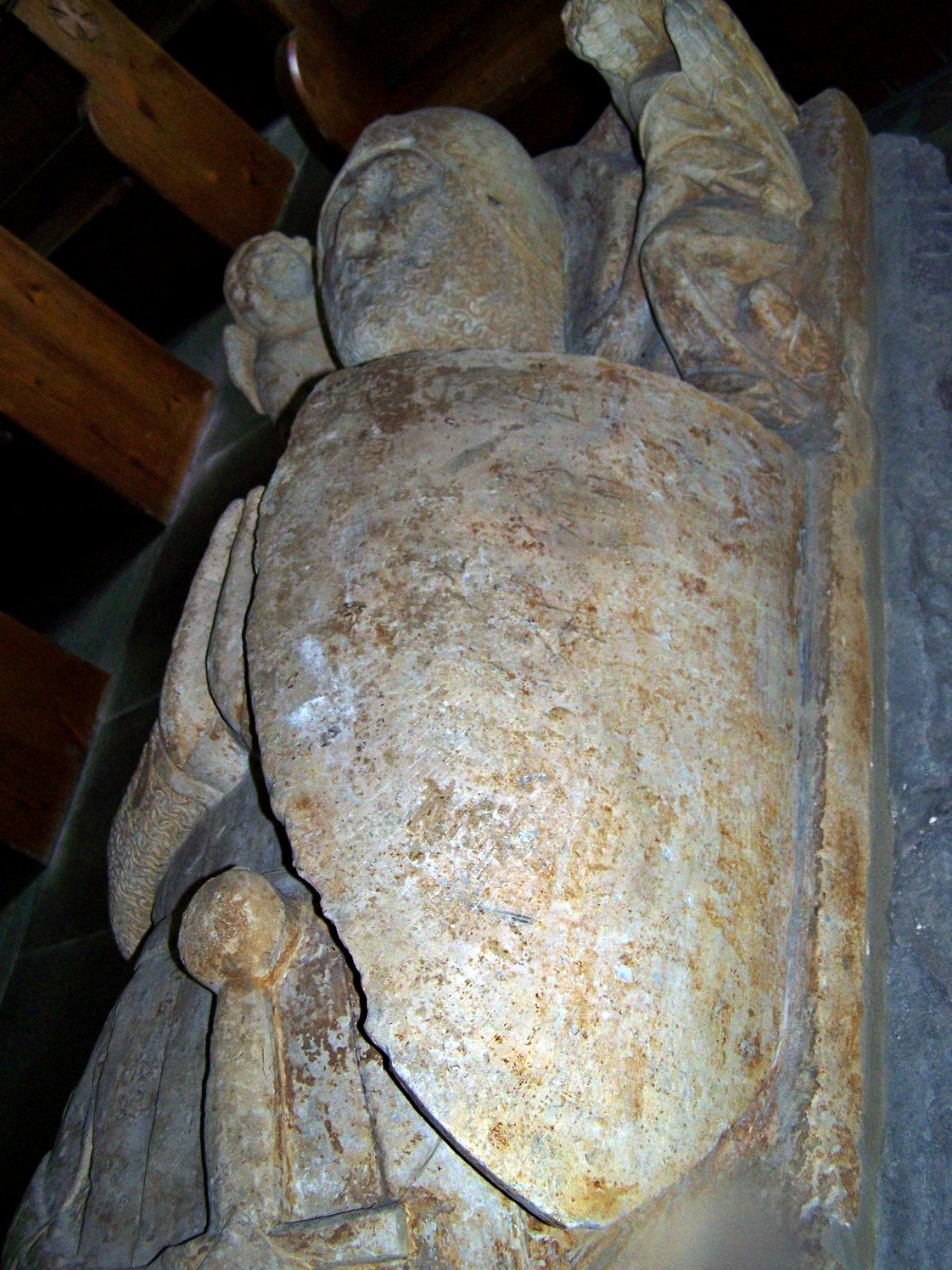
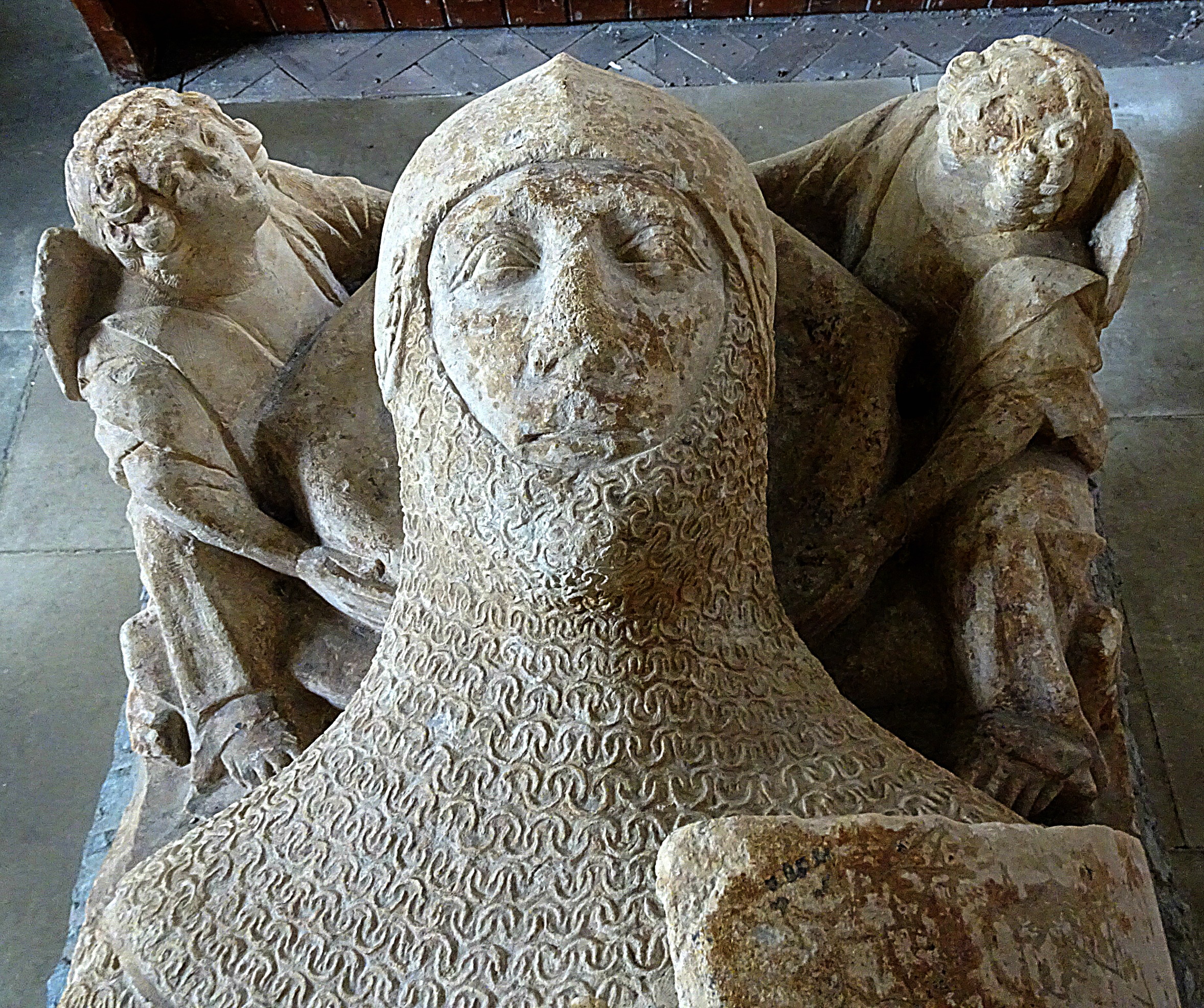
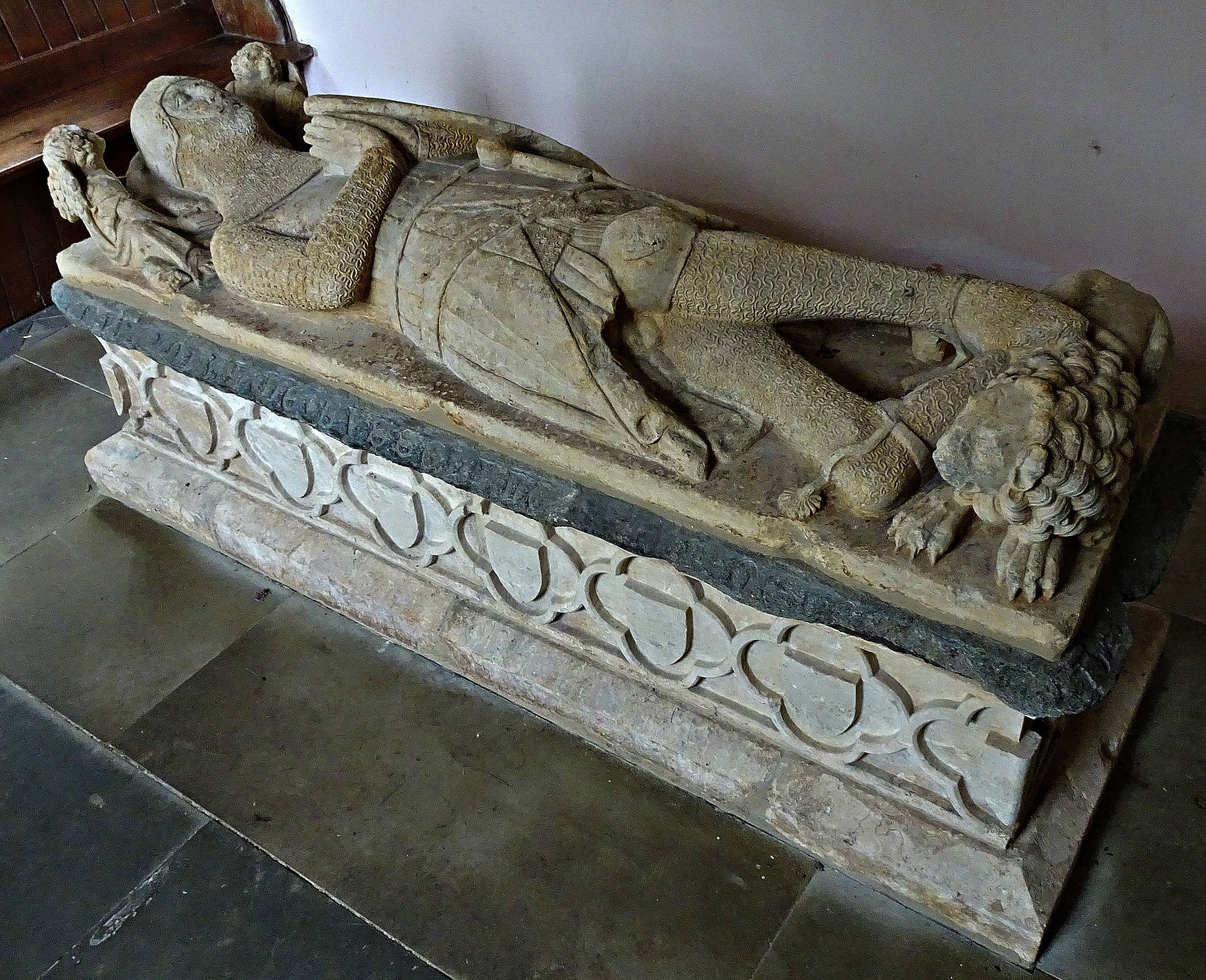
14th Century Sir John de Buslingthorpe c1340-44 Church of St Michael Lincolnshire England
- Guinevere Jackson
- 1 December 2022
- 0 Comment
Sir John de Buslingthorpe (c.1340–1344): When Stone Refuses to Lie
In the quiet countryside of Lincolnshire, the Buslingthorpe family once stood as landholding gentry of stature and consequence. Their name is preserved in parish records, land grants, and most powerfully, in stone. Yet the story their effigies now tell is not only one of rank and lineage — it is a story of selective survival, deliberate alteration, and controlled memory.
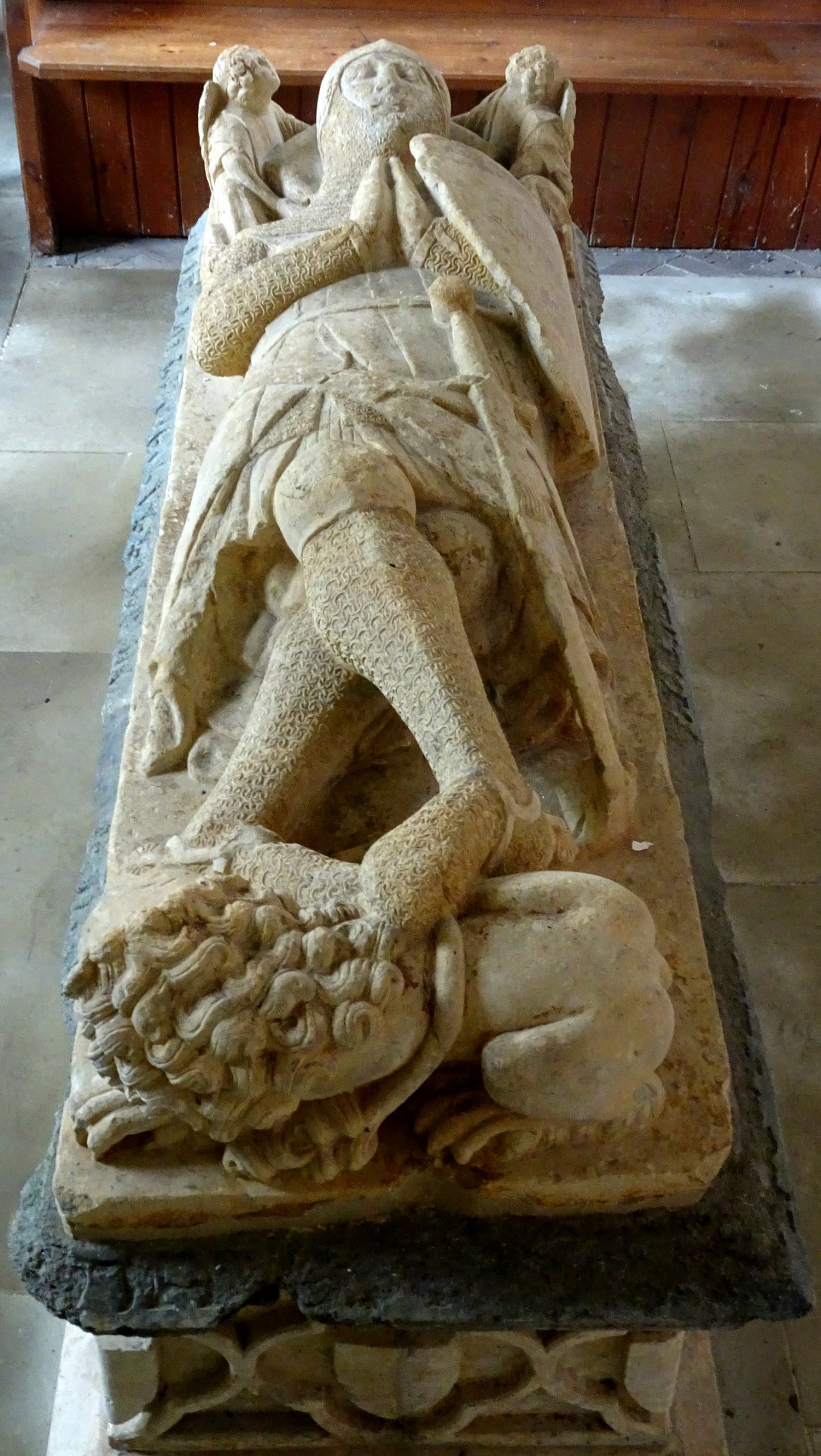
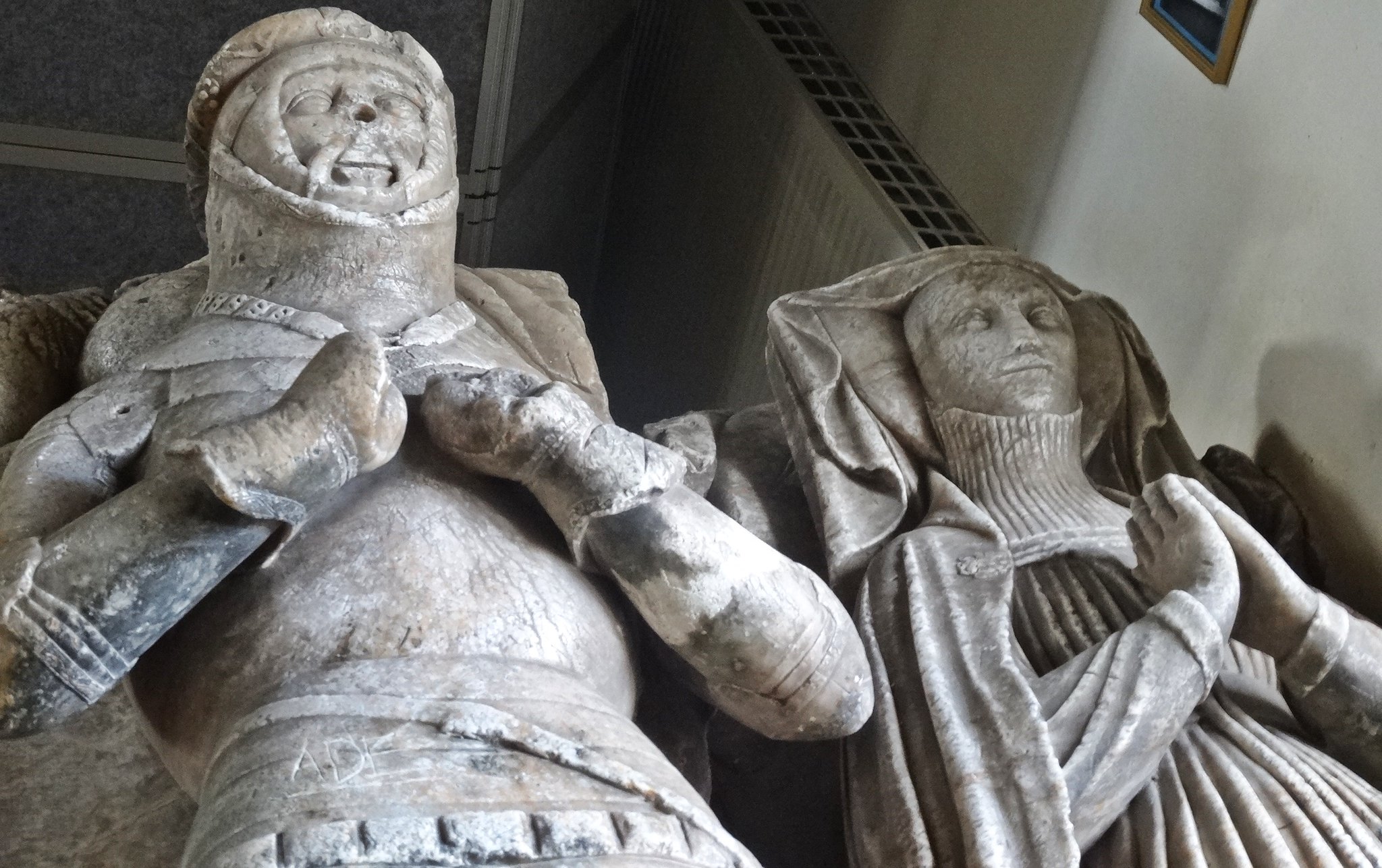
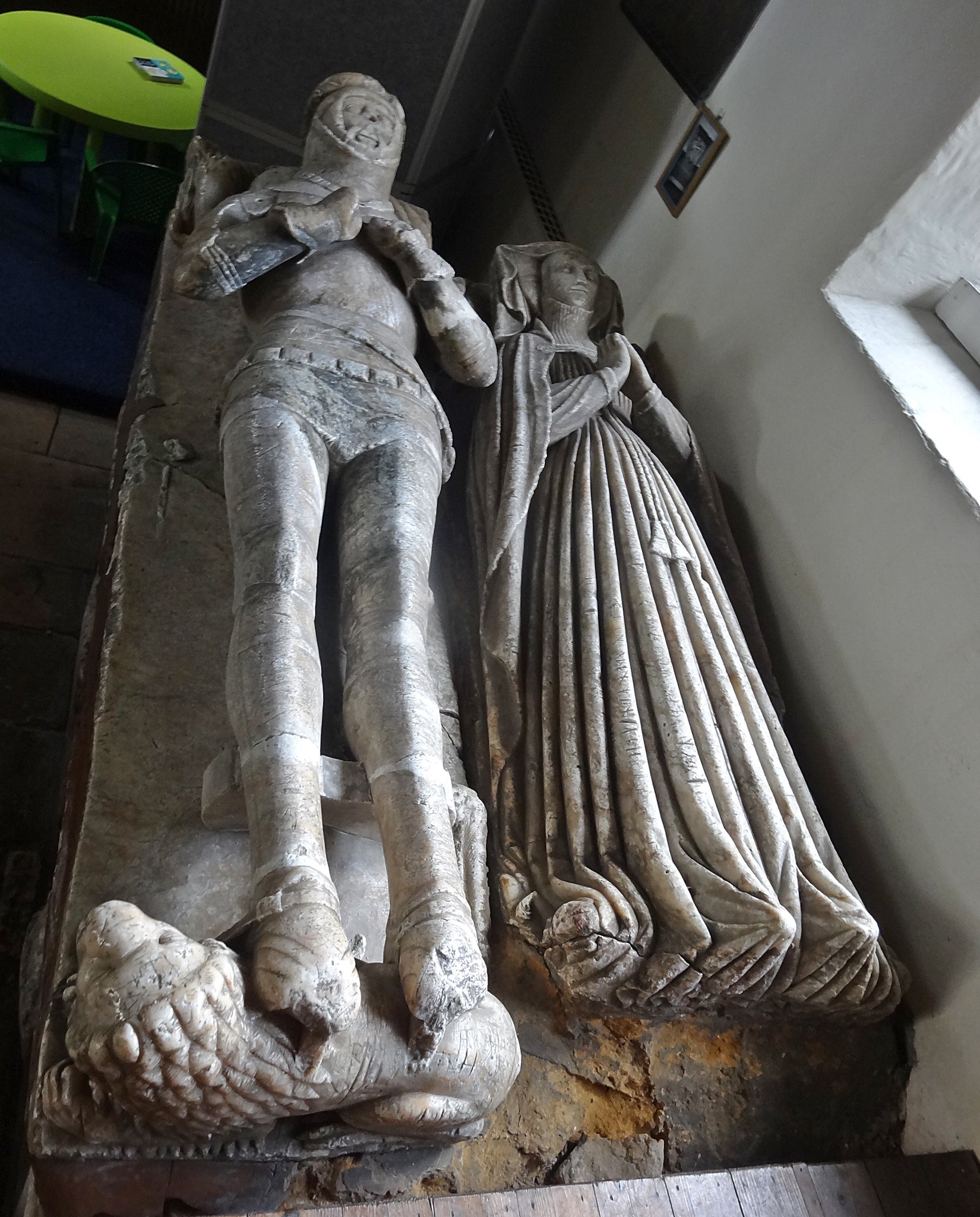
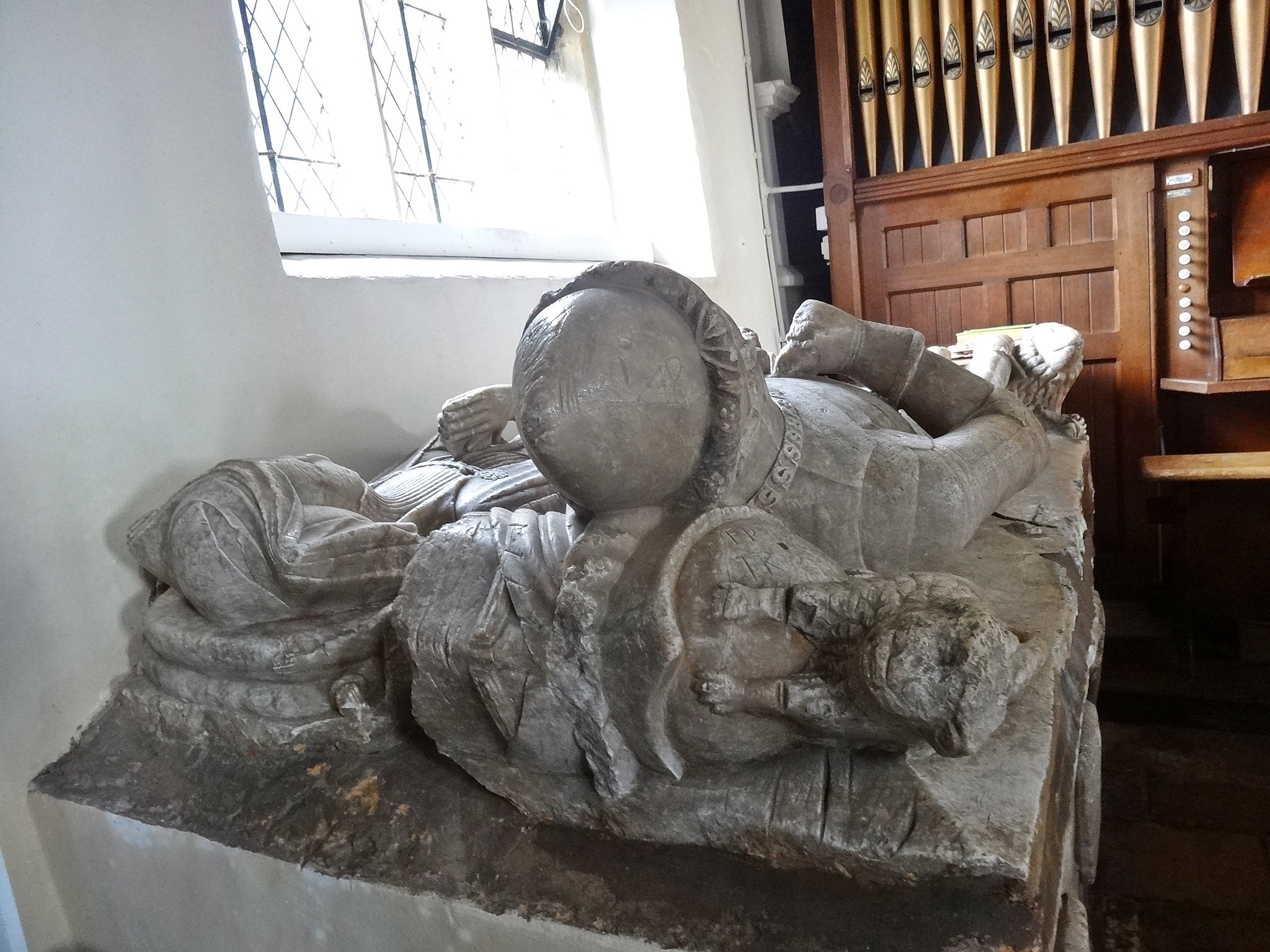
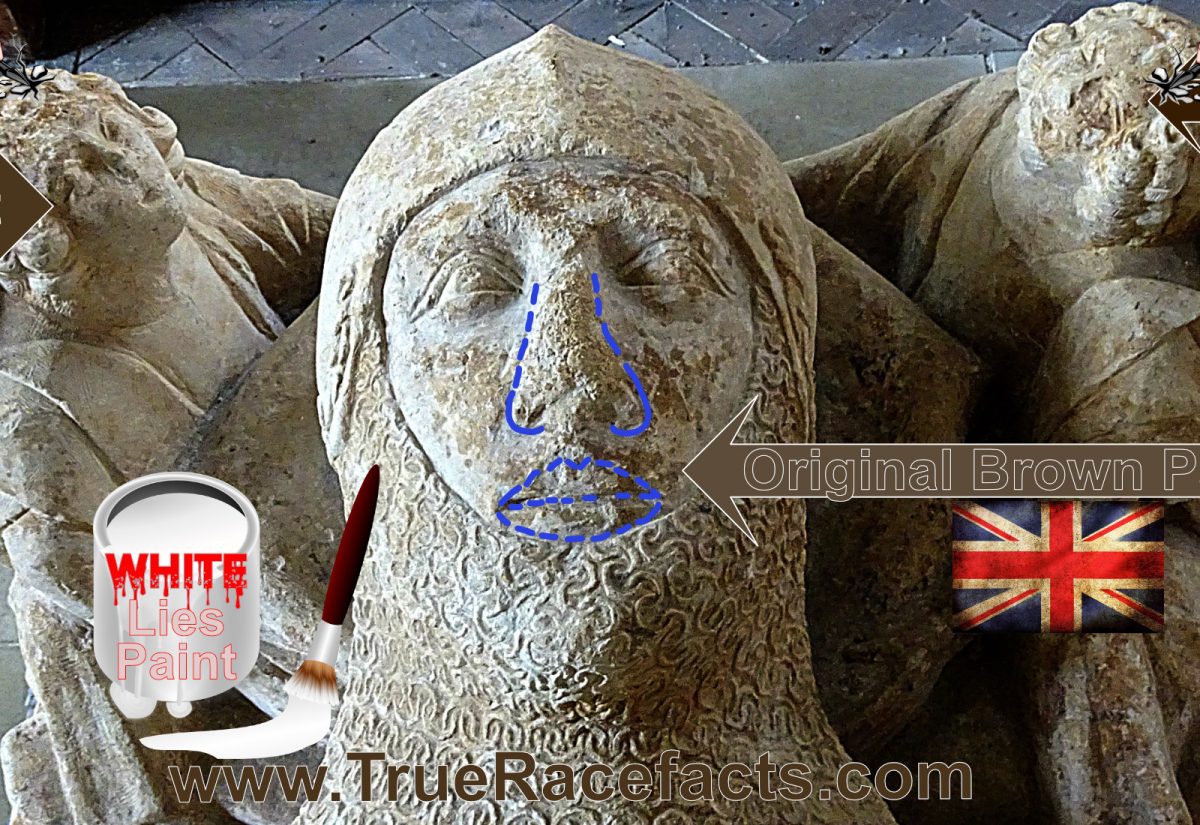
At the centre of this narrative stands Sir John de Buslingthorpe, who died between 1340 and 1344, a knight of the realm whose effigy still lies within the parish church. Unlike many medieval monuments that have been softened into anonymity, Sir John’s face remains strikingly expressive, even after later interference.
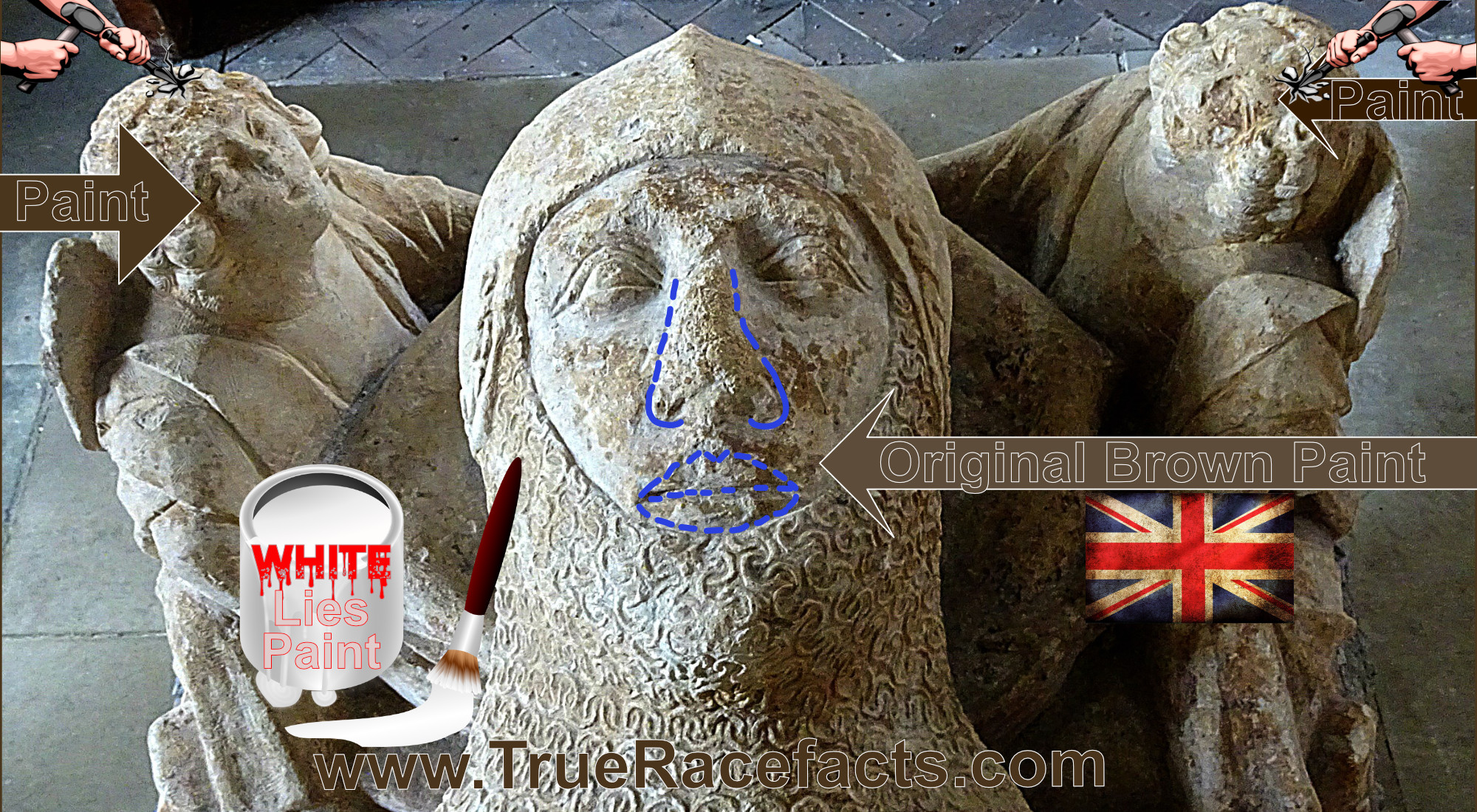
Despite attempts to reduce and soften his features, his full lips and broad nasal structure are still clearly defined. Traces of brown pigment remain on the stone, a rare survival that speaks directly to the original polychrome finish of the monument — and to the complexion it once openly displayed.
This is not symbolism.
This is phenotype in stone.
A Knight of Rank and Lineage
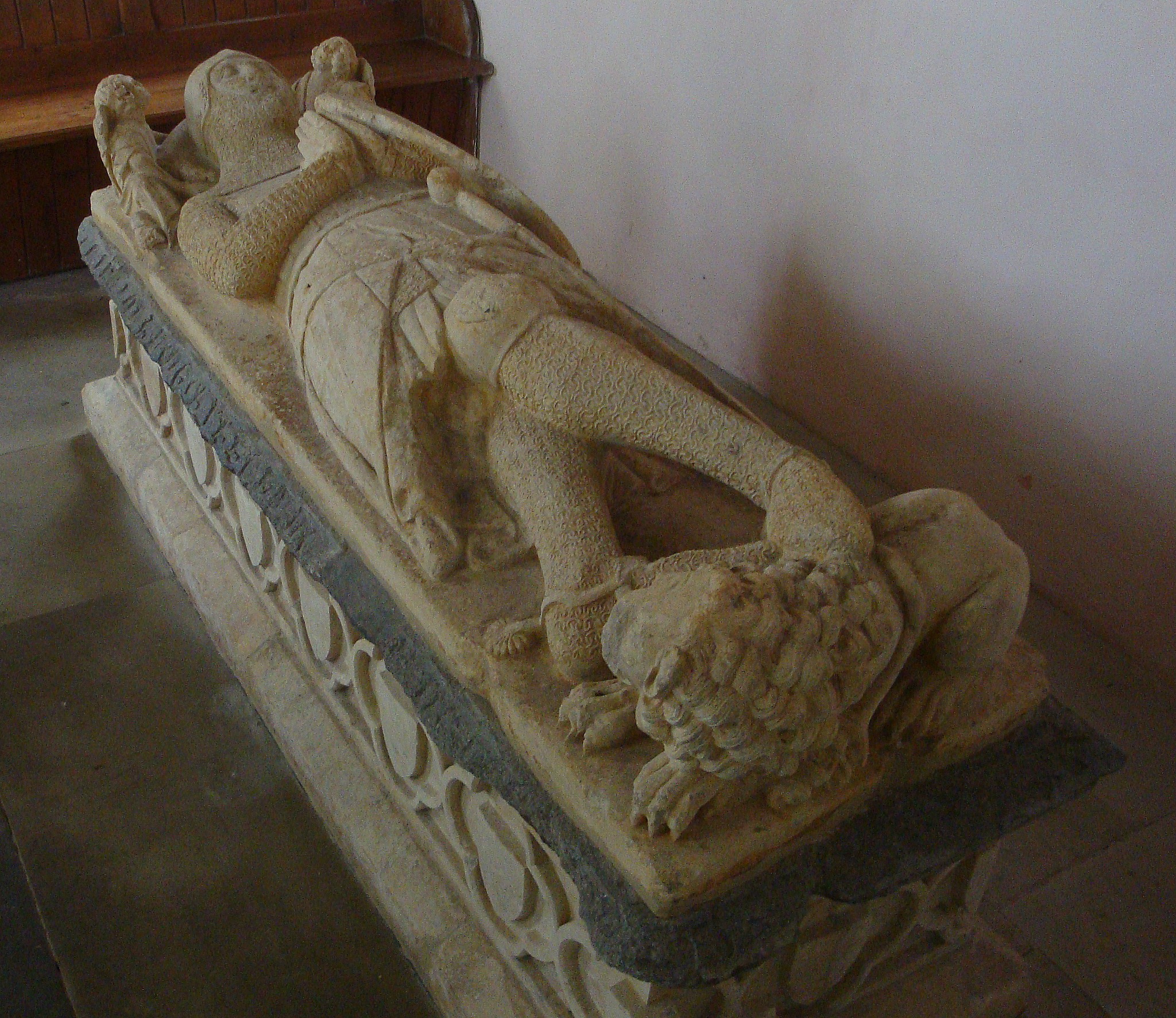
The Buslingthorpes were not obscure villagers. They were a gentle family, holding land, bearing arms, and integrated into the knightly class of medieval England. Sir John’s burial within the church itself confirms his status. Effigies were expensive, deliberate commissions, reserved for those of standing. They were intended to preserve likeness, authority, and memory.
His posture, armour, and placement all speak to a man recognised as noble in his time. But it is his face that now draws the eye — not because it is damaged, but because it has resisted damage.
Despite later chiselling and smoothing, the shape of his mouth and the breadth of his nose remain unmistakable. The brown pigment still clinging to the stone is not decorative flourish; it is residual truth.
The Fate of His Father: Richard de Buslingthorpe
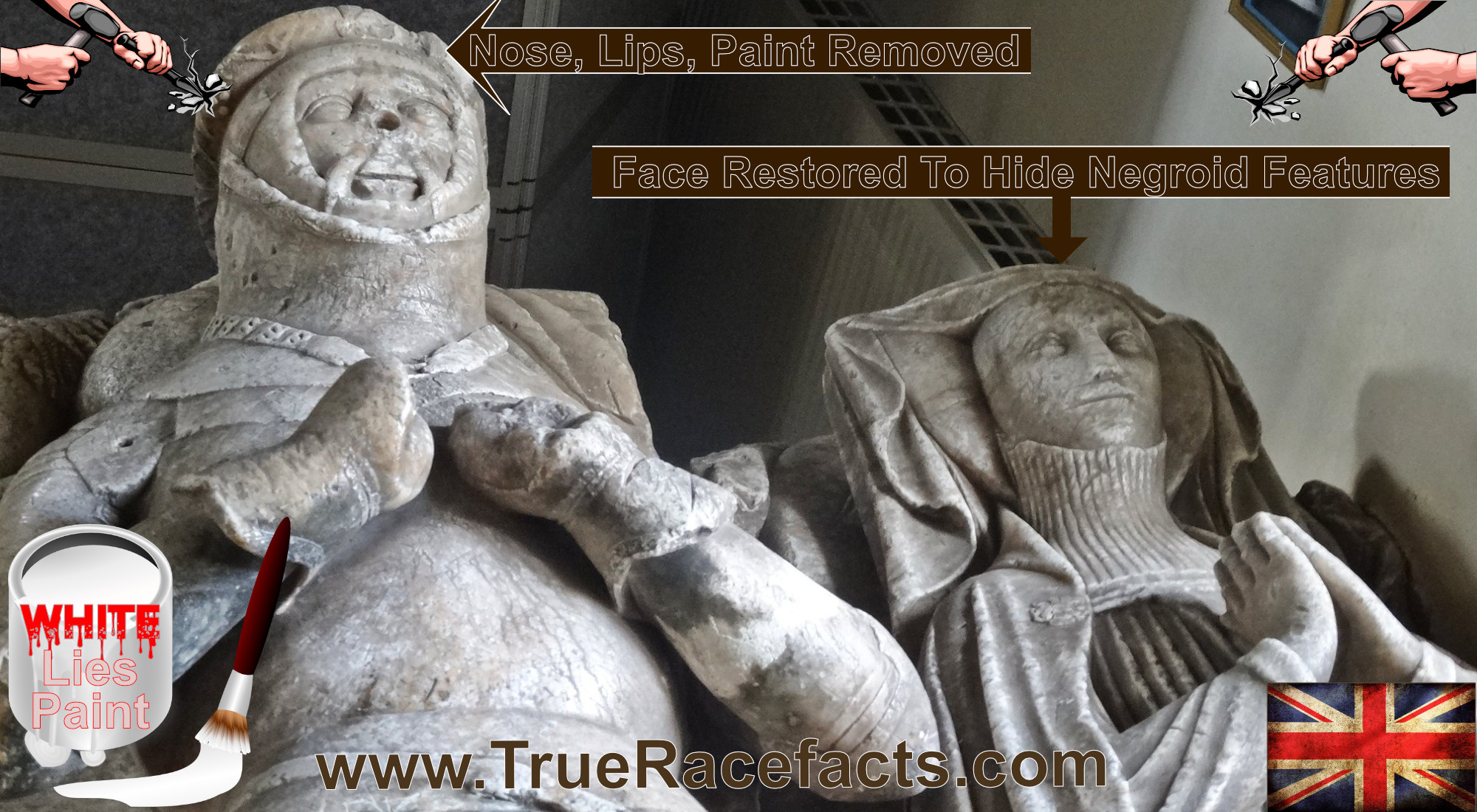
If Sir John’s effigy tells a story of resistance, that of his father, Richard de Buslingthorpe, tells a far more violent one.
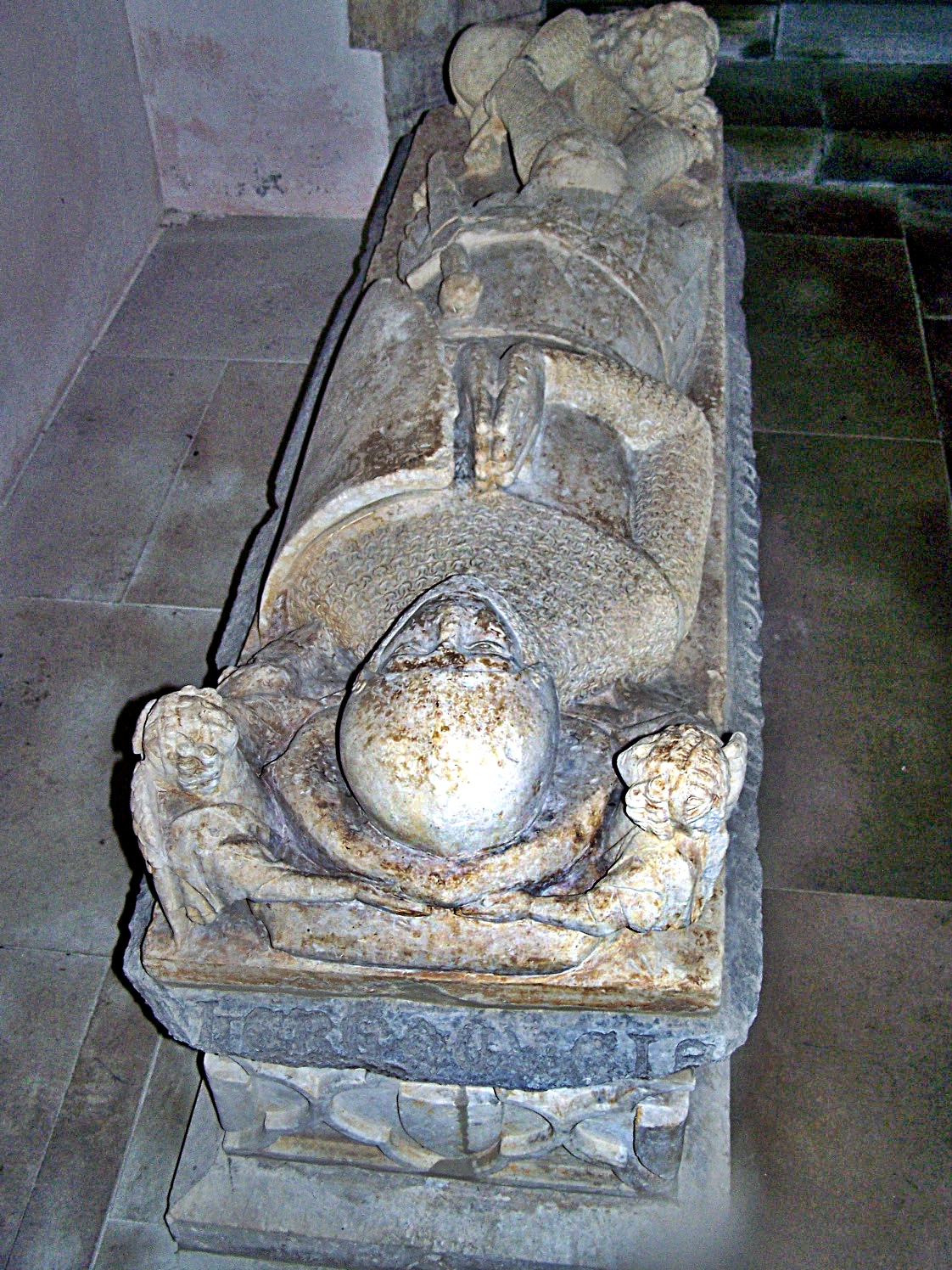
Richard’s effigy lies nearby, but his face has not survived in the same way. Where his nose should be, there is now a conspicuous cavity. His lips have been entirely removed. The damage is not uniform. It is not the gentle wearing of centuries. It is targeted, aggressive, and precise.
Stone does not decay in this pattern by accident.
Noses do not disappear cleanly.
Lips do not vanish selectively.
Holes do not form where identity once resided.
What we see in Richard’s effigy is not time.
It is intervention.
The Lions Beneath Their Feet: Kingship and Identity
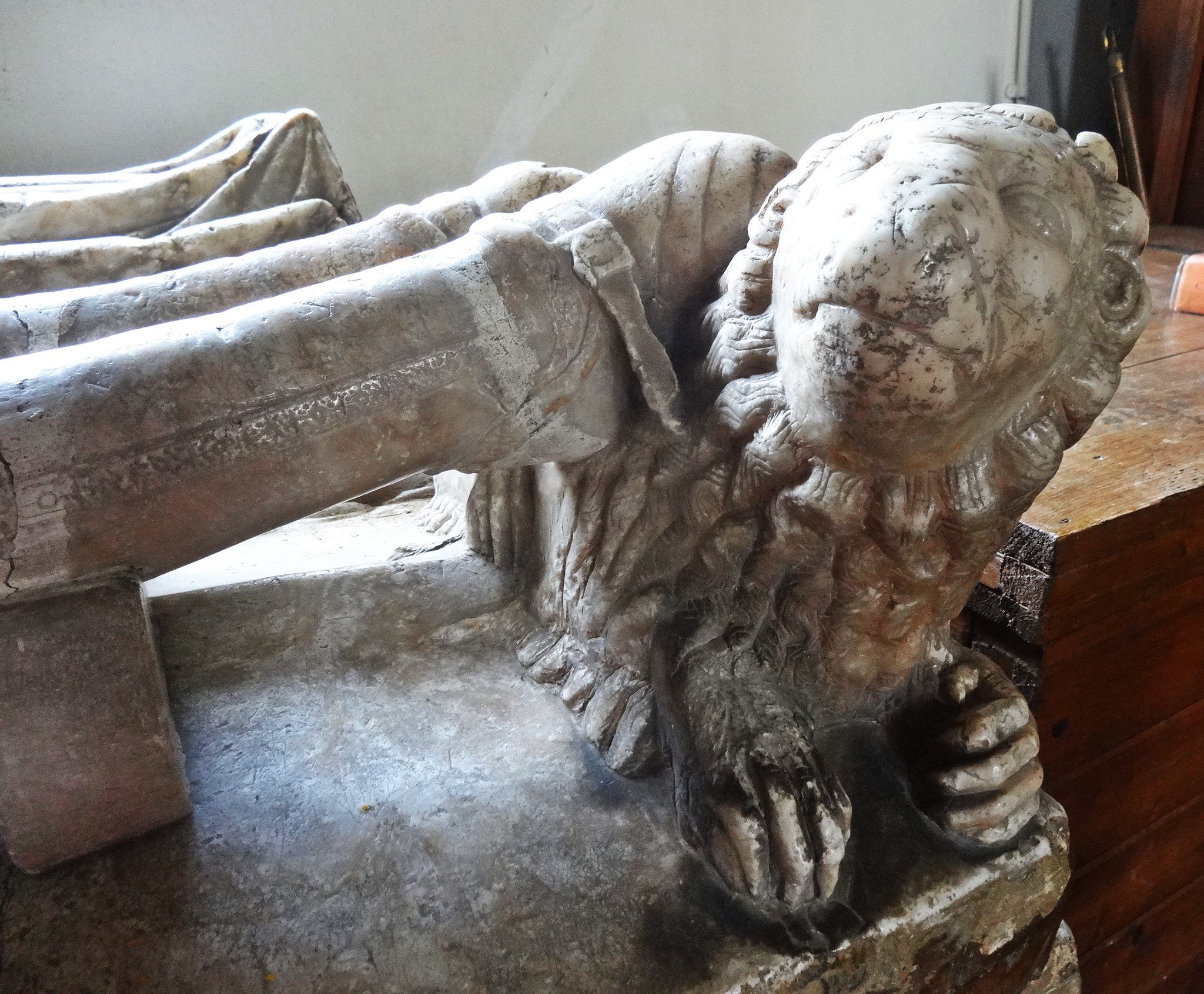
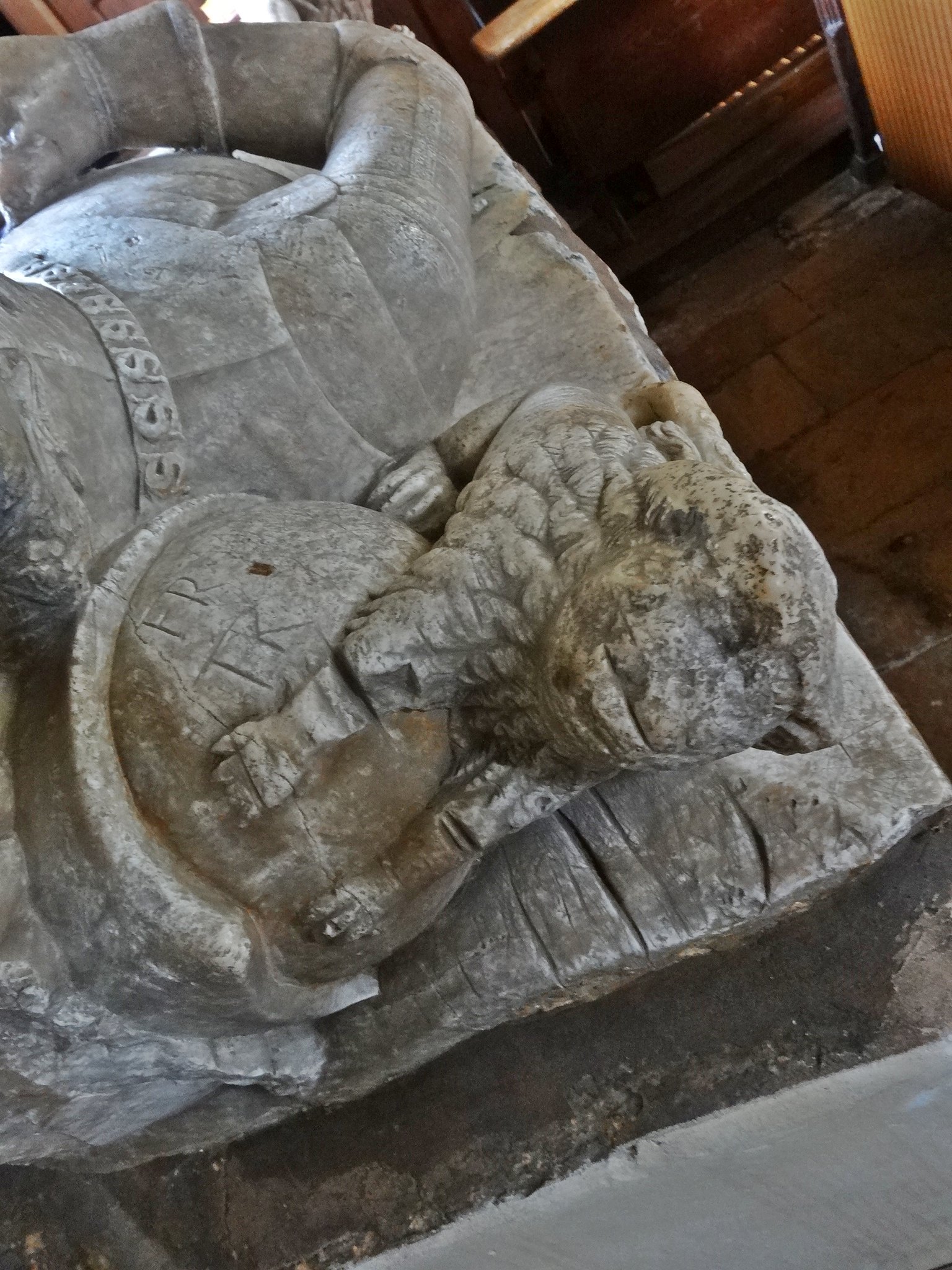
Both Sir John de Buslingthorpe and his father Richard are carved with their feet resting upon lions.
This is not decorative coincidence.
In medieval funerary art, animals beneath the feet were chosen deliberately. Dogs symbolised loyalty. Dragons represented conquest. Lions, however, were reserved for rulership, authority, and kingship. In biblical tradition, the lion is the emblem of the Tribe of Judah — the royal tribe of Israel, from which kingship was said to descend.
The lion is not a generic medieval motif. It is a Hebrew symbol of sovereignty.
That both father and son are shown standing upon lions suggests conscious identification with kingly lineage and covenant authority. This was not random workshop styling. Effigies were commissioned by families. The symbolism was intentional, chosen, and understood.
These men did not see themselves as common warriors.
They saw themselves as noble heirs of a royal tradition.
Orientation Toward Jerusalem
Equally significant is the likely eastward orientation of the monuments.
In medieval burial practice, bodies were often laid facing east in anticipation of resurrection. However, within elite and knightly contexts, orientation toward Jerusalem carried deeper meaning — spiritual alignment with the Holy City, the seat of biblical kingship, and the centre of Hebrew heritage.
When taken together:
-
Feet upon lions
-
Knightly rank and burial in honour
-
Monuments likely aligned toward Jerusalem
-
Swarthy features later altered or reduced
…the message becomes coherent.
These were not men pretending to be something else.
They were men who knew who they were.
The later damage to their faces does not negate this — it explains it.
A Pattern Across England
This pattern is not isolated to Buslingthorpe.
Across England, from Herefordshire to Yorkshire, from Worcestershire to Kent, the same phenomenon repeats:
-
Bodies intact
-
Armour preserved
-
Heraldry respected
-
Faces negotiated
Where features challenge later expectations, they are softened.
Where lips were full, they are reduced.
Where noses were broad, they are broken.
The message is consistent: status could remain, but appearance became inconvenient.
Sir John’s effigy was not spared — it was simply less successfully altered. Enough remains to expose what later hands attempted to disguise. His father’s effigy was treated more brutally, as though the features were too explicit to be tolerated.
Brown Paint and Buried Truth
The survival of brown pigment on Sir John’s effigy is especially significant. Medieval effigies were brightly painted. Colour was intentional. Complexion was not avoided.
That pigment was not added by modern imagination. It was applied by medieval craftsmen under the direction of family and community. It reflects how Sir John was seen and known in life.
That it remains at all — after chiselling, sanding, and centuries of exposure — is remarkable.
It is a quiet defiance.
Nobility That Could Not Be Denied
Despite the attempts to revise their faces, the Buslingthorpes could not be stripped of their position. They remain:
-
Knights
-
Landholders
-
Buried in honour
-
Carved in stone
Their nobility was never in question. What became contested was their appearance.
And that is precisely why the damage matters.
This is not vandalism.
It is curation of memory.
The monuments were not destroyed.
They were edited.
When Stone Becomes Testimony
Sir John de Buslingthorpe still lies as he was placed — a knight, a noble, a man of rank. His father lies beside him, wounded in effigy but not erased.
Together, they form a powerful record:
One shows us what survived.
The other shows us what was targeted.
And both expose a truth that England’s churches still hold, quietly and uncomfortably:
The medieval elite were not as uniform as later centuries wished them to be.
Stone remembers what history tries to revise.
“You can edit a monument, but you cannot erase the proportions of truth”
Fair Use Copyright Disclaimer under section 107 of the Copyright Act of 1976, allowance is made for “fair use” for purposes such as criticism, comment, news reporting, teaching, scholarship, education and research. Fair use is a use permitted by copyright statute that might otherwise be infringing.
Sources
- Images: The source is in the image description jmc4, Budby Flickr
- www.pinterest.co.uk/pin/745205069563526636/
- Historic England, “Church of St Michael, Buslingthorpe (1359510)”, National Heritage List for England, retrieved 9 April 2015
- Buslingthorpe: Church History, GENUKI, retrieved 7 February 2011
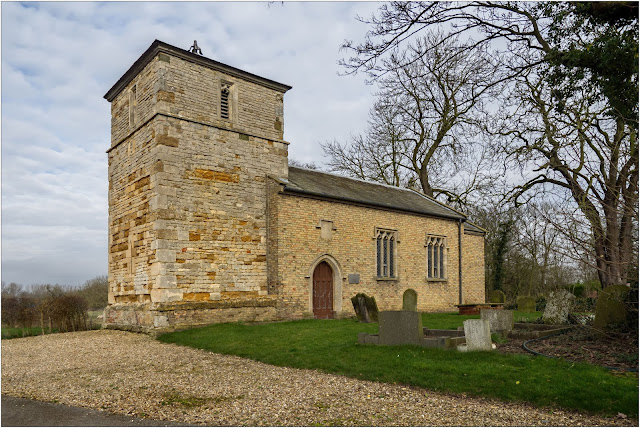
- Image of Church St Michaels http://lincolnshirecam.blogspot.com — Edited 8/1/26
 Donate