Sir Thomas Cawne (d. 1374): The Knight Who Knew Who He Was
- Guinevere Jackson
- 31 December 2025
- 0 Comment
Sir Thomas Cawne (d. 1374): The Knight Who Knew Who He Was
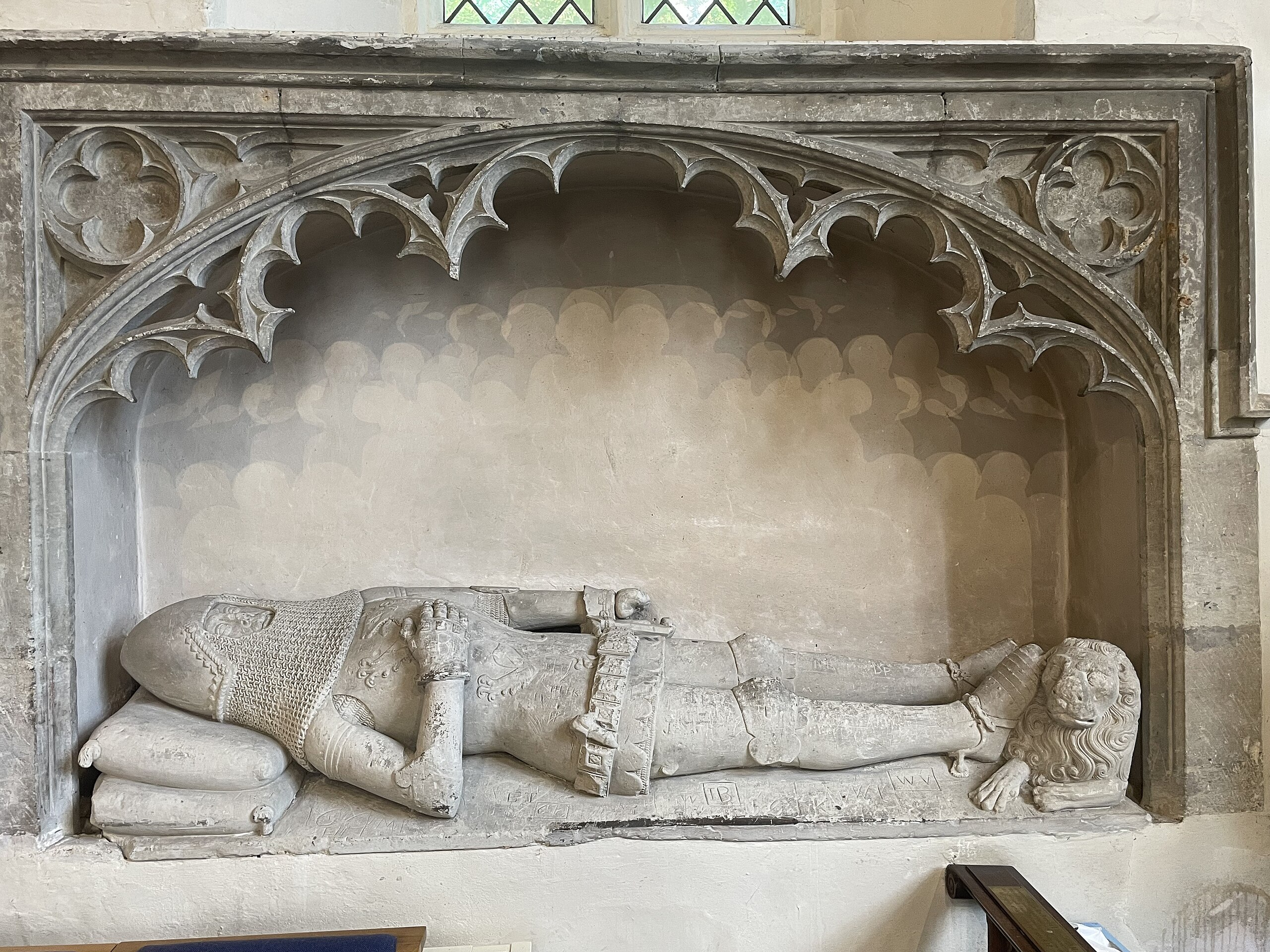
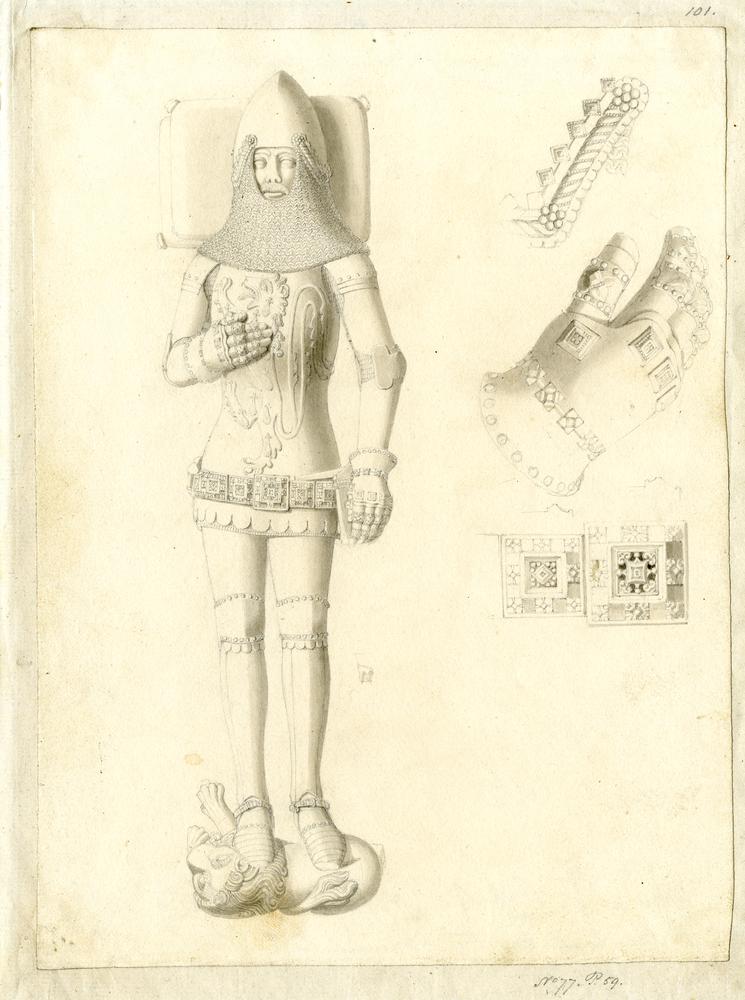
Sir Thomas Cawne, who died in 1374, belonged to England’s medieval knighthood at a time when rank, lineage, and identity were declared not only in charters and arms, but in stone. His effigy survives as testimony that he was a man of recognised status—entitled to memorialisation within the sacred space of the church, an honour reserved for those of inherited authority and noble standing.
Effigies were never casual. Every element was deliberate. Armour proclaimed rank. Posture conveyed honour. Symbols spoke a language contemporaries understood without explanation.
And Sir Thomas Cawne’s monument speaks clearly—if one knows how to read it.
Noble Status Carved in Stone
The very existence of Sir Thomas Cawne’s effigy confirms his place among the knightly elite of 14th-century England. This was a class defined by bloodline, landholding, and martial responsibility. Knighthood was not merely a title earned; it was an identity inherited and defended.
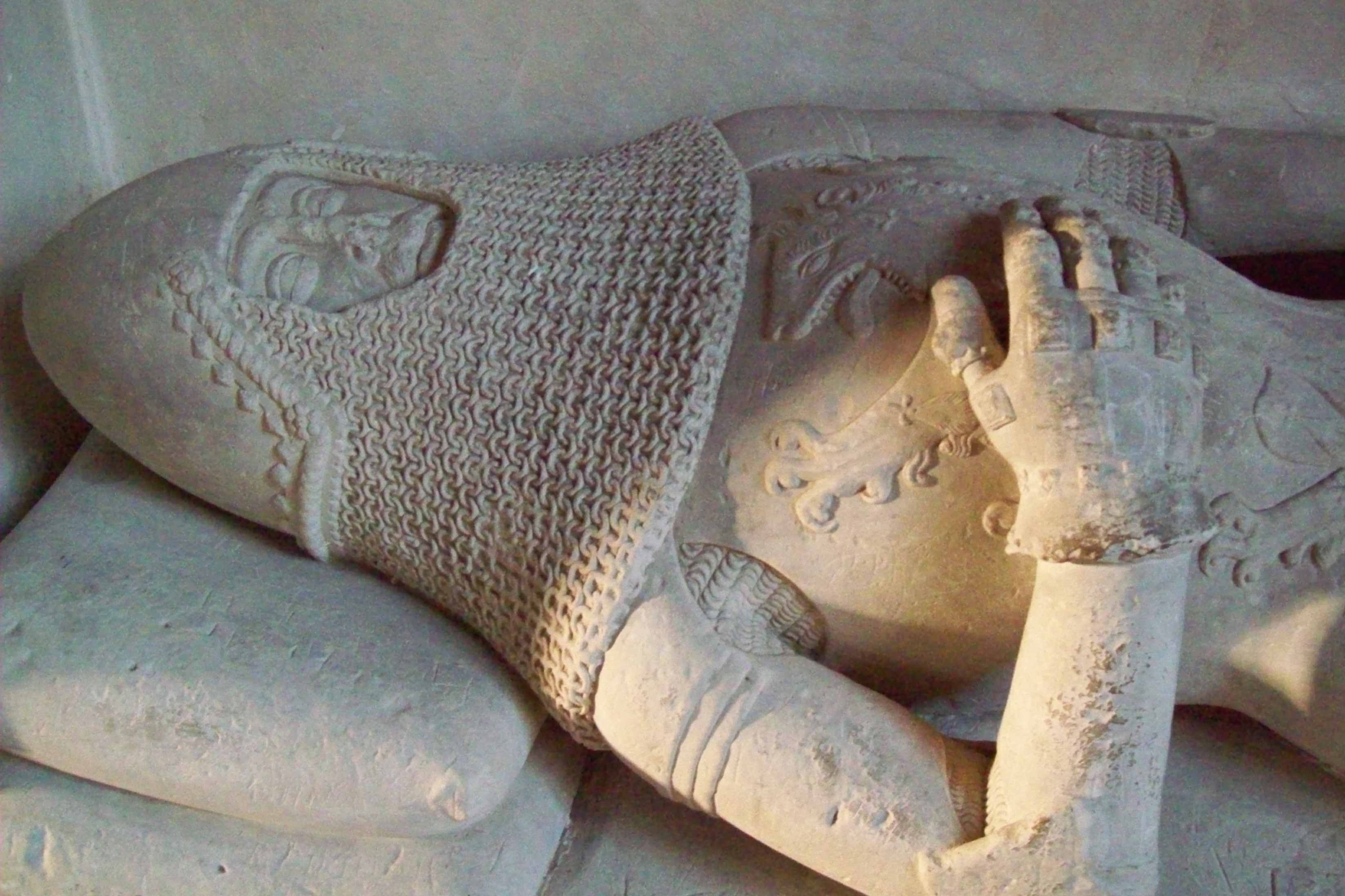
His armour is carved with care. His body is intact. His position within the church confirms recognition by both secular and ecclesiastical authority.
Yet, as with so many medieval monuments, what has been preserved and what has been altered tells a deeper story.
The Altered Face of a Medieval Knight
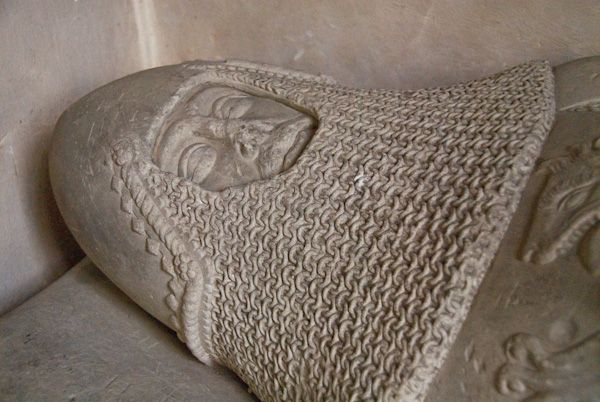
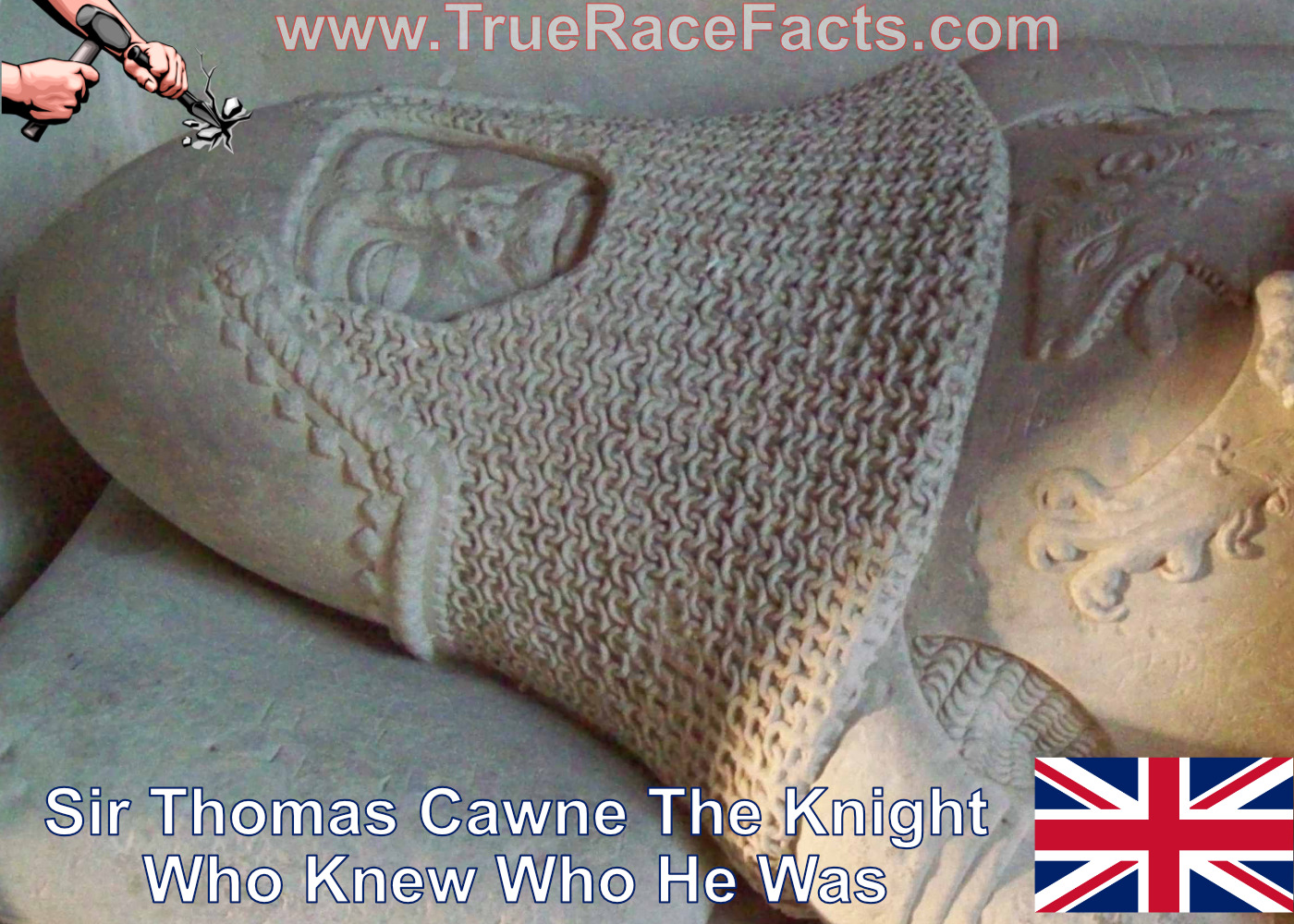
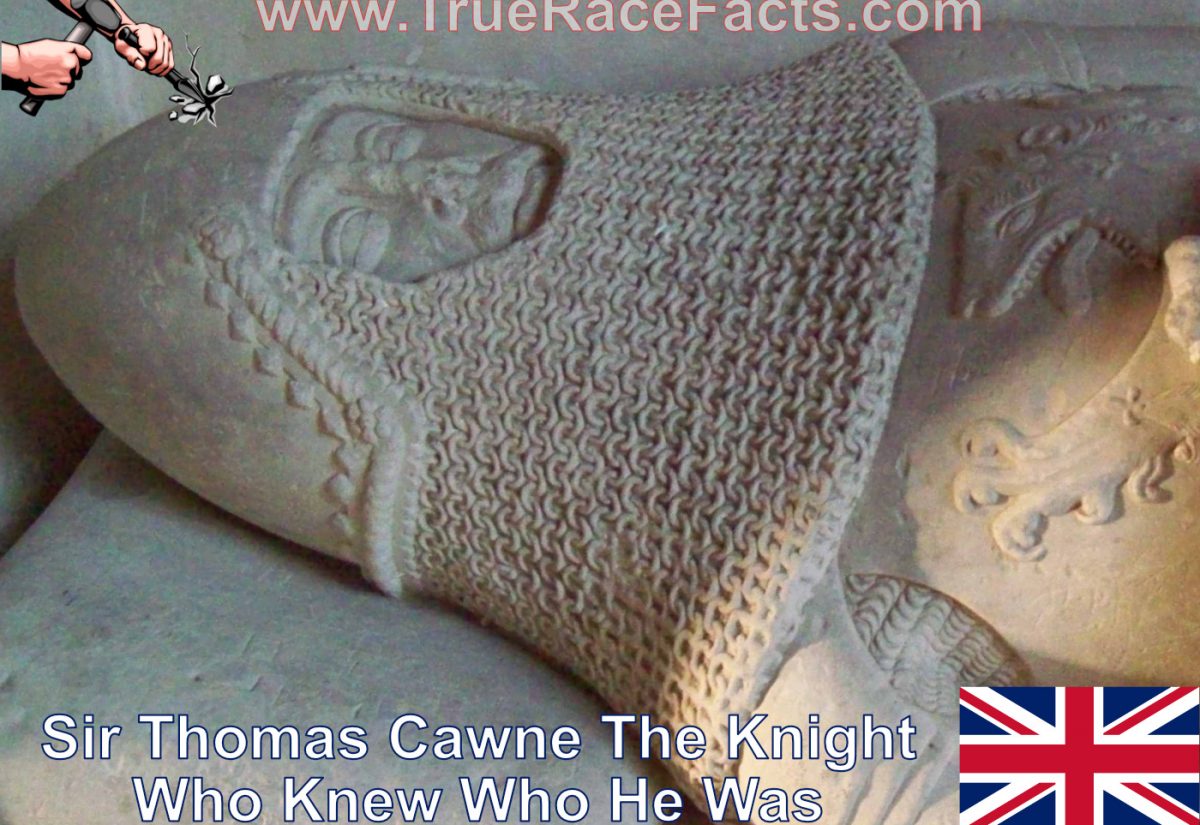
While the armour and form of Sir Thomas Cawne’s effigy remain intact, the facial features tell another story. The nose and lips—those features most closely tied to identity—are noticeably diminished in comparison to the surrounding stone.
This is not uniform erosion. It is selective.
Across England’s churches, the same pattern appears again and again:
Armour preserved
Heraldry intact
Symbols untouched
Faces softened, reduced, or reworked
Even in its altered state, the remaining outline of Sir Thomas Cawne’s face suggests broader features than later racial narratives were comfortable preserving. The stone still carries the memory of what was once clearly visible.
Stone can be abraded.
But it cannot be made to forget entirely.
The Lion Beneath His Foot
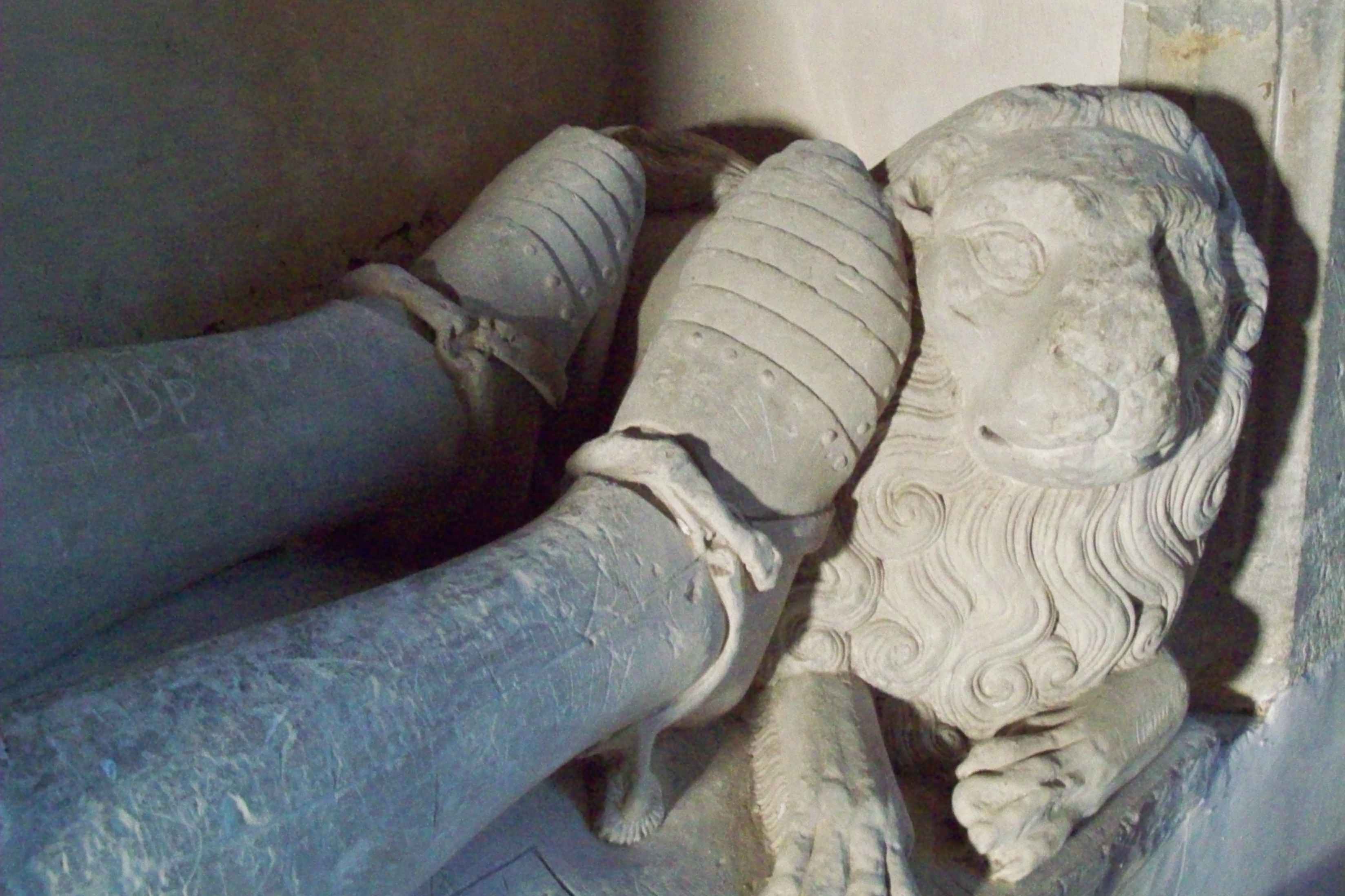
One detail of Sir Thomas Cawne’s effigy is impossible to ignore: his foot rests upon a lion.
In medieval funerary art, this was never decorative. Animals placed beneath the feet of knights carried explicit symbolic meaning, understood by a society steeped in Scripture and heraldic language.
The lion is inseparable from biblical kingship. In Scripture, it signifies Judah, sovereignty, covenant, and divine inheritance:
“Judah is a lion’s whelp.” (Genesis 49:9)
“The Lion of the tribe of Judah.” (Revelation 5:5)
To rest one’s foot upon a lion was not to honour it passively, but to stand upon what it represented—mastery, inheritance, and rightful dominion. It declared awareness of one’s place within a sacred lineage tradition.
This was visual theology carved in stone.
Sir Thomas Cawne’s lion is therefore not incidental. It is declarative. It signals that he understood authority not merely as martial strength, but as something ancient, inherited, and biblically grounded.
Identity Preserved in Symbols, Softened in Flesh
Here the contradiction becomes striking.
The lion remains.
The armour remains.
The authority remains.
But the face—the human marker of identity—has been diminished.
This is not destruction. It is curation.
The Great Deception was never carried out by smashing monuments wholesale. It worked through editing—retaining rank and symbols while quietly reshaping appearance to fit later expectations.
Sir Thomas Cawne’s effigy embodies this process perfectly. His authority could be remembered. His symbolism could be tolerated. But his true image became negotiable.
What the Stone Still Tells Us
Despite intervention, Sir Thomas Cawne’s monument continues to speak.
It speaks of a knight who knew his place in the world.
Of a nobility fluent in biblical symbolism.
Of an England whose medieval elite were more complex—and more swarthy—than later narratives admit.
You can sand a face.
You can soften a feature.
But you cannot erase meaning carved in stone.
The lion still bears his foot.
The monument still stands.
And Sir Thomas Cawne still tells the truth—to those willing to see it.
“When a knight rests his foot upon a lion, he is not claiming courage—he is declaring inheritance.”
Guinevere Jackson
Image citation Wikipedia, Find A Grave & Wikipedia
 Donate