Lady Emmeline Dawney: The Great Heiress Whose Face Was Lost, But Whose Legacy Endures
“The greatest monuments preserve more than memory. They preserve the questions that history has never answered.”
Few noble families commanded greater influence in medieval England than the Courtenays. As Earls of Devon, they controlled vast estates, advised kings, commanded armies and stood amongst the highest ranks of the English aristocracy. Through carefully arranged marriages they strengthened their position with some of the greatest families in the kingdom, and few alliances proved more valuable than that of Lady Emmeline Dawney, a wealthy Cornish heiress whose inheritance brought extensive estates into the Courtenay family.
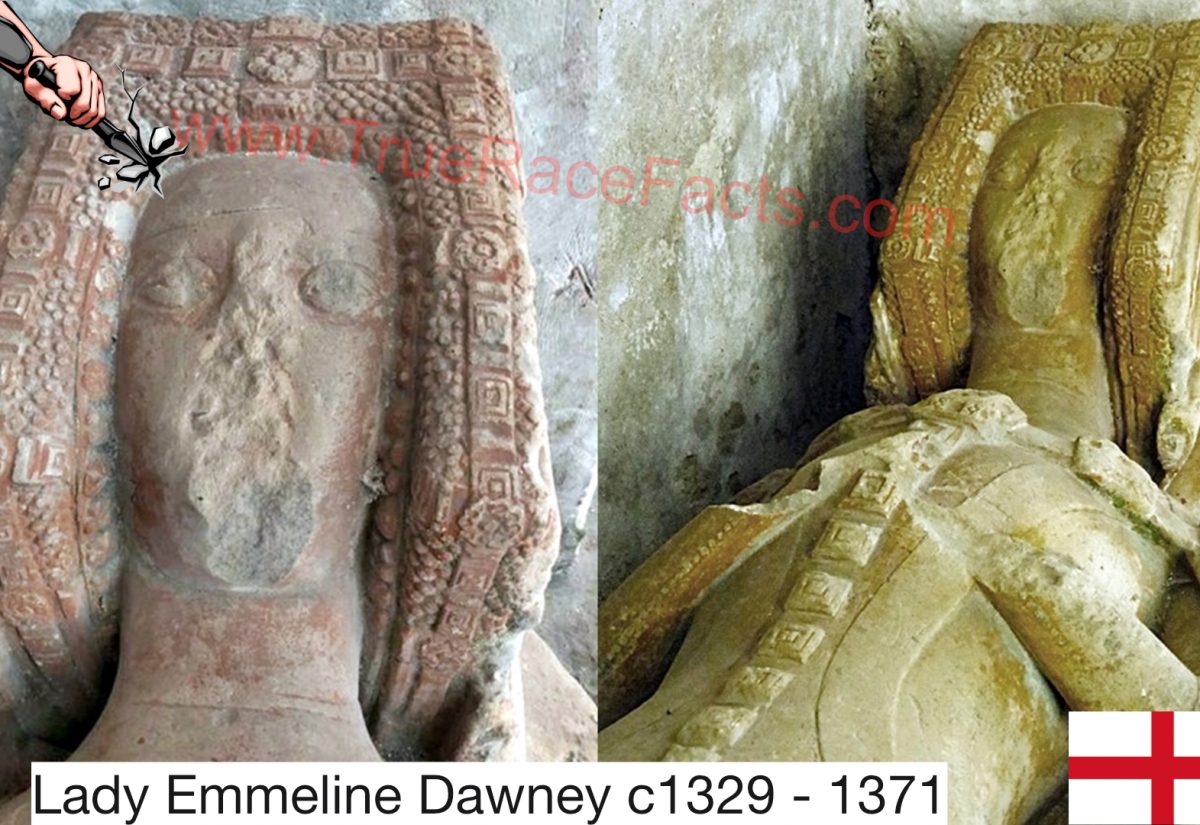
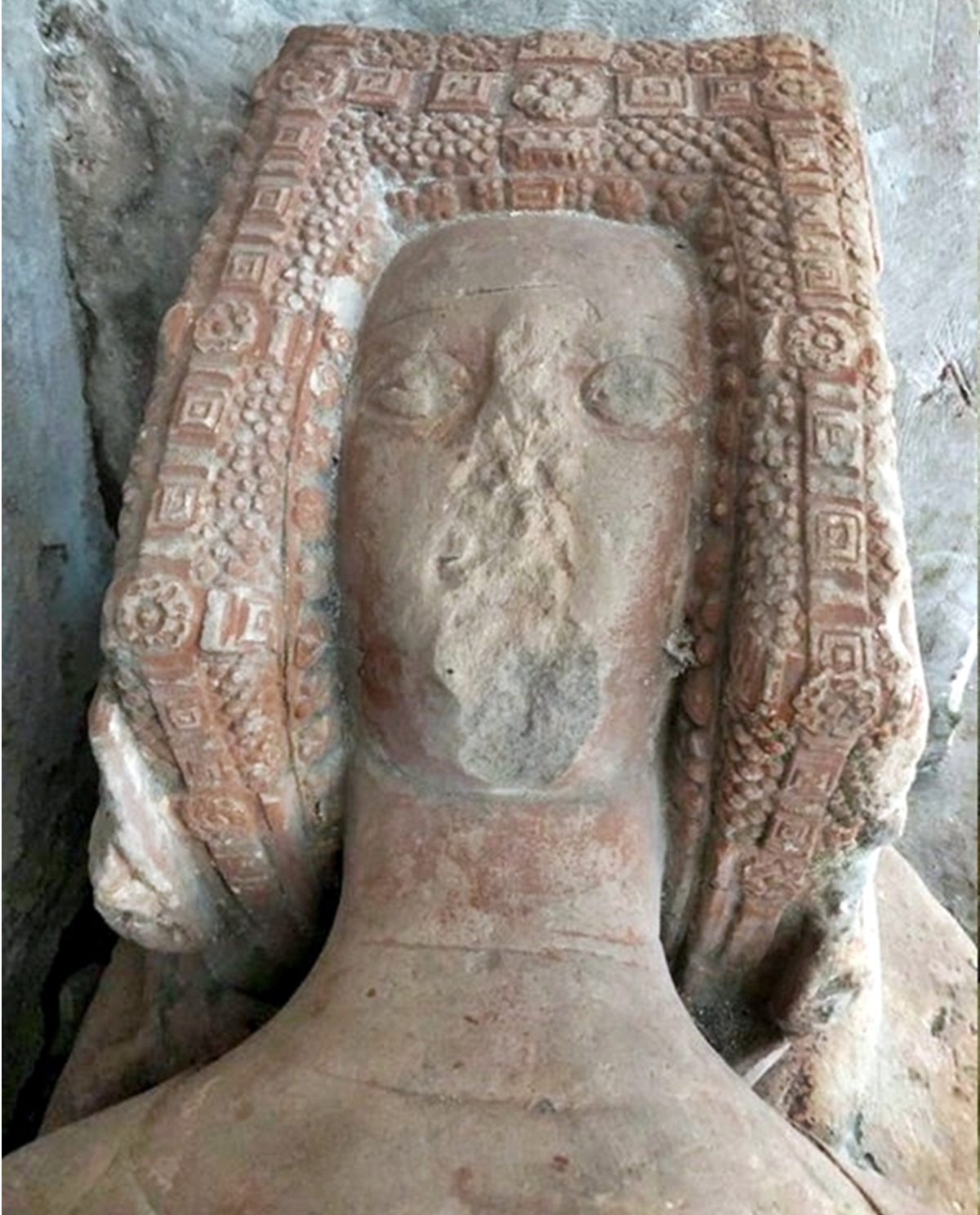
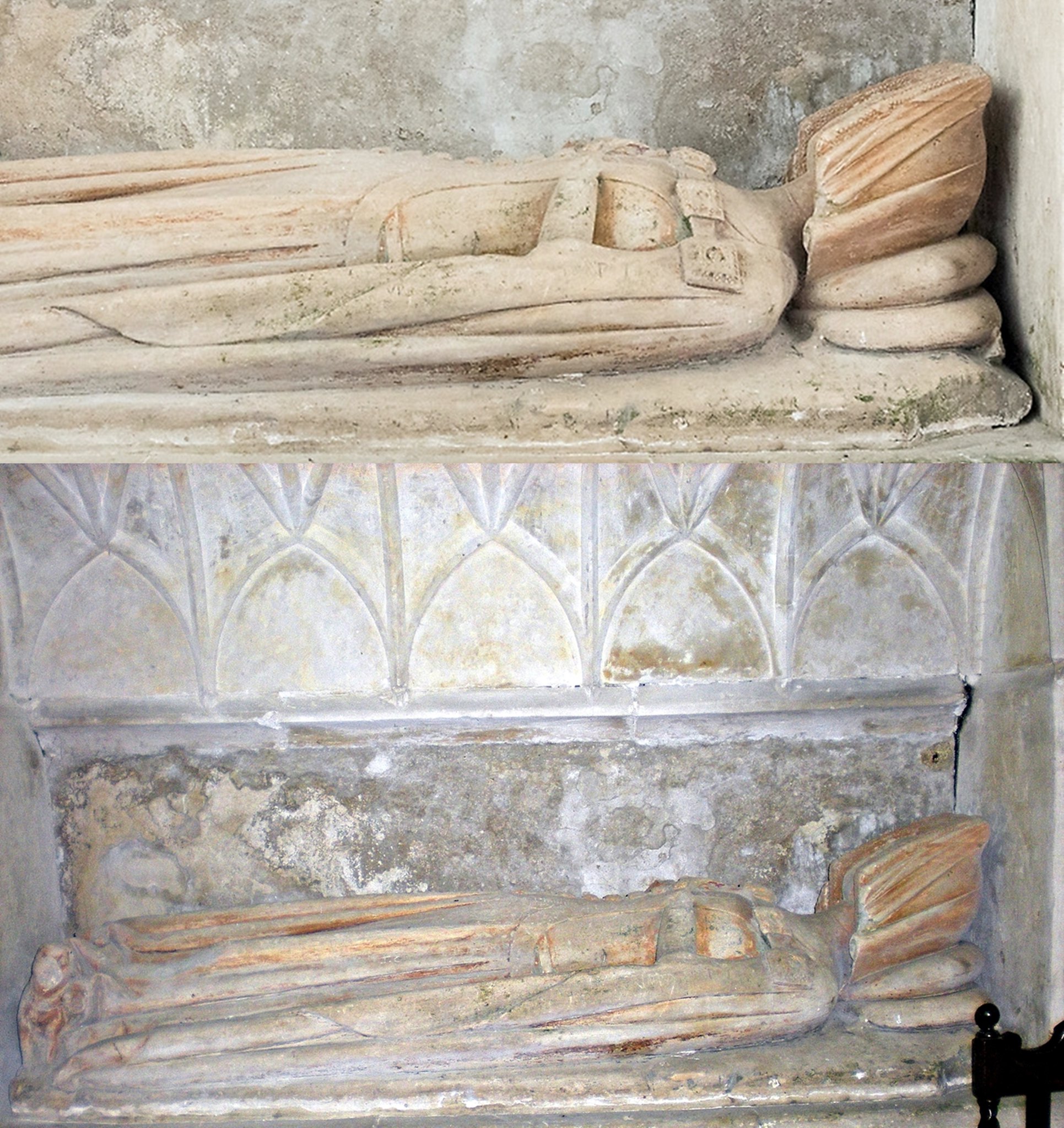
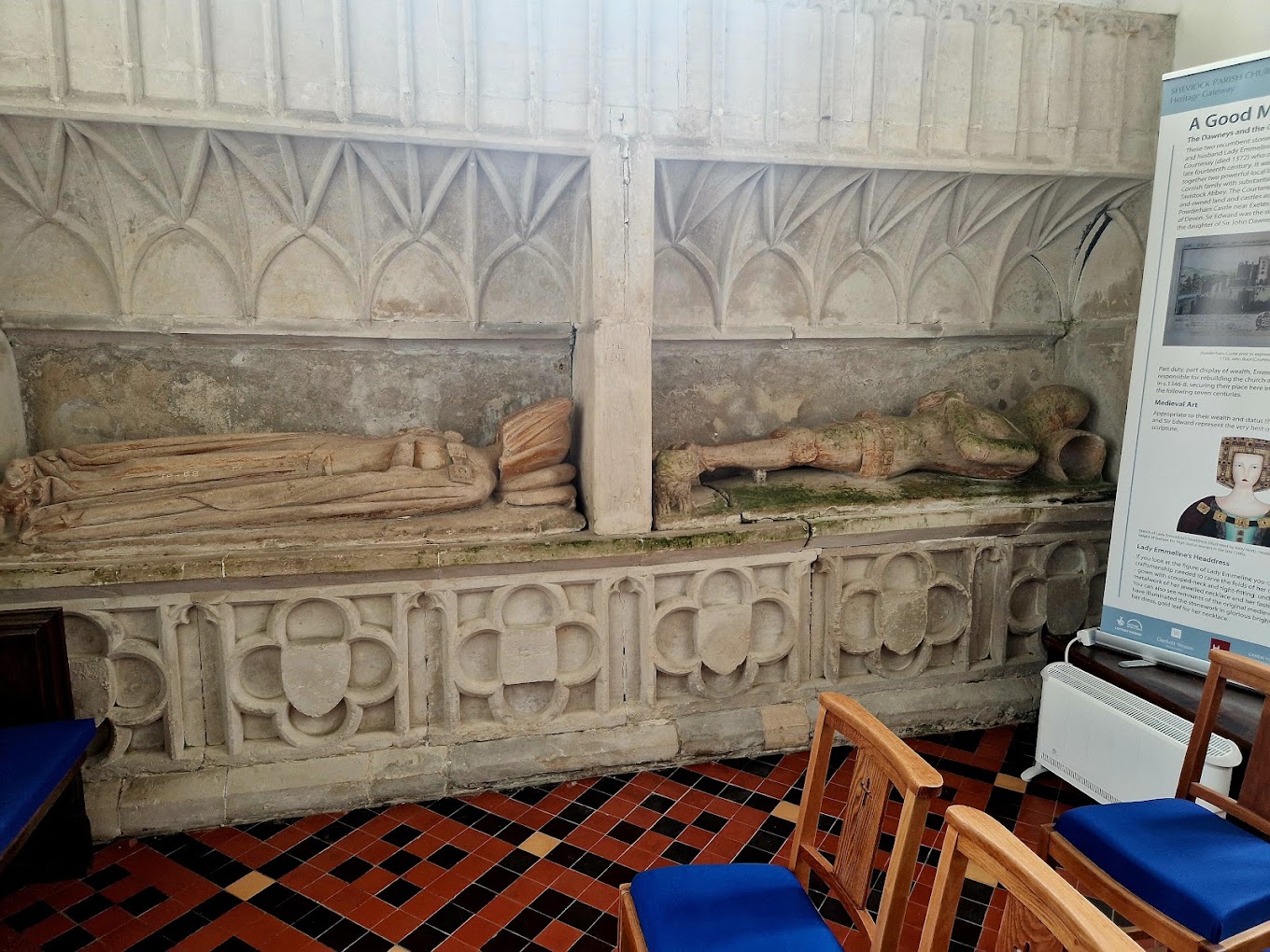
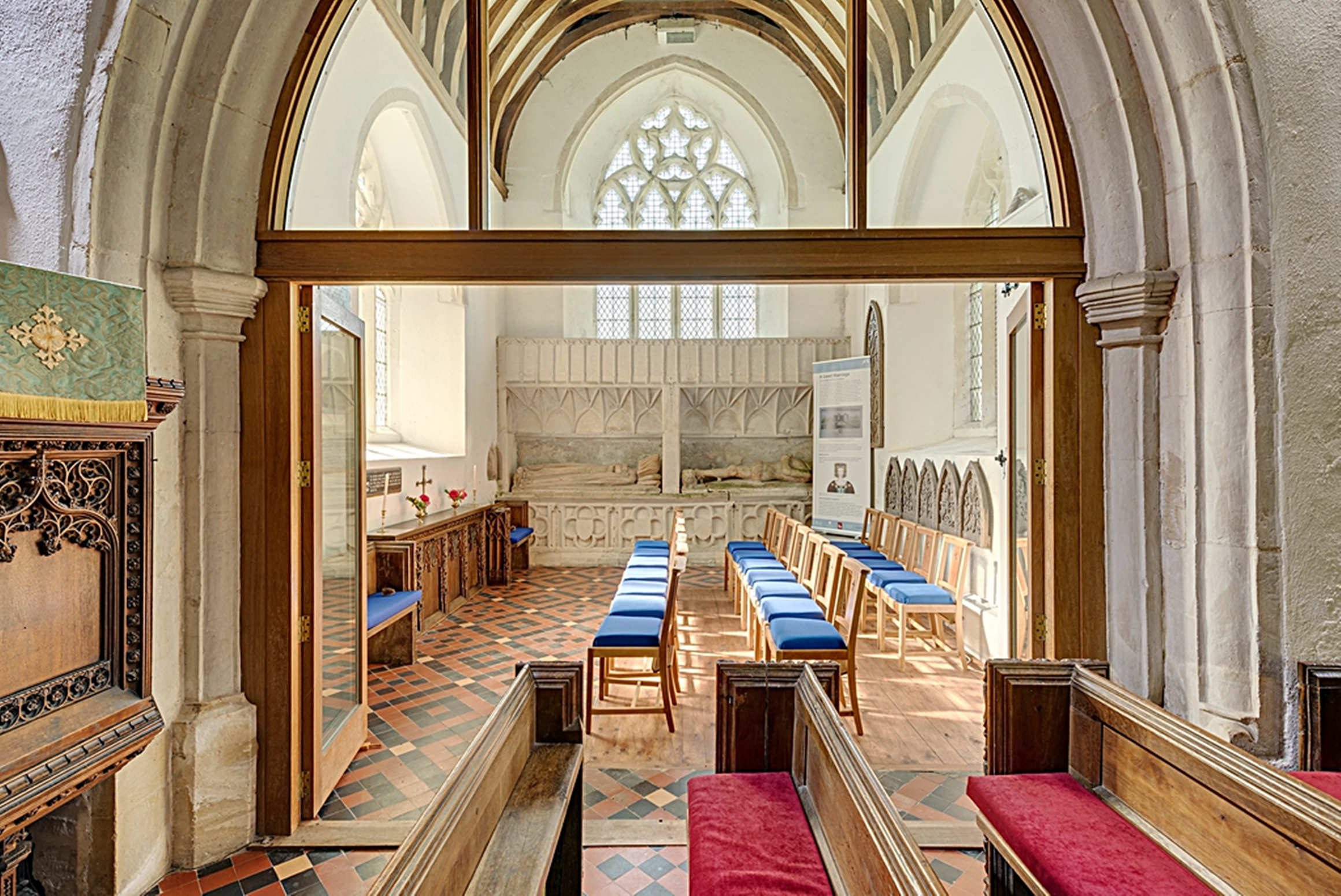
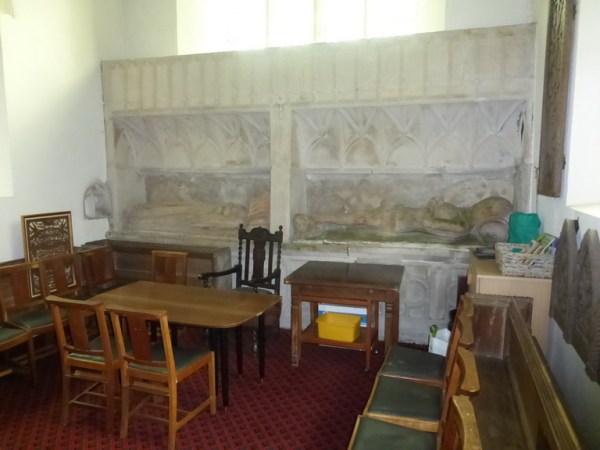
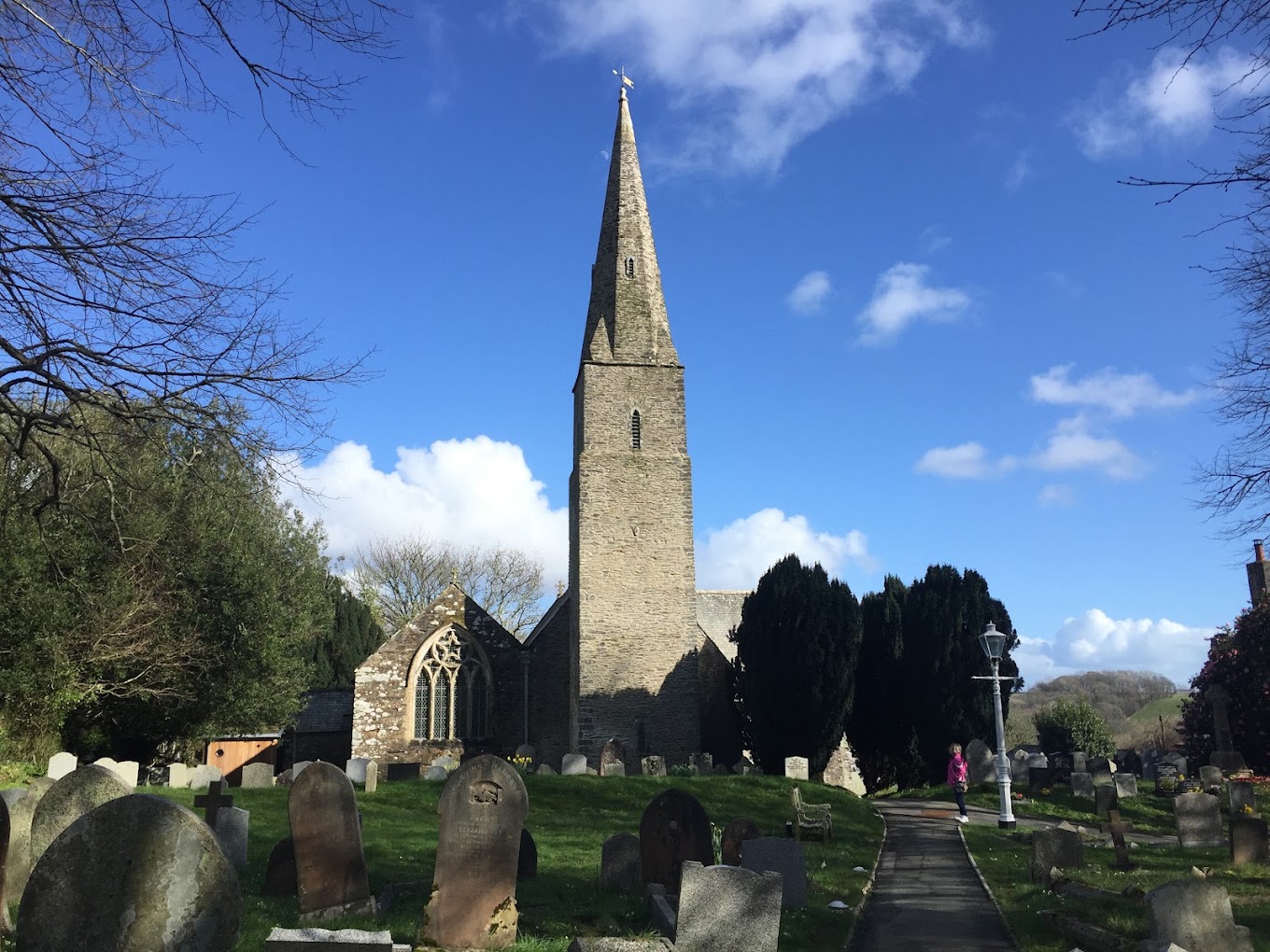
More than six centuries later, Lady Emmeline still lies beside her husband beneath their magnificent original Gothic canopies in the south transept of St Mary’s Church, Sheviock, Cornwall. It is one of the finest surviving medieval monuments in the county, yet it is not simply its beauty that captures the visitor’s attention. It is Lady Emmeline’s face.
Before examining the monument itself, it is worth understanding who this remarkable woman was.
Lady Emmeline Dawney was born around 1329 at Ingoldsby, the daughter and heiress of Sir John Dawney and Sibyl Treverbyn, herself the daughter of Sir Walter Treverbyn of Treverbyn, Cornwall, and Margery Bloyou. Through both her father and mother, Emmeline inherited connections to influential Cornish families whose wealth, landed estates and political importance had helped shape the region for generations. She was not simply born into privilege; she inherited it.
Before 1346, Emmeline married Sir Edward de Courtenay of Godlington, the third son of Hugh de Courtenay, Earl of Devon, and Margaret de Bohun. The marriage united two distinguished noble houses and brought considerable wealth into the Courtenay family.
The Courtenays themselves ranked amongst the greatest aristocratic dynasties in medieval England. Their ancestry reached back to the Norman Conquest, while their hereditary Earldom of Devon placed them amongst the kingdom’s most powerful noble families. They possessed enormous estates across the southwest of England, held positions close to the Crown and exercised considerable political and military influence throughout the Middle Ages.
Through Margaret de Bohun, the Courtenays were also closely connected to the English royal family. Margaret was the daughter of Humphrey de Bohun, Earl of Hereford, and Elizabeth of Rhuddlan, daughter of King Edward I and Eleanor of Castile. Lady Emmeline’s children therefore descended directly from one of England’s greatest Plantagenet kings, placing them within the extended royal bloodline itself.
Yet Lady Emmeline was far more than the wife of a powerful nobleman.
Historical records state that she brought with her an estate consisting of fifteen large manors in Cornwall, making her one of the most significant heiresses in fourteenth-century Cornwall. In medieval England, land was wealth, influence and power. These estates substantially strengthened the Courtenay family’s already formidable position within the county, illustrating that marriages amongst the nobility were often as much about political alliances and landed wealth as they were about family.
Lady Emmeline and Sir Edward became the parents of Edward de Courtenay, later Earl of Devon, who continued one of England’s greatest noble dynasties. Their younger son, Sir Hugh Courtenay, also established influential alliances through marriage, further extending the family’s prominence throughout the southwest of England.
Lady Emmeline died at Haccombe on 20 March 1371, but her monument has survived the passing of more than six centuries.
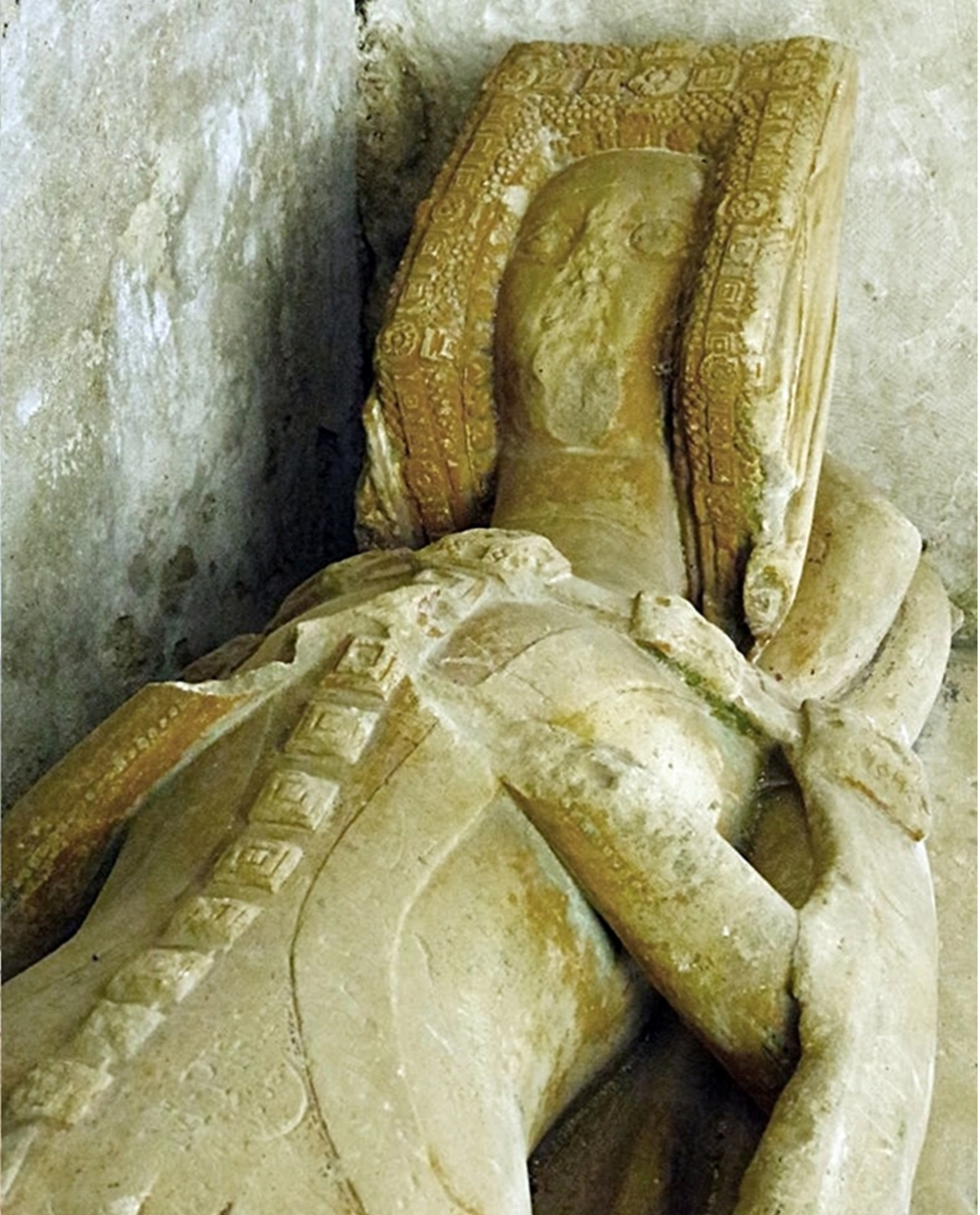
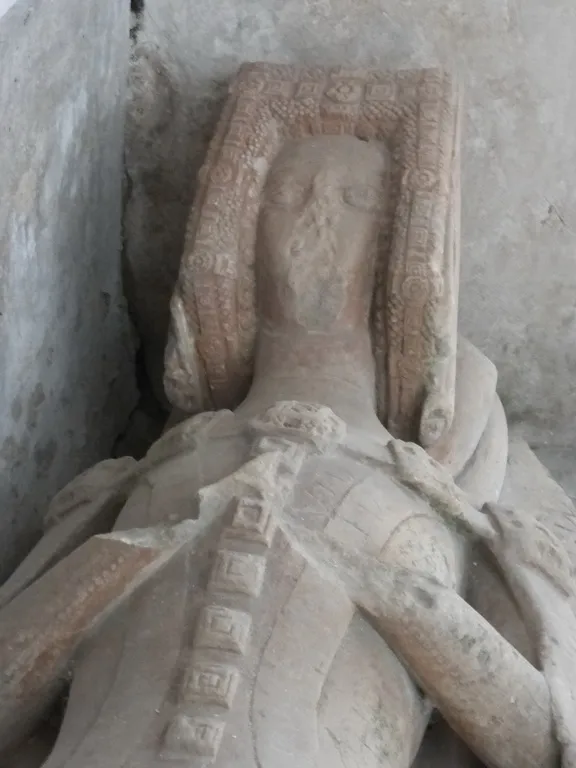
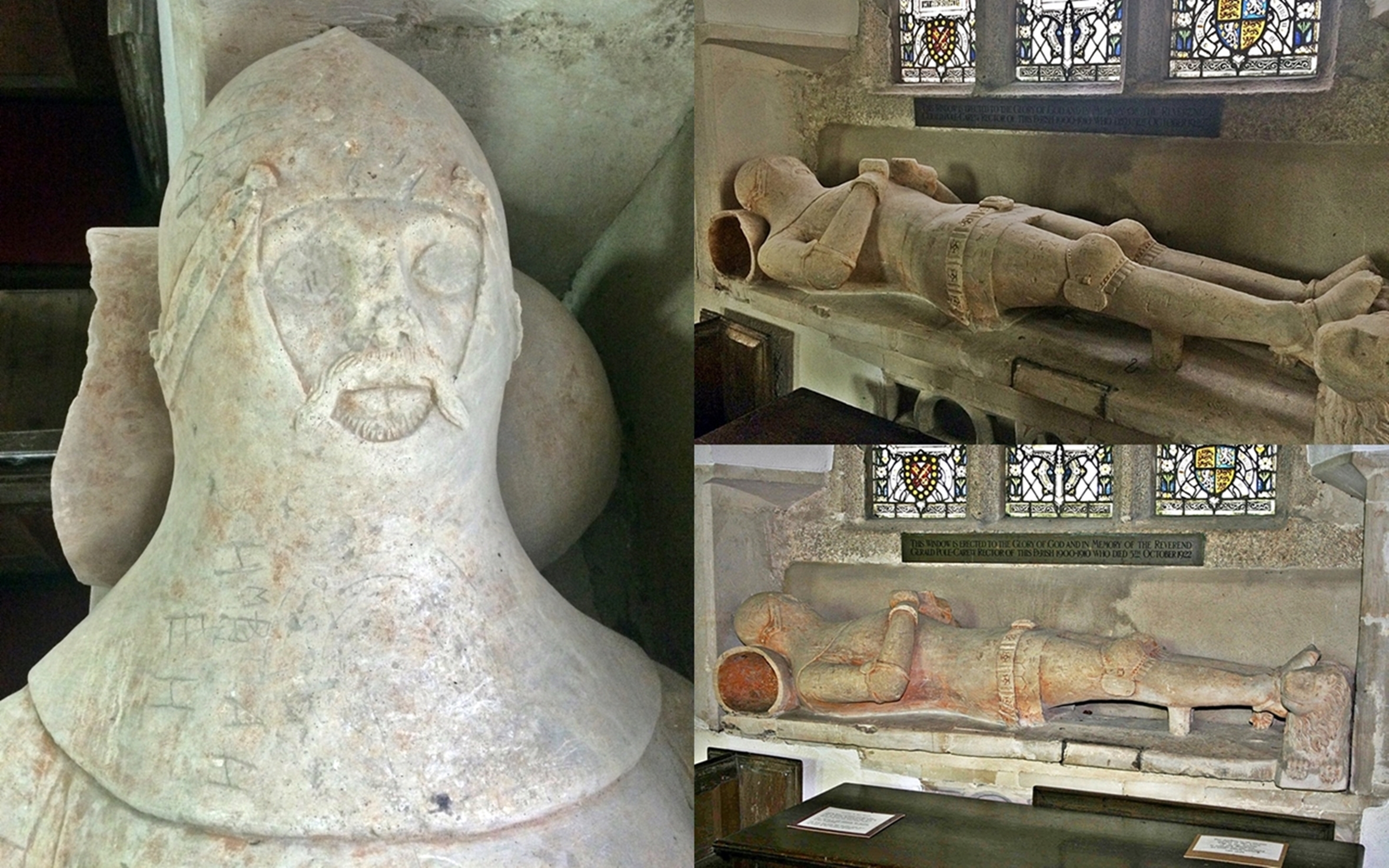
Standing before the effigy today, the quality of the medieval craftsmanship remains remarkable. The drapery, heraldic details and carving beneath the original Gothic canopy continue to demonstrate the skill of the sculptor who created one of Cornwall’s finest medieval monuments.
Yet it is Lady Emmeline’s face that immediately commands attention.
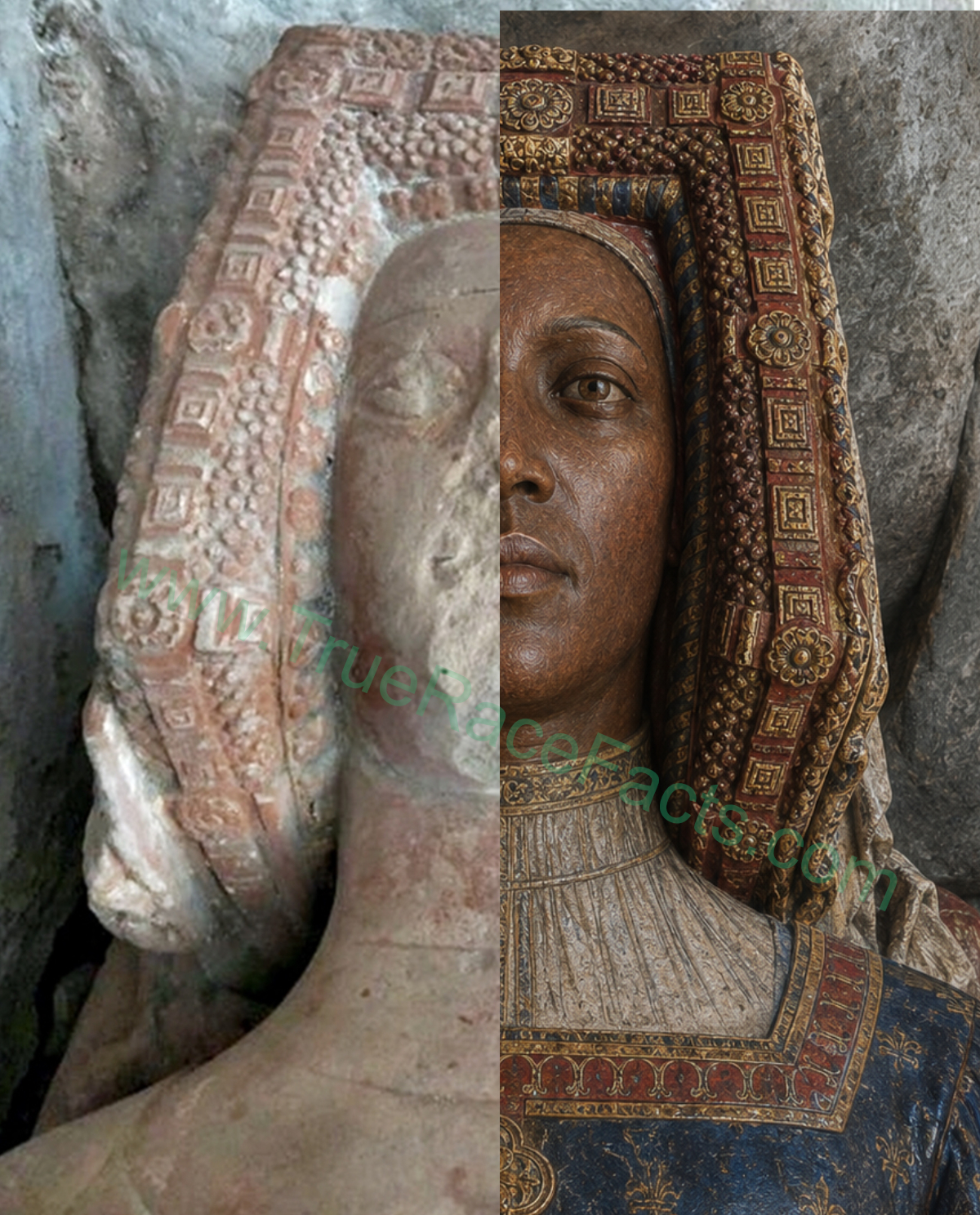
The nose has been deliberately removed, while much of the lips have also been cut away. Despite this damage, enough of the original outline remains to show precisely where both features were originally carved. The surviving contours make it clear that the sculptor had carefully modelled the nose and mouth before they were later lost.
The monument itself cannot tell us who was responsible or when the damage occurred. Whether it resulted from iconoclasm, deliberate defacement, later alteration or another episode in the monument’s long history cannot be stated with certainty.
What can be observed, however, is that the facial features visible today are no longer those originally carved by the medieval mason.
There is a profound irony in that fact.
Here lies a woman whose inheritance strengthened one of England’s greatest noble houses. Her descendants inherited the Earldom of Devon, her family connections reached into the Plantagenet royal dynasty, and her wealth helped shape the history of medieval Cornwall. Yet the first thing many visitors notice is not her extraordinary lineage, but the absence of the face the sculptor originally intended the world to see.
Lady Emmeline Dawney entered history as one of the great heiresses of fourteenth-century Cornwall. Her estates strengthened one of medieval England’s most powerful noble dynasties, her descendants carried forward the Courtenay name, and her bloodline reached into the Plantagenet royal family. Yet today it is not her wealth that first captures the visitor’s attention, nor her ancestry, nor even the magnificence of the monument beneath which she lies. It is the absence of the face the medieval sculptor originally carved.
More than six hundred years later, the stone still preserves enough of its original outline to remind us that something has been lost.
Whether through iconoclasm, deliberate defacement or another chapter of history, the monument continues to ask its own silent question.
And like all great monuments, it invites every visitor to examine the evidence for themselves.
“The chisel that created this face honoured a man. The hands that later altered it leave us asking why.”
Guinevere Jackson
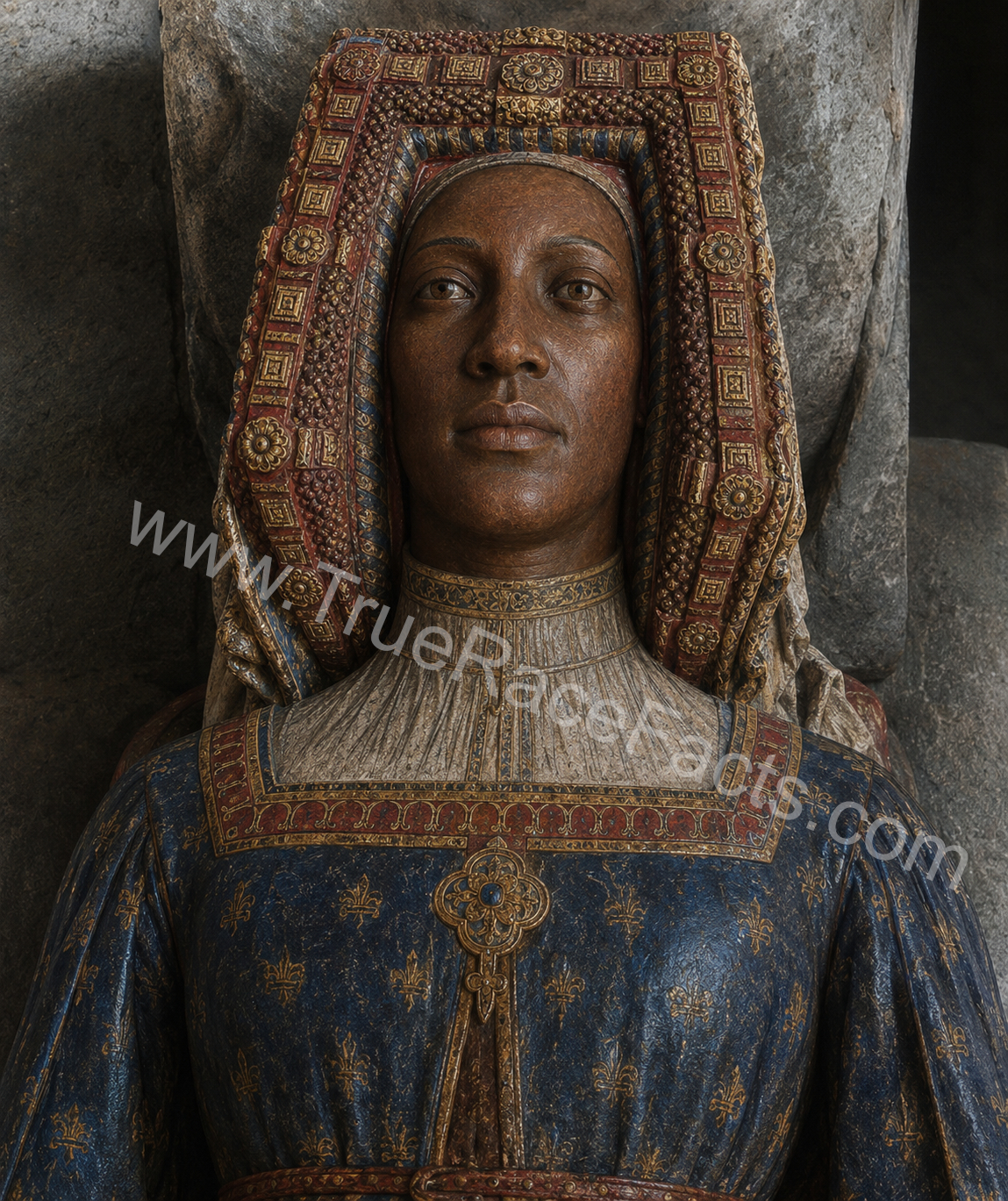
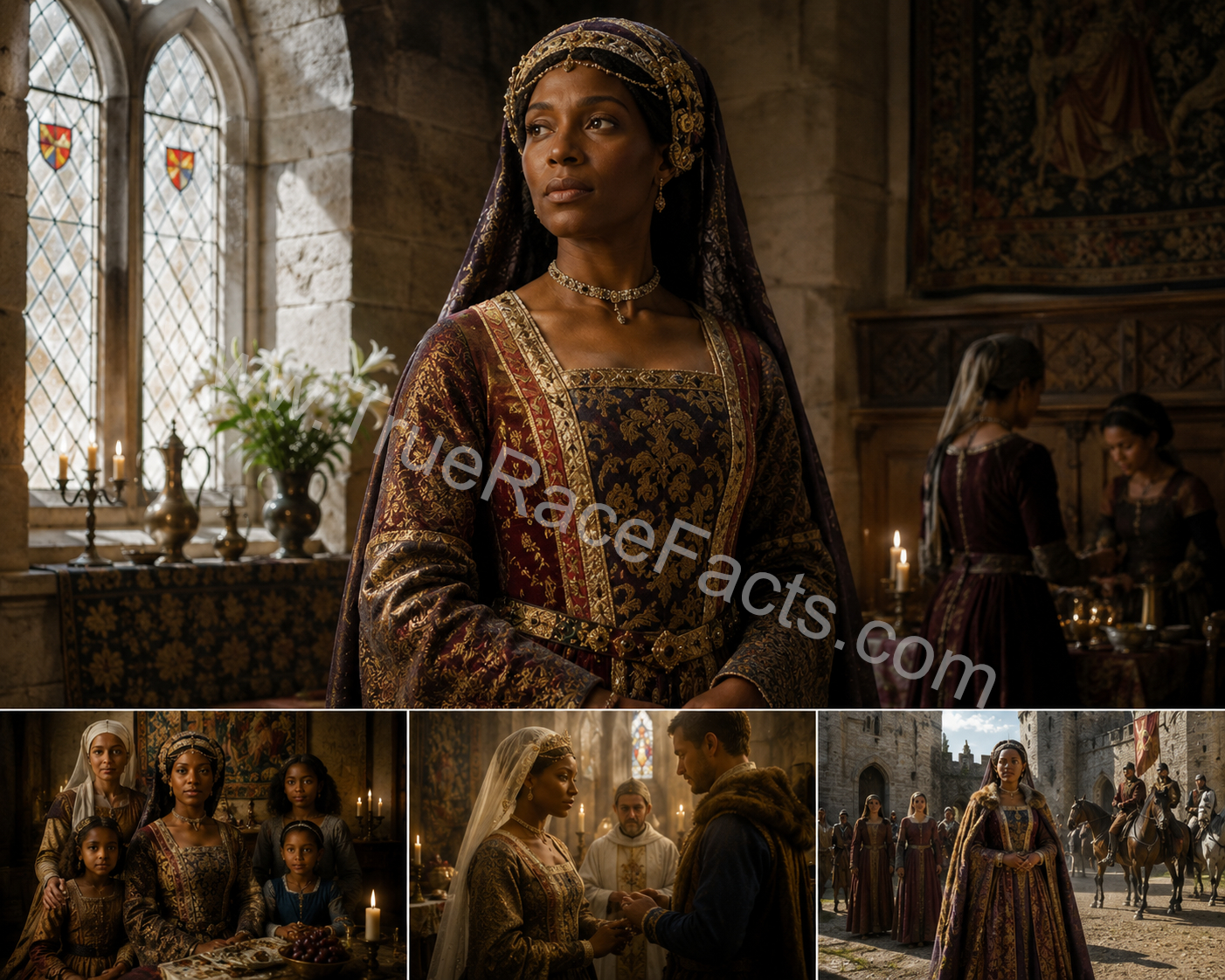
Image citation Flickr Ai for the facial reconstruction created by Guinevere Jackson
 Donate