John Fitzalan Earl of Arundel The Warrior Earl 15 Century
- 31 August 2026
- 0 Comment
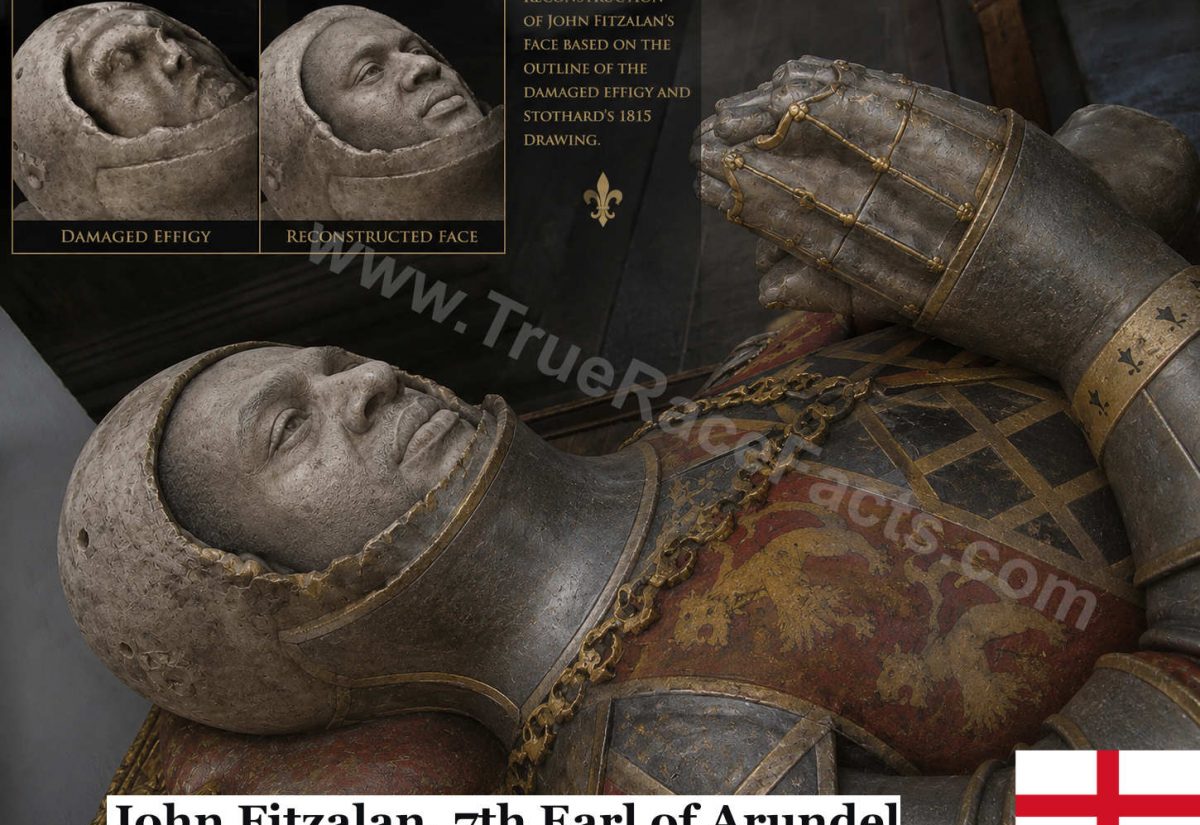
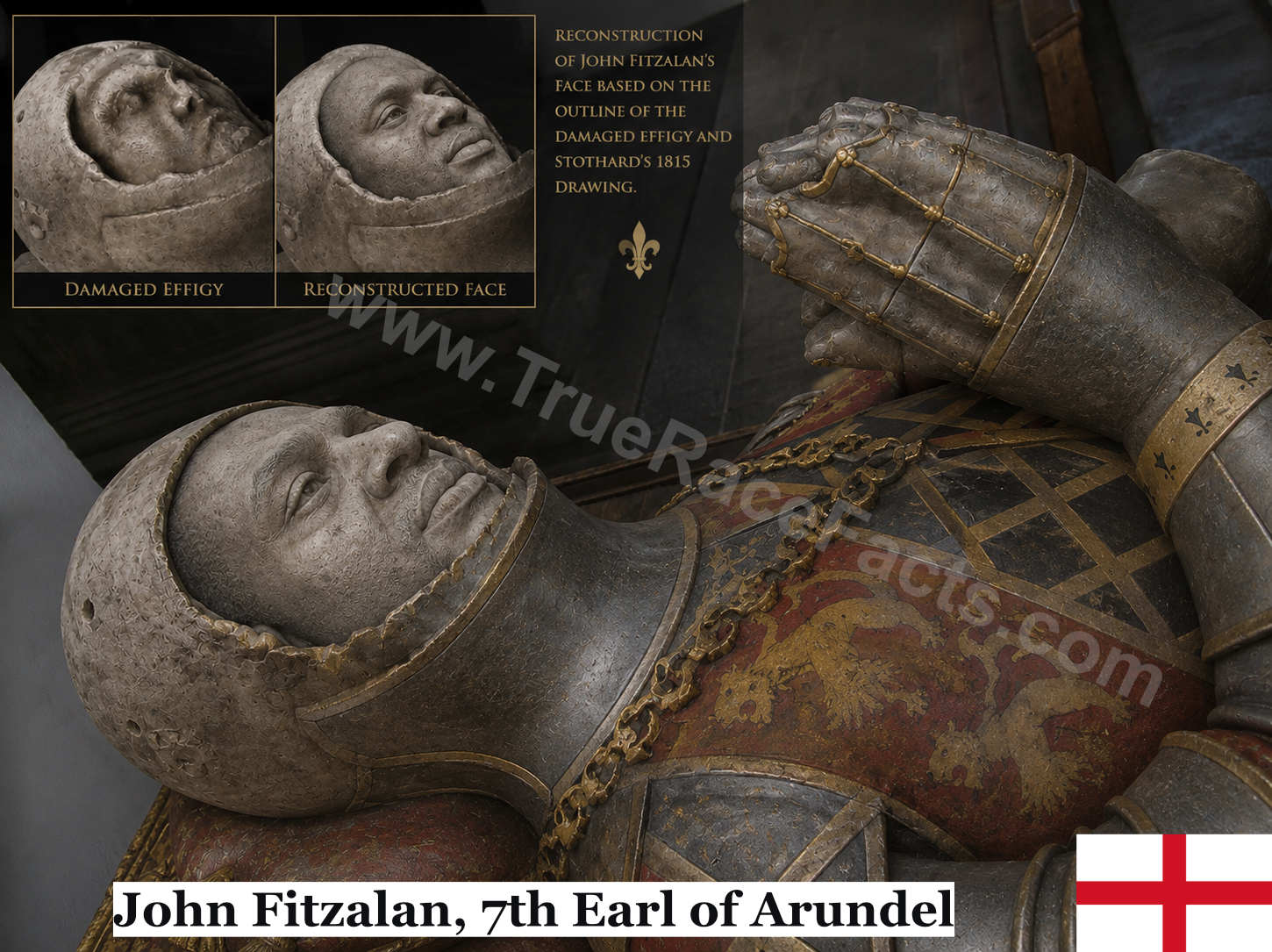

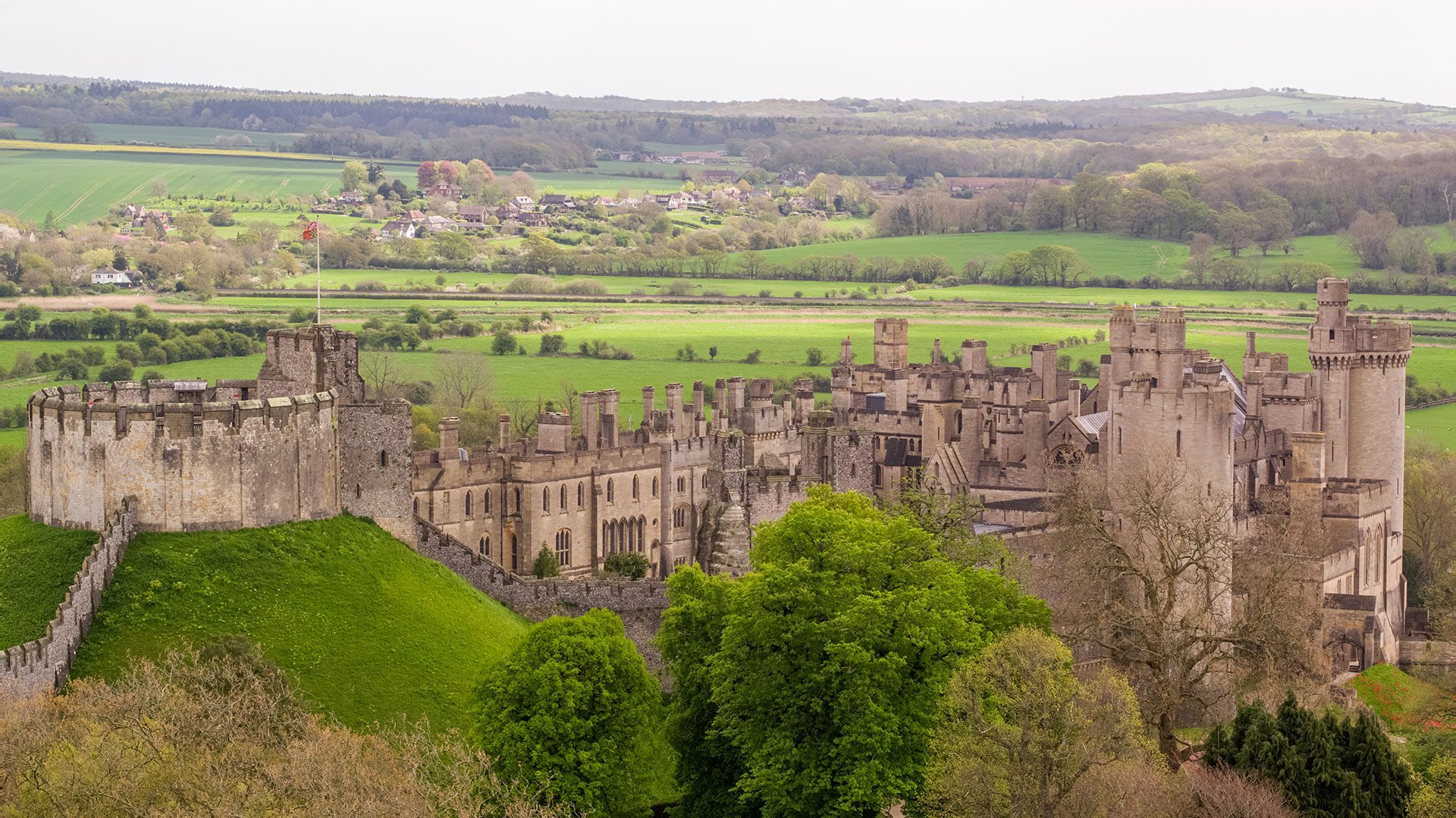
Among the great aristocratic families of medieval England, few possessed the combination of land, military power and political influence enjoyed by the Fitzalans, Earls of Arundel. Their history was tied not merely to an aristocratic title but to castles, enormous landed estates and some of the most powerful families in the kingdom. Into this world was born John Fitzalan, 7th Earl of Arundel and 4th Baron Maltravers, on 14 February 1408. His life would be remarkably short—he died aged only twenty-seven—but before his death he became a Knight of the Garter, a leading English commander in France and one of the prominent noblemen fighting for the English Crown during the final decades of the Hundred Years’ War.
John was the son of John Fitzalan, Lord Maltravers, and Eleanor Berkeley, daughter of Sir John Berkeley of Beverston. His paternal ancestry united two important inheritances. His grandfather descended from the Fitzalan lords, while his grandmother Eleanor Maltravers was heiress to the Maltravers family. The family’s claim to Arundel was itself the subject of a prolonged aristocratic dispute. When Thomas Fitzalan died without a male heir in 1415, John’s father claimed the castle, estates and Earldom of Arundel, but the claim was contested by the powerful Mowbray family. John’s father died in 1421 before the matter had been conclusively resolved, leaving his young son to inherit not merely estates but an unfinished struggle over one of England’s most prestigious titles.
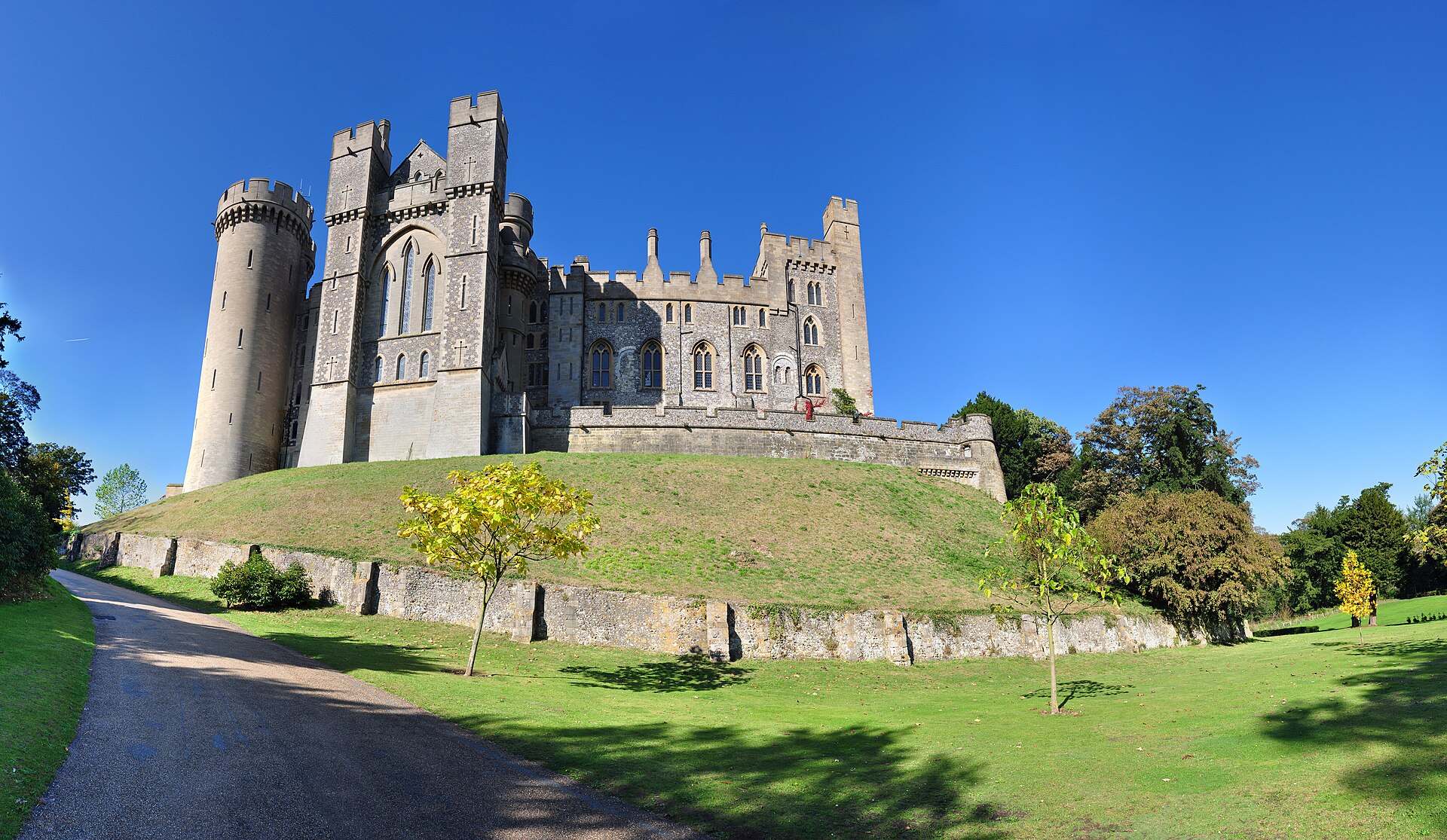
The wealth behind that title was considerable. Arundel Castle was the centre of a great feudal honour in Sussex, while the Fitzalans also possessed ancient estates at Clun and elsewhere in Shropshire. The family’s wealth had been dramatically enlarged during the fourteenth century through marriage into the de Warenne inheritance, bringing additional property and influence associated with one of England’s oldest aristocratic houses. The surviving Arundel estate records document the ancient Barony of Arundel, its manors, rights and privileges, together with the family’s Shropshire possessions. John therefore belonged to a dynasty whose power rested upon substantial landed wealth spread across different parts of England and the Welsh Marches.
John’s family connections reached even further into the ruling elite. Through his first intended or possible marriage to Constance Cornwall, he was connected with John Cornwall, Baron Fanhope, and through Constance’s mother Elizabeth with John of Gaunt, son of Edward III. After Constance’s early death, John married Maud Lovell, daughter of Robert Lovell. Their son Humphrey Fitzalan inherited the earldom after John’s death, although Humphrey himself died as a child in 1438. The title then passed to John’s younger brother William Fitzalan, continuing the family’s position among England’s greatest noble houses.
John’s position at court was established while he was still extraordinarily young. In 1426 he was knighted alongside the young King Henry VI, and in 1429 he was summoned to Parliament. By 1430 he had entered military service in France, where England was struggling to maintain the extraordinary territorial gains achieved during the reign of Henry V. John served under John, Duke of Bedford, uncle and regent for the young Henry VI, and rapidly acquired a reputation as an energetic military commander.
His campaigns took him through the Île-de-France and Normandy, where he participated in the recovery of fortresses, confronted local resistance and helped maintain English control over occupied French territory. This was the world immediately following Joan of Arc’s intervention in the war, when English dominance in France was increasingly being challenged. Yet John continued to rise. His military service was one of the reasons his disputed claim to the Earldom of Arundel was formally recognised in 1433. The Crown’s decision acknowledged the connection between possession of Arundel Castle and the earldom while also rewarding a young commander who had rendered valuable military service.
John was also admitted to the Order of the Garter, England’s highest and most prestigious order of chivalry. His position therefore went considerably beyond that of an ordinary battlefield knight. He belonged to the small circle of aristocratic commanders upon whom the English monarchy depended for the continuation of its war in France.
His extraordinary career ended at Gerberoy in 1435. When John learned that French forces had occupied the nearby fortress, he advanced against them despite being confronted by a stronger force. During the resulting battle many English troops withdrew, but Arundel remained and fought. He was struck in the foot by gunfire—described in accounts as a shot from an early firearm—and was captured by the French. His wounded leg was subsequently amputated, but the operation could not save him. John Fitzalan died at Beauvais on 12 June 1435, aged only twenty-seven.
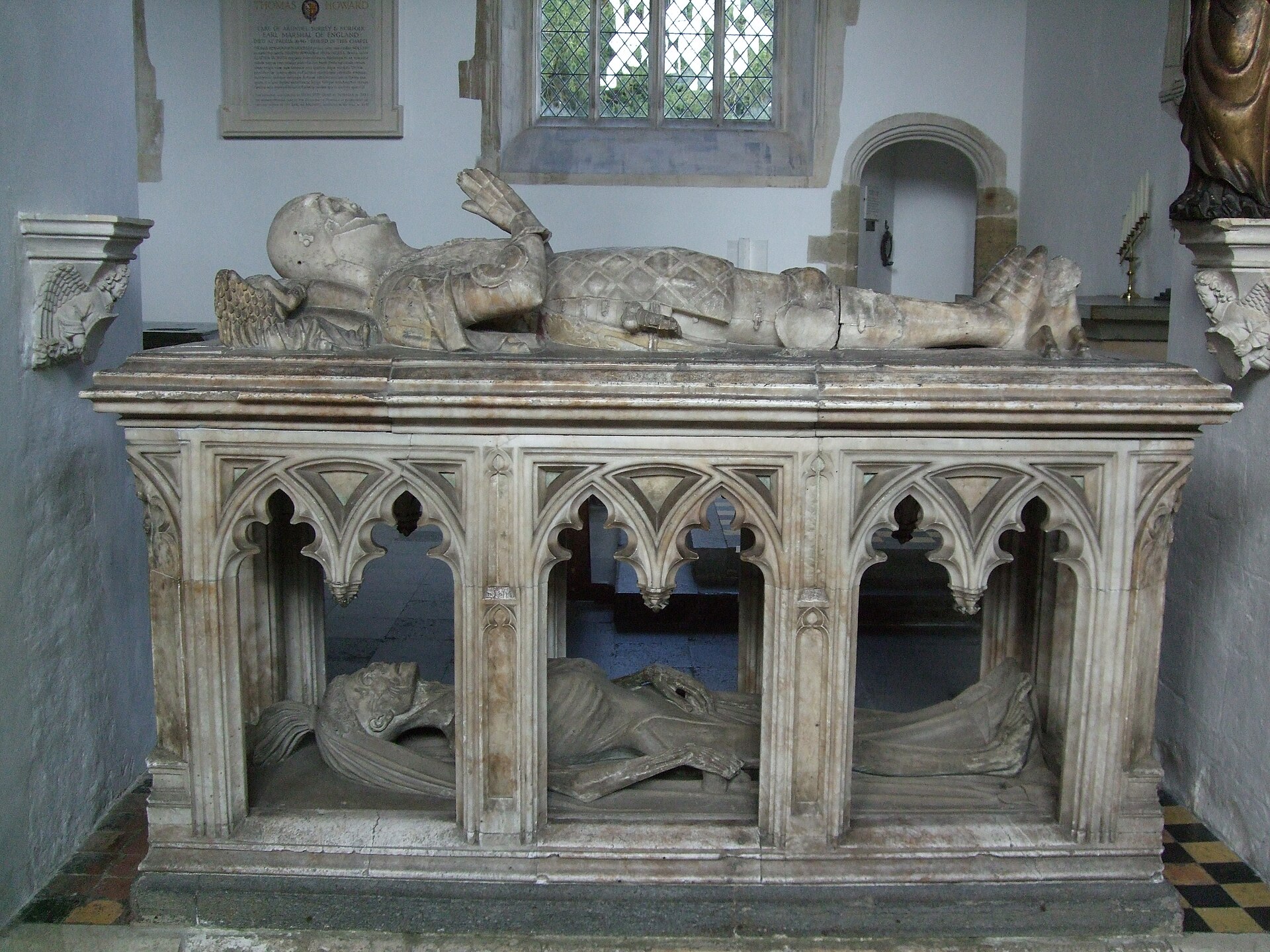
For centuries there was uncertainty about what subsequently happened to his body. Some accounts suggested that he had been buried in France. The mystery was dramatically resolved in the nineteenth century when his tomb at Arundel was opened and a skeleton missing one leg was discovered. The physical remains therefore corresponded with the extraordinary historical account of the wound and amputation that preceded his death.
The Face Recorded by Charles Alfred Stothard
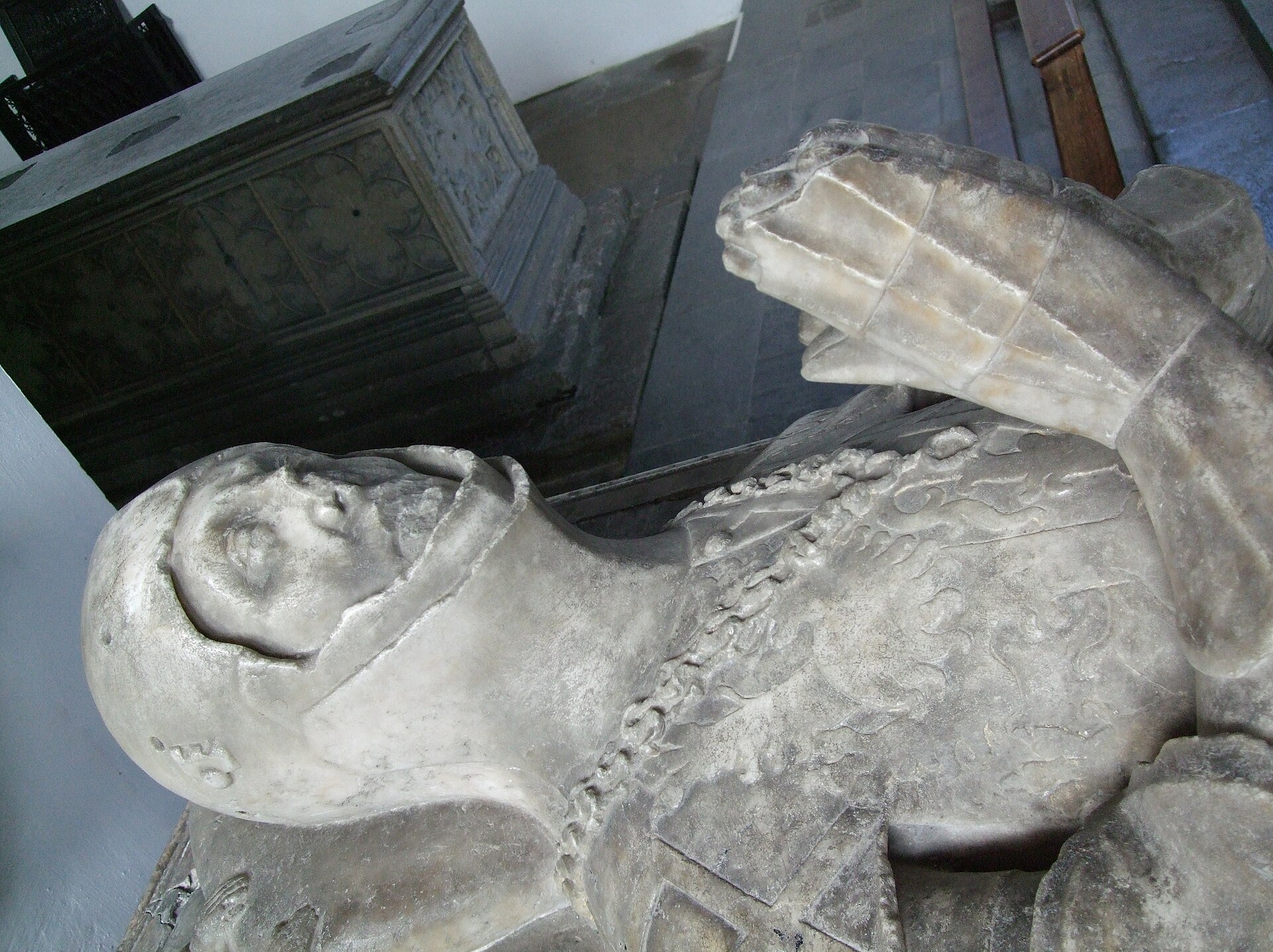
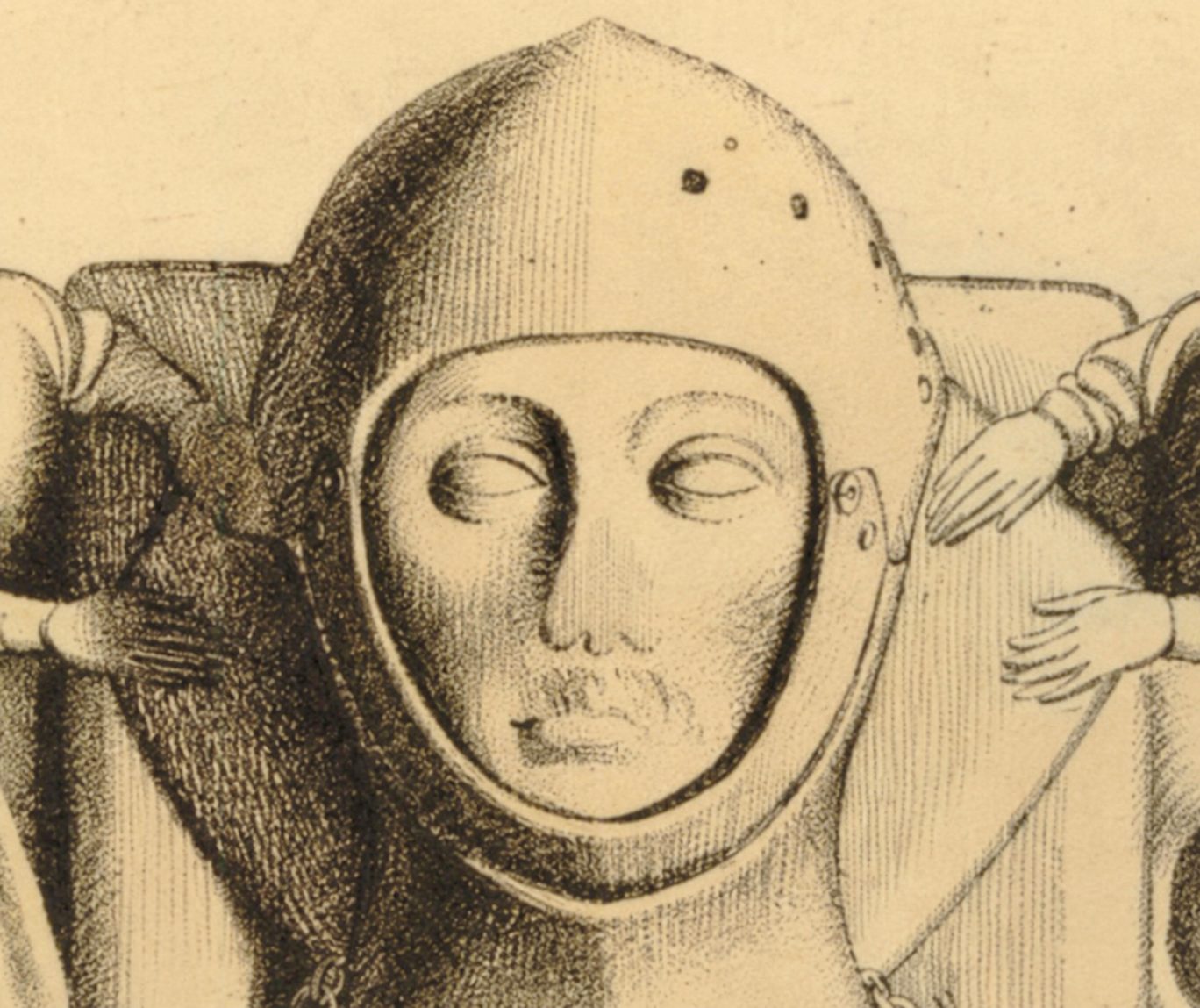
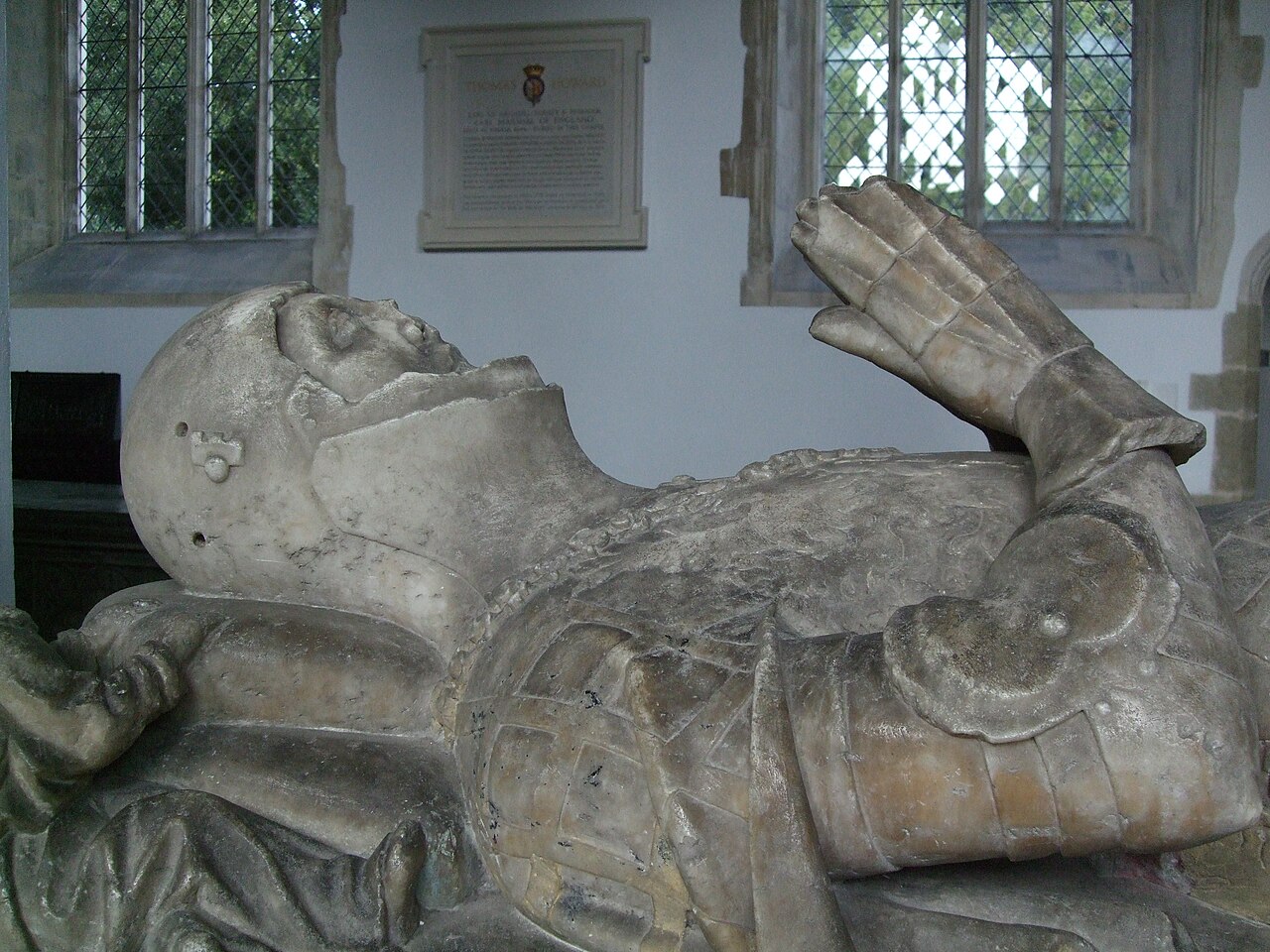
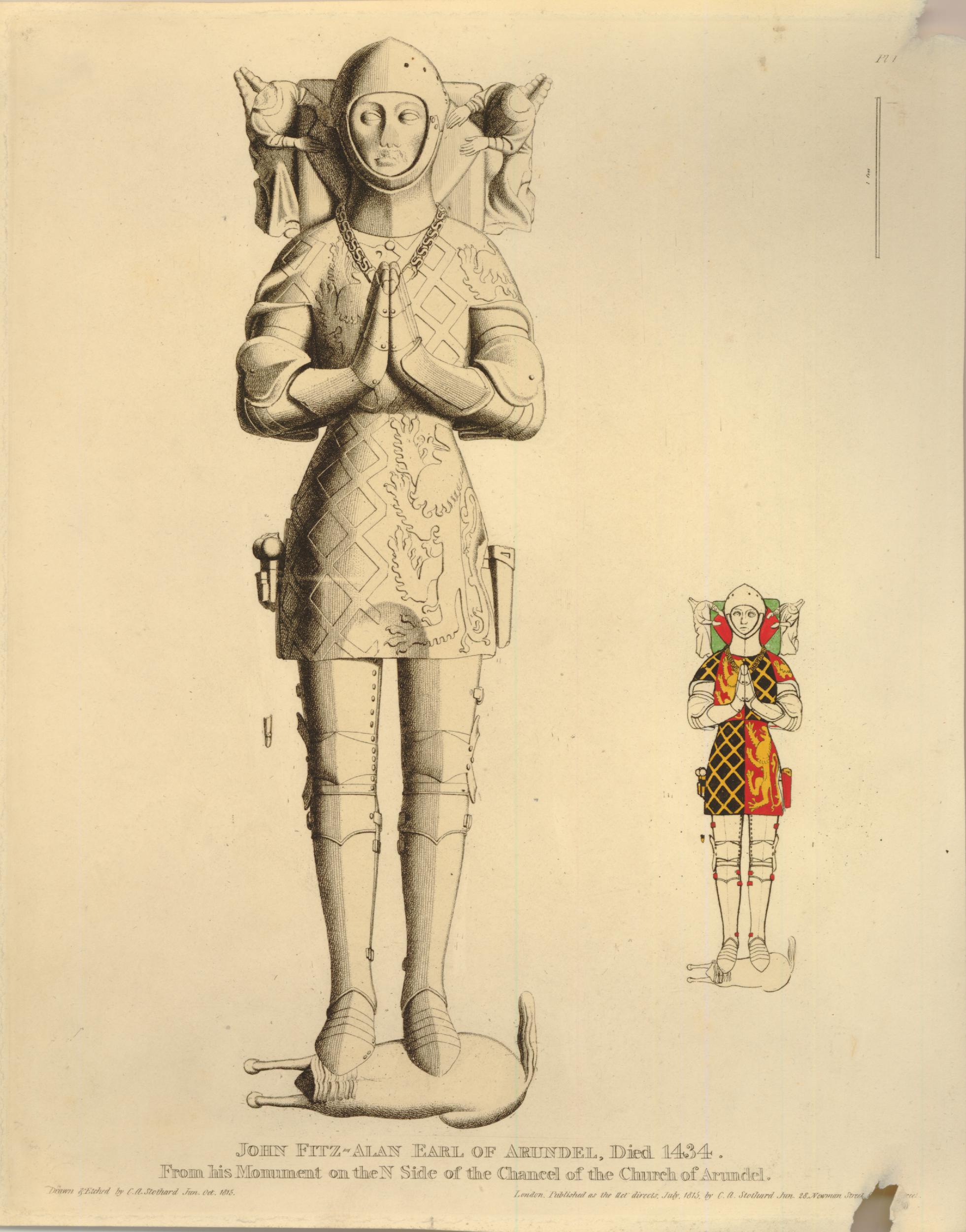
Today John’s effigy has suffered considerable damage, and that makes an earlier record of the monument especially important. In 1815, Charles Alfred Stothard recorded the effigy, and the resulting work is now catalogued by the National Portrait Gallery as John Fitzalan, 7th Earl of Arundel as effigy in Church of Arundel. The NPG identifies Stothard as the artist working from the monument of an unknown medieval sculptor.
The drawing deserves close examination.
Stothard recorded John lying in armour, his hands together in prayer and his head supported upon his helm. His surcoat displays the heraldry of his family and his feet rest upon an animal. But for the purposes of understanding his appearance, it is the face that is particularly valuable.
Look at the nose.
Stothard records a conspicuously wide and full nose, with substantial width through the nostrils and lower portion of the nose. The mouth area is also important. The lips of the surviving monument have suffered damage, but portions of their outline can still provide information about the original modelling.
This does not look like a vague nineteenth-century fantasy. Stothard was recording a physical medieval monument, and the National Portrait Gallery preserves his 1815 image specifically as a representation made after the effigy.
That distinction matters enormously.
When an effigy’s face has subsequently been damaged, an earlier antiquarian drawing becomes evidence of the monument’s previous condition. Stothard’s work allows us to compare what he recorded in 1815 with what survives today.
The nose he drew cannot simply be made invisible because its proportions challenge someone’s expectation of what a fifteenth-century English earl should have looked like. Neither should we manufacture certainty that the sculpture cannot provide. The appropriate approach is much simpler: put Stothard’s record beside the present effigy and allow readers to examine the difference for themselves.
This becomes even more significant when John’s social position is remembered. We are not looking at an unidentified figure from an unknown context. This monument commemorates a man belonging to one of England’s great aristocratic dynasties: Earl of Arundel, Baron Maltravers, Knight of the Garter, lord of substantial estates and military commander for the English Crown.
His appearance therefore belongs in any serious discussion about the faces represented among England’s medieval aristocracy.
There is another fascinating detail about the accuracy of the monument. The armour represented upon John’s effigy has itself been used by historians of arms and armour as evidence for fifteenth-century equipment. A rare surviving type of helmet offered by Christie’s was compared directly with the unusual helmet represented on Fitzalan’s effigy, with Stothard’s plates specifically cited as a reference. The monument has therefore already been treated as useful physical evidence when historians want to understand what John wore.
The same principle should encourage careful examination when asking what the sculptor represented in his face.
John Fitzalan lived for only twenty-seven years, yet his short life connected him to some of the greatest institutions and families of medieval England. He inherited the wealth and prestige of the Fitzalan and Maltravers families, fought for recognition of the Arundel inheritance, became a Knight of the Garter, commanded English forces in France and died from wounds received while refusing to abandon the battlefield.
Nearly four centuries later, Charles Alfred Stothard stood before his monument and recorded what he saw.
Today the effigy is damaged.
Stothard’s drawing is therefore not merely an attractive illustration. It is a historical witness.
When studying the faces of medieval England, we should use every surviving source available to us: the monument as it exists today, earlier drawings made before subsequent damage, heraldry, archaeology, documentary records and contemporary imagery.
The face Stothard recorded deserves to be looked at. And readers can decide for themselves what they see.
“When the monument has been damaged, an earlier drawing can become a witness to what the stone once showed.””
Guinevere Jackson
Image citation: Wikipedia, British Museum
 Donate