Sir John Stretch (d.1390) Swarthy Knight, Lion at His Feet, and the Effigy That Endures
- Guinevere Jackson
- 7 February 2026
- 0 Comment
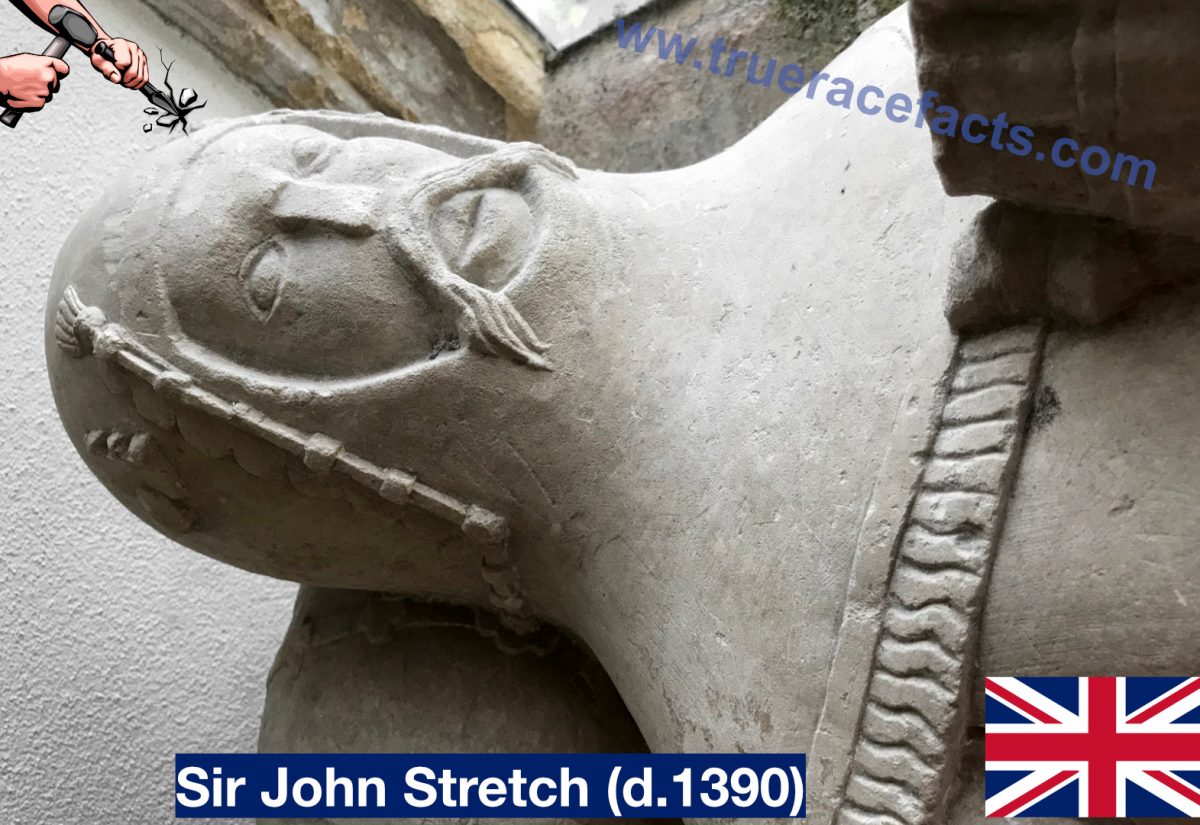
Sir John Stretch (d.1390): Swarthy Knight, Lion at His Feet, and the Effigy That Endures
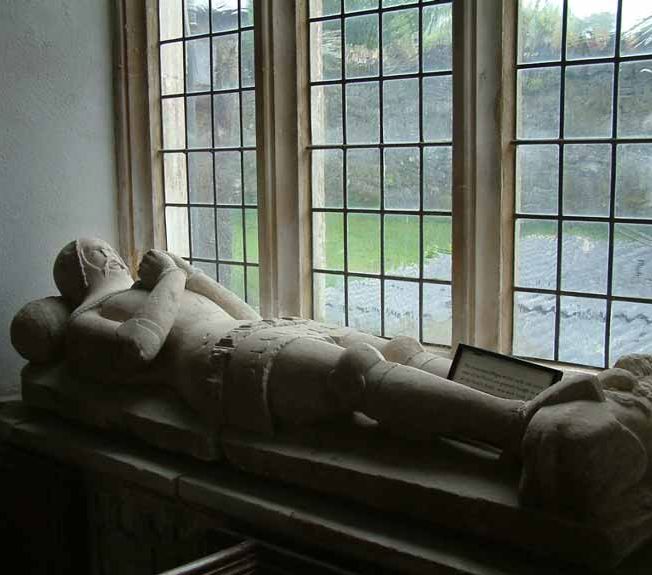
Sir John Stretch, who died in 1390, was a late-medieval knight of notable status, with authority rooted in land, lineage, and local influence. Knights of his rank were commemorated with effigies meant to preserve likeness, rank, and memory — a tangible record of nobility carved in stone.
A Face Reworked
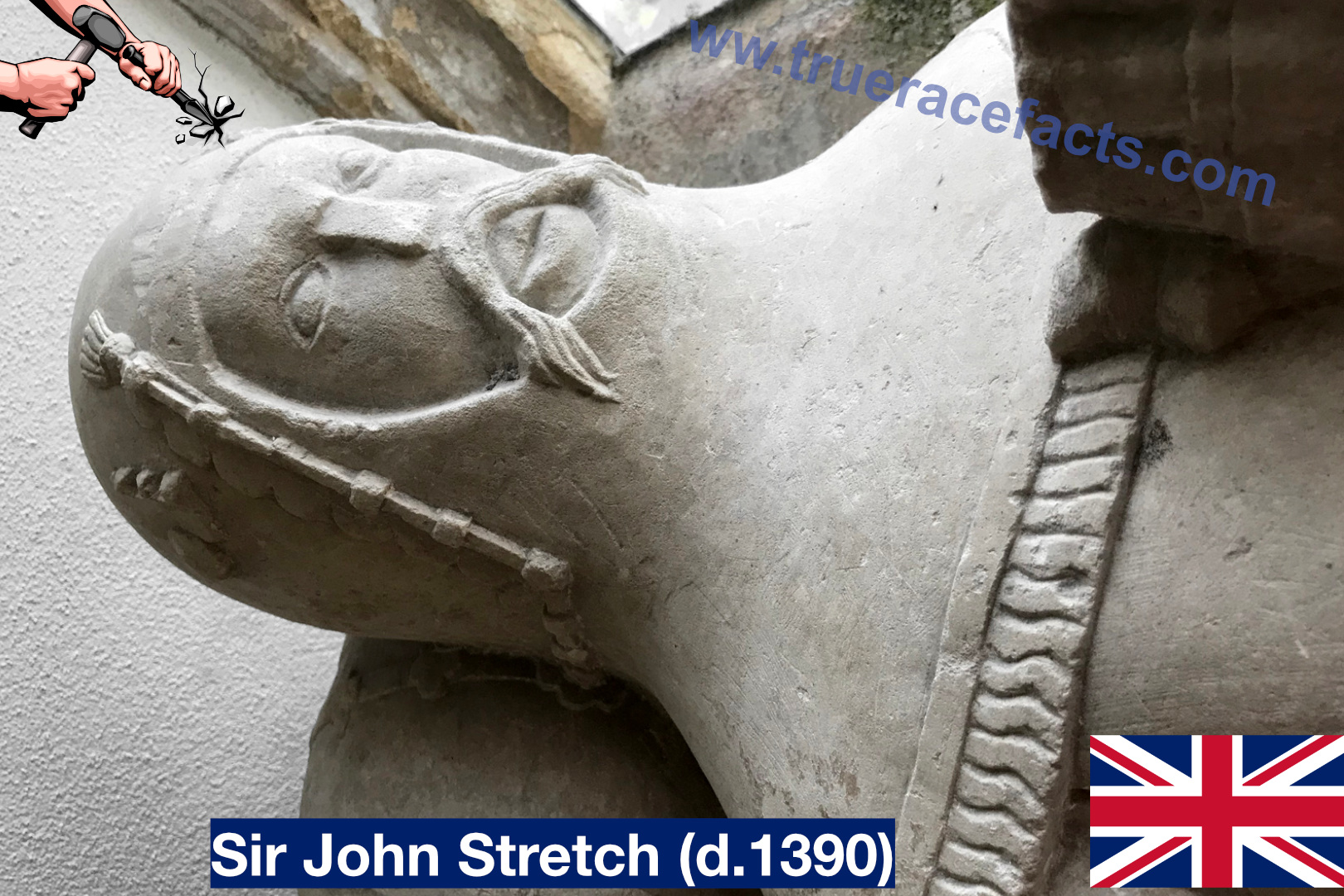
His surviving effigy is remarkable for its condition. Armour and posture remain intact, preserving the dignity expected of a fourteenth-century knight. The face, however, tells a different story: the original paint was removed, the nose deliberately filed down, and the lips hacked, yet the underlying modelling still reveals the likeness of a swarthy (i.e., black) medieval knight. Even after this interference, the original sculptural intent is still visible.
The Lion at His Feet
Beneath his feet rests a lion, a detail of immense symbolic weight. In medieval iconography, lions signify courage, nobility, and authority, but they also carry biblical resonance — particularly the Lion of Judah, a symbol of Israelite lineage and sacred kingship. Positioned under the knight, the lion signals more than valour; it communicates awareness of sacred heritage, faith, and identity. This detail amplifies the contrast between the unchanged symbols of authority and the deliberately altered facial features, highlighting the selective nature of historical erasure.
Selective Intervention
The effigy’s armour, body, and symbolic elements remain untouched, while the face bears the mark of revision. This pattern mirrors what is observed in many medieval monuments: rank and status were preserved, but features indicating identity — in this case, swarthy ethnicity — were softened or removed. Effigies were intended as portraits for eternity, making such alterations not random damage but intentional negotiation of memory.
Nobility in Stone
Even with alteration, the effigy communicates rank, lineage, and authority. The lion beneath his feet asserts sacred and noble identity, while the carefully modelled face — even partially erased — preserves the likeness of a swarthy (i.e., black) knight. Stone endures longer than narrative; even when chiselled down and stripped of paint, the truth carved into it resists full erasure.
“The lion beneath his feet spoke of sacred lineage, the altered face above it reveals how later hands struggled with that memory.”
Guinevere Jackson
Image citation britishlistedbuildings.co.uk Flickr
 Donate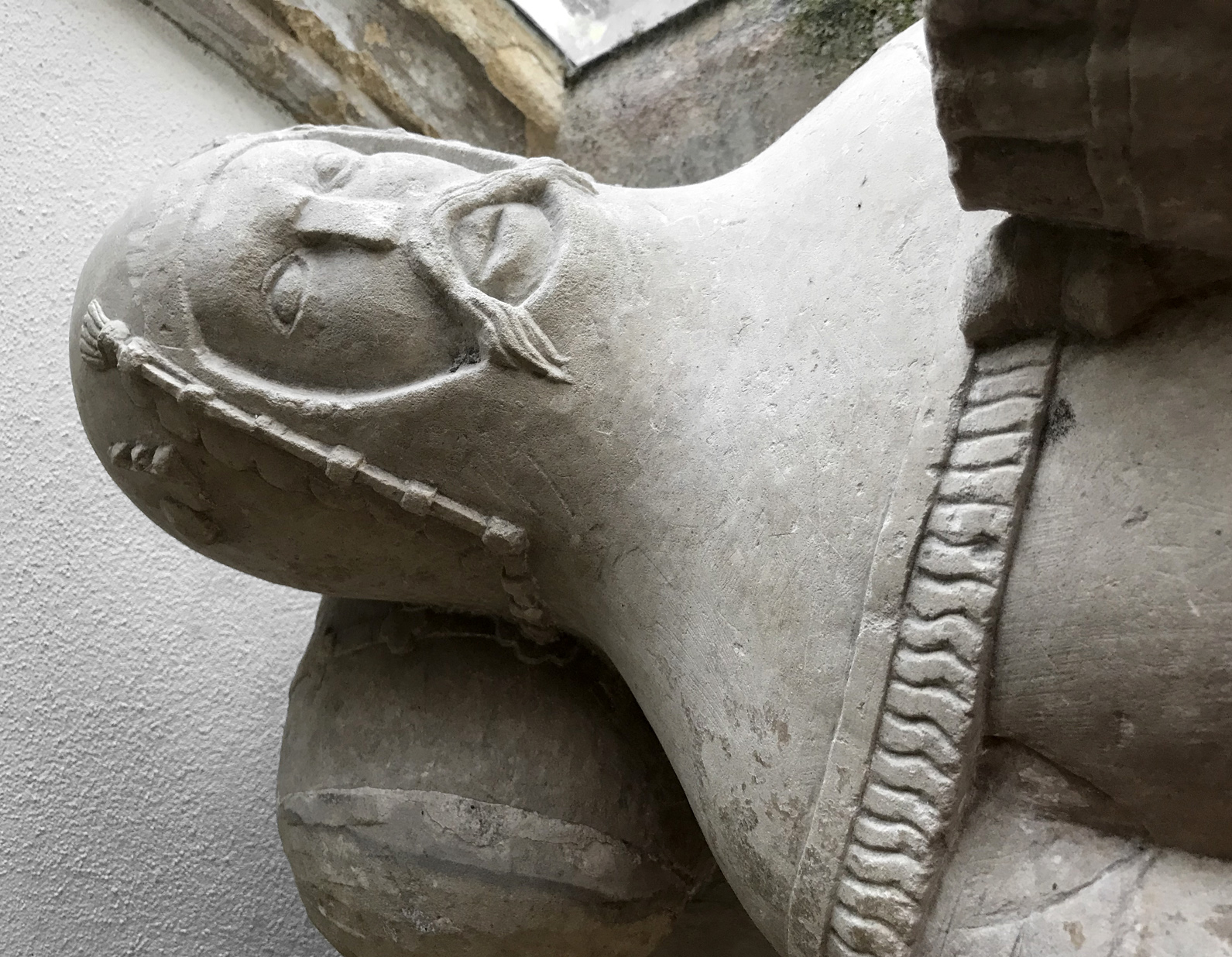
- ancient briton
- Anglo Saxon
- baron
- bishop
- Black
- black man
- Black Nobility
- classical
- Deception
- England
- Hebrew
- hidden history
- historical
- iconoclasm
- identity theft
- Israel
- Israelite
- Knight
- Lady
- Landowner
- lies
- Lion of Judah
- medieval
- music
- Negro
- Nobility
- northern kingdom
- Politician
- swarthy
- Theft
- truth
- Wales
- wealthy
- welsh
- welsh black nobility