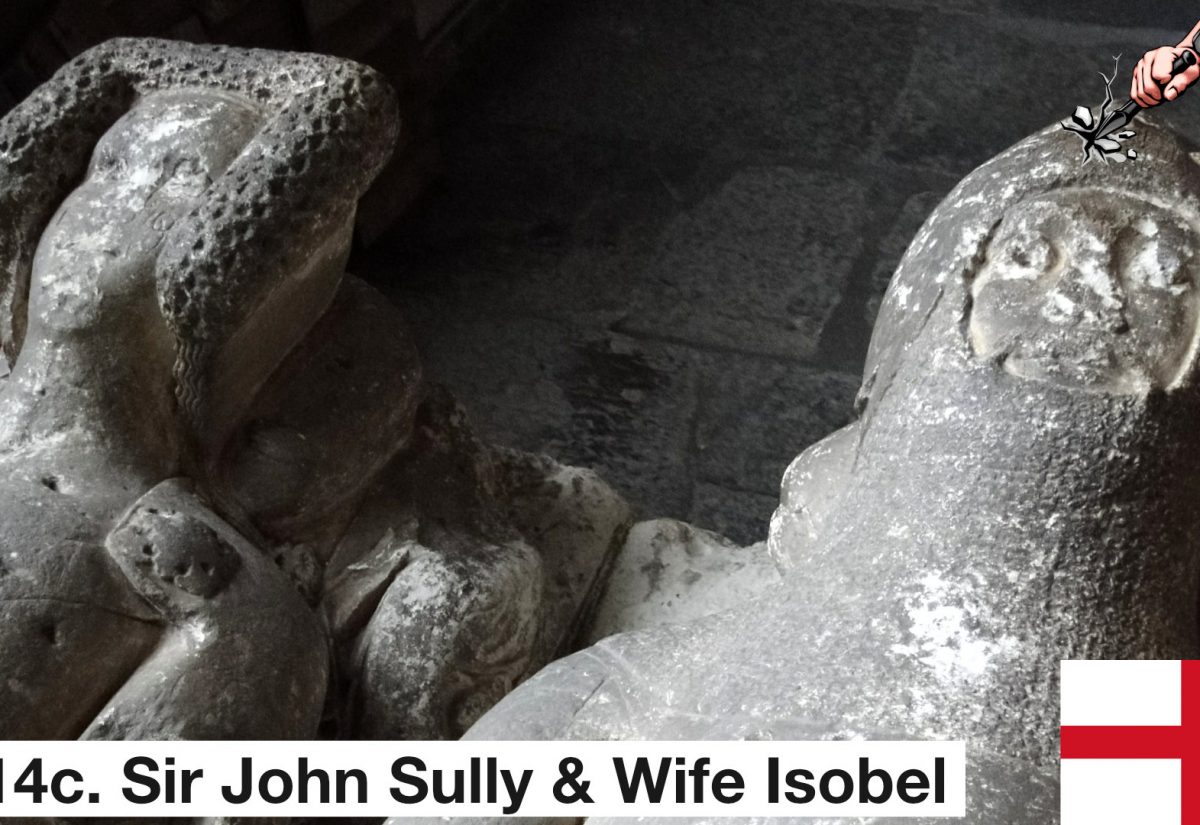
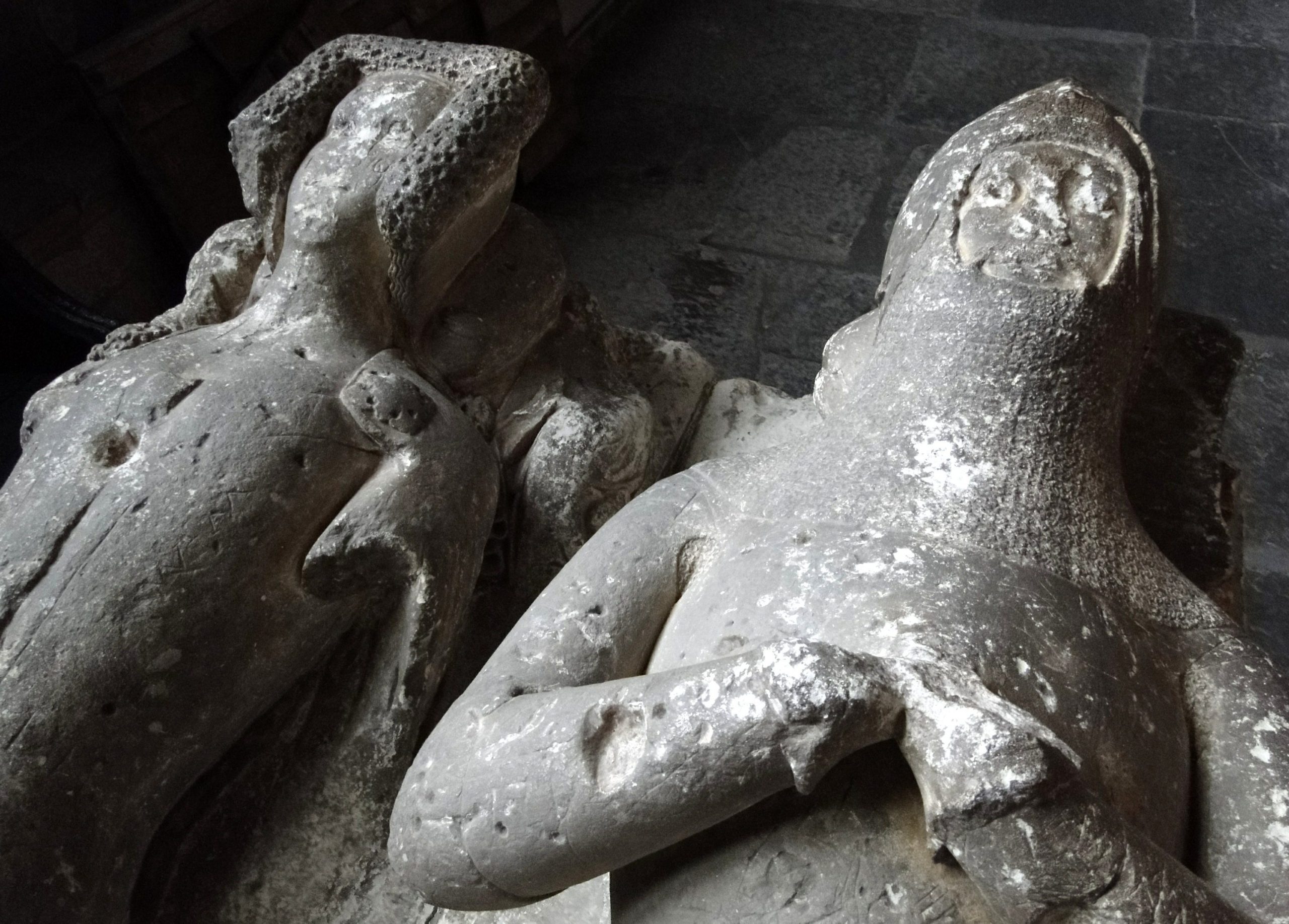
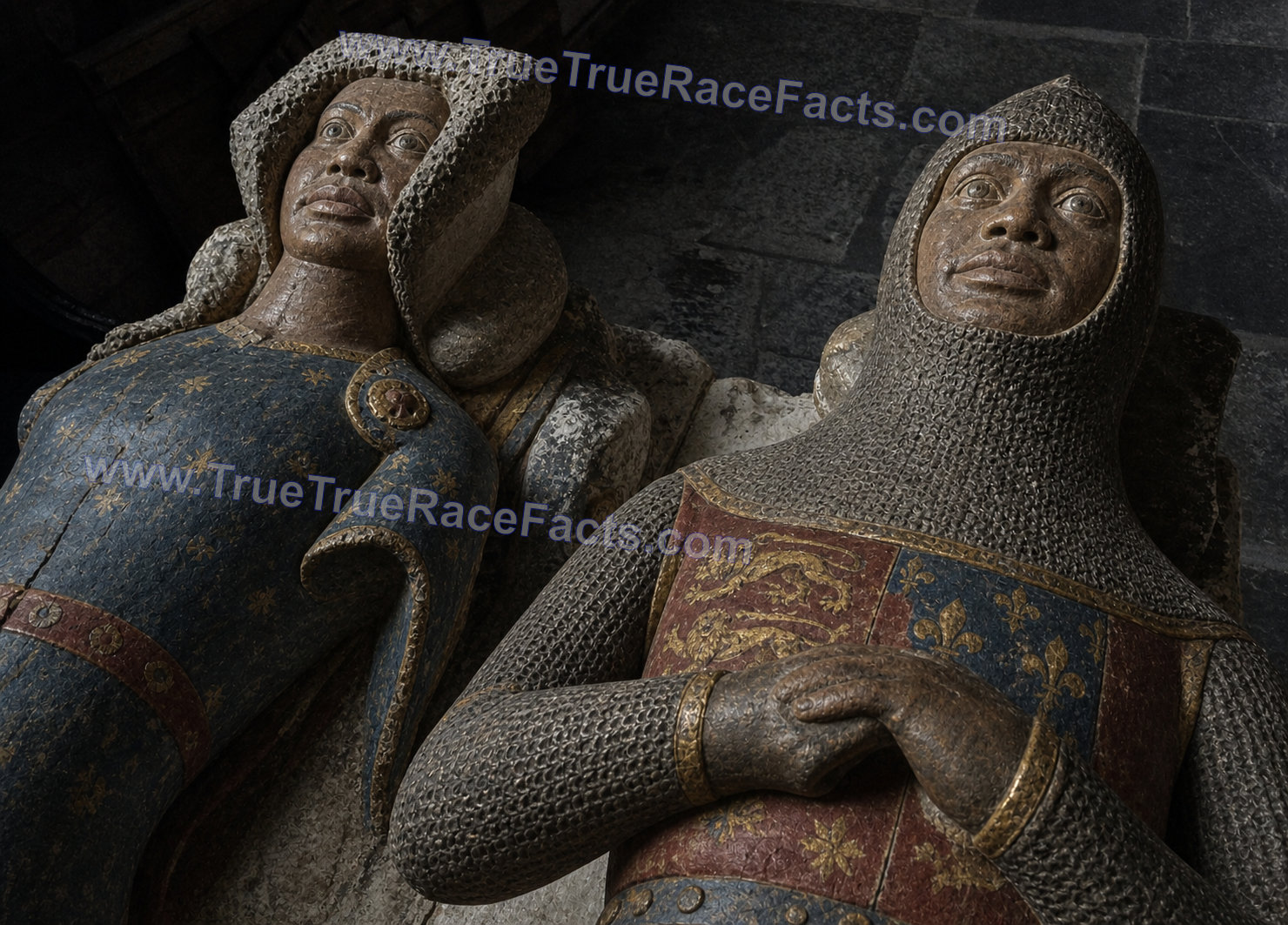
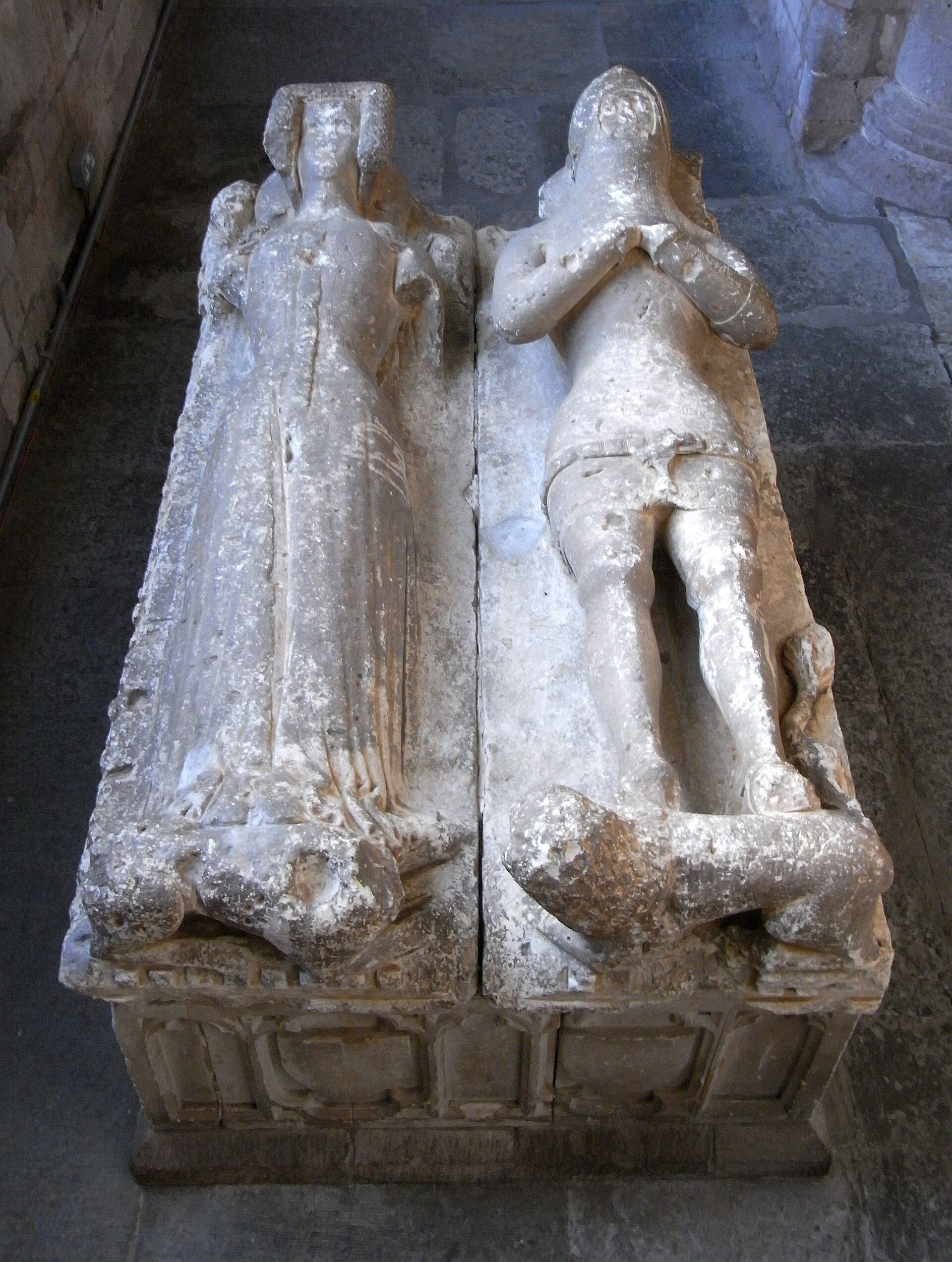
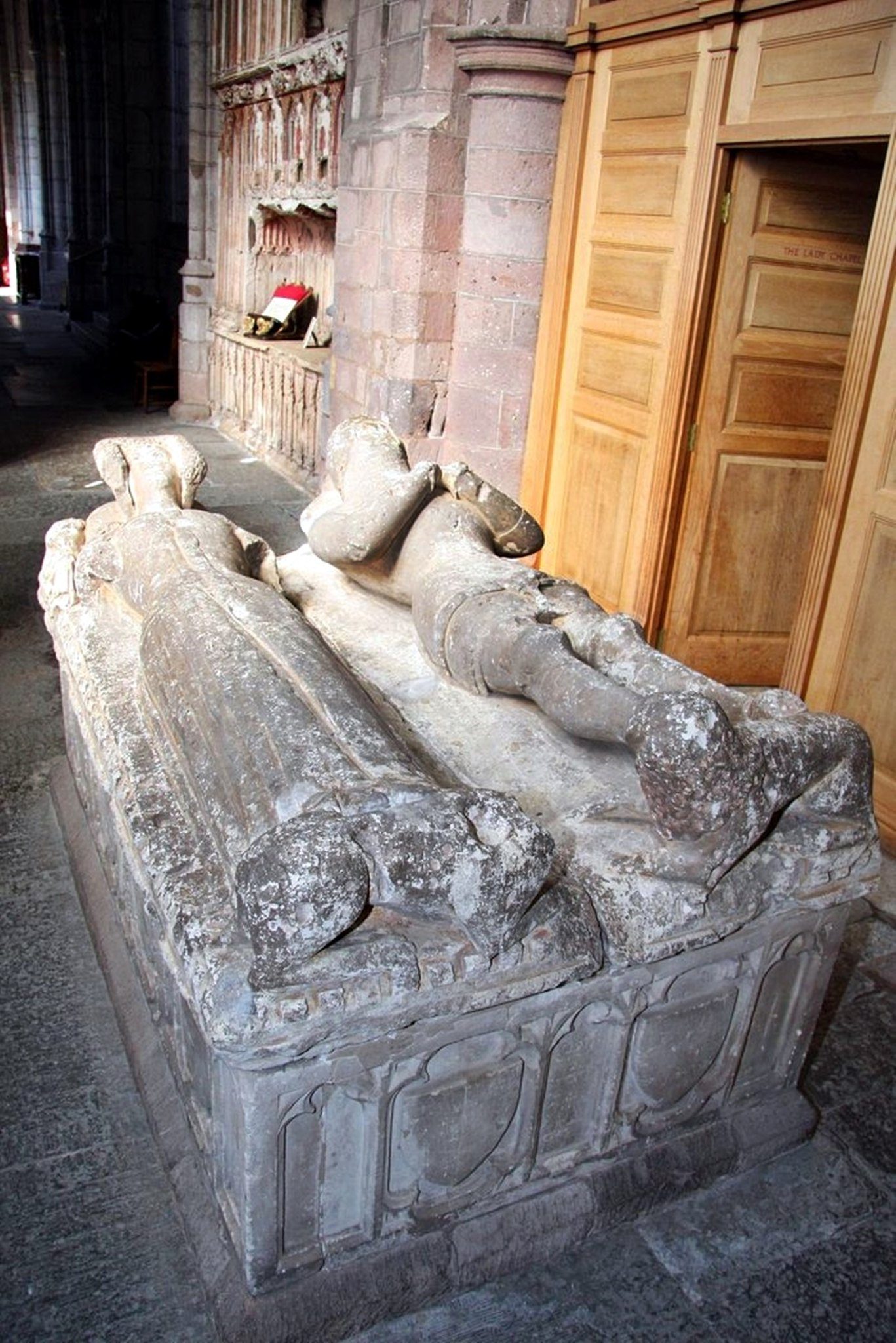
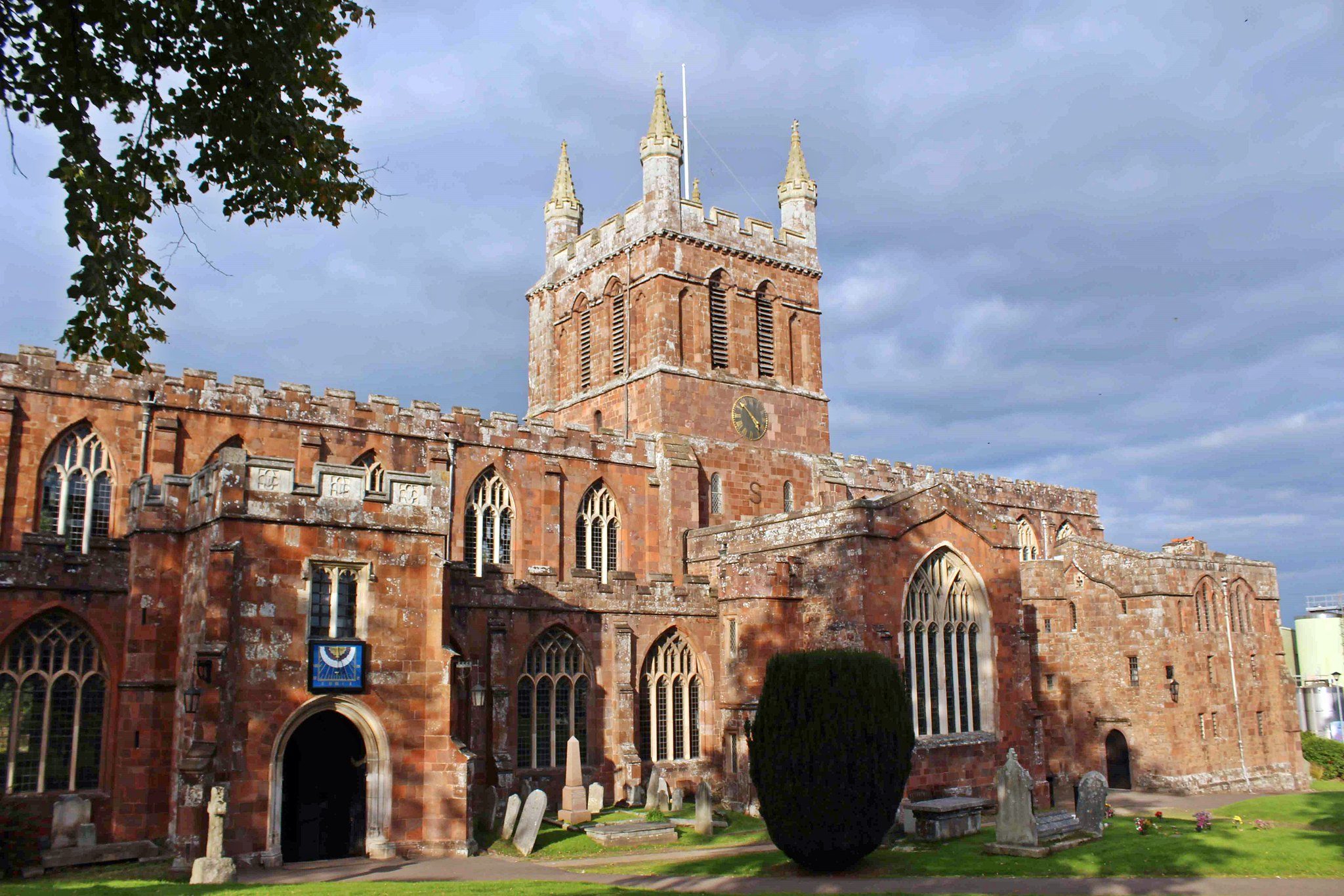
Inside the magnificent Church of the Holy Cross, one of Devon’s most historically important churches, lies the extraordinary effigy of Sir John Sully, Knight of the Garter, one of England’s most celebrated 14th-century warriors.
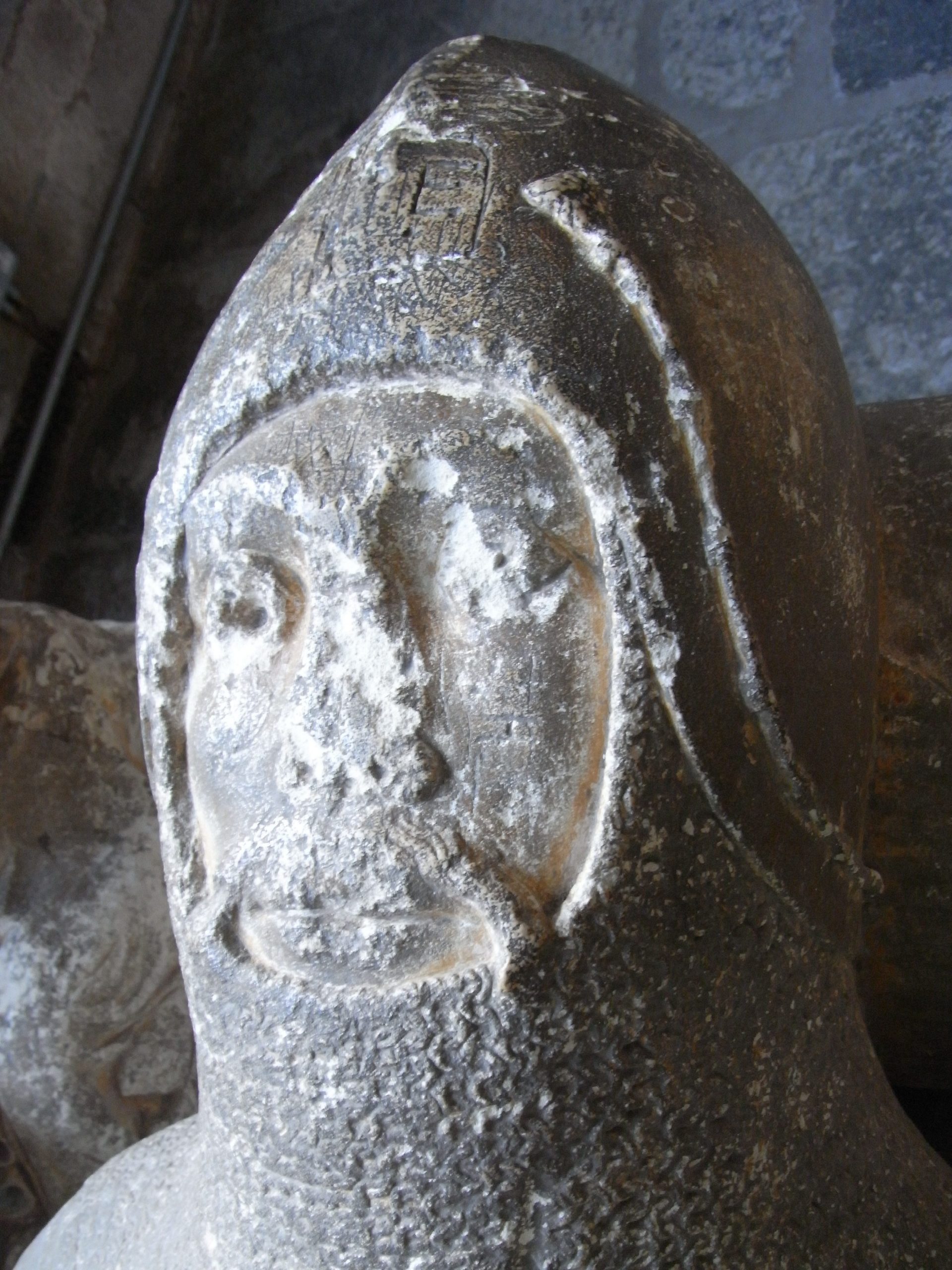
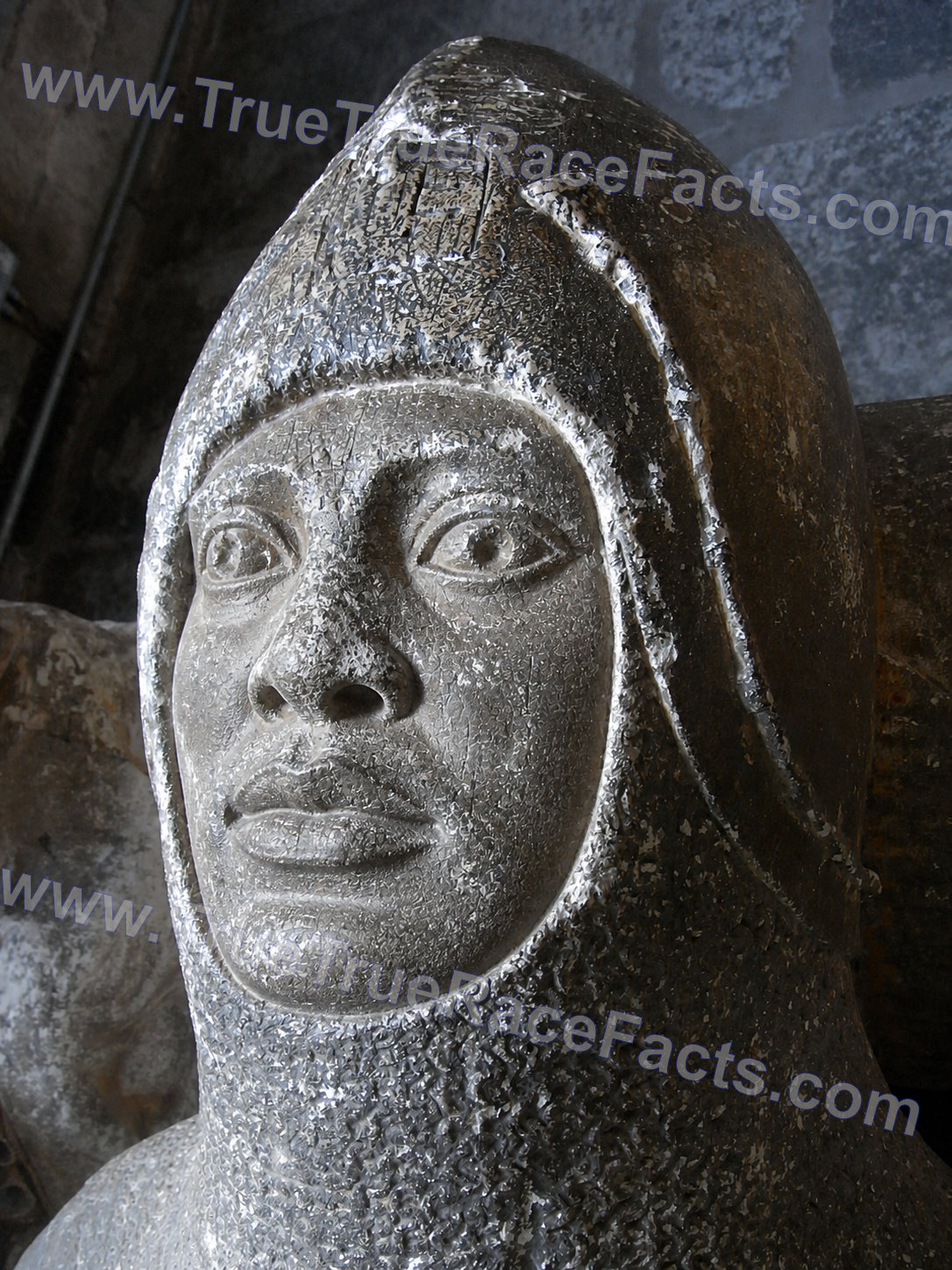
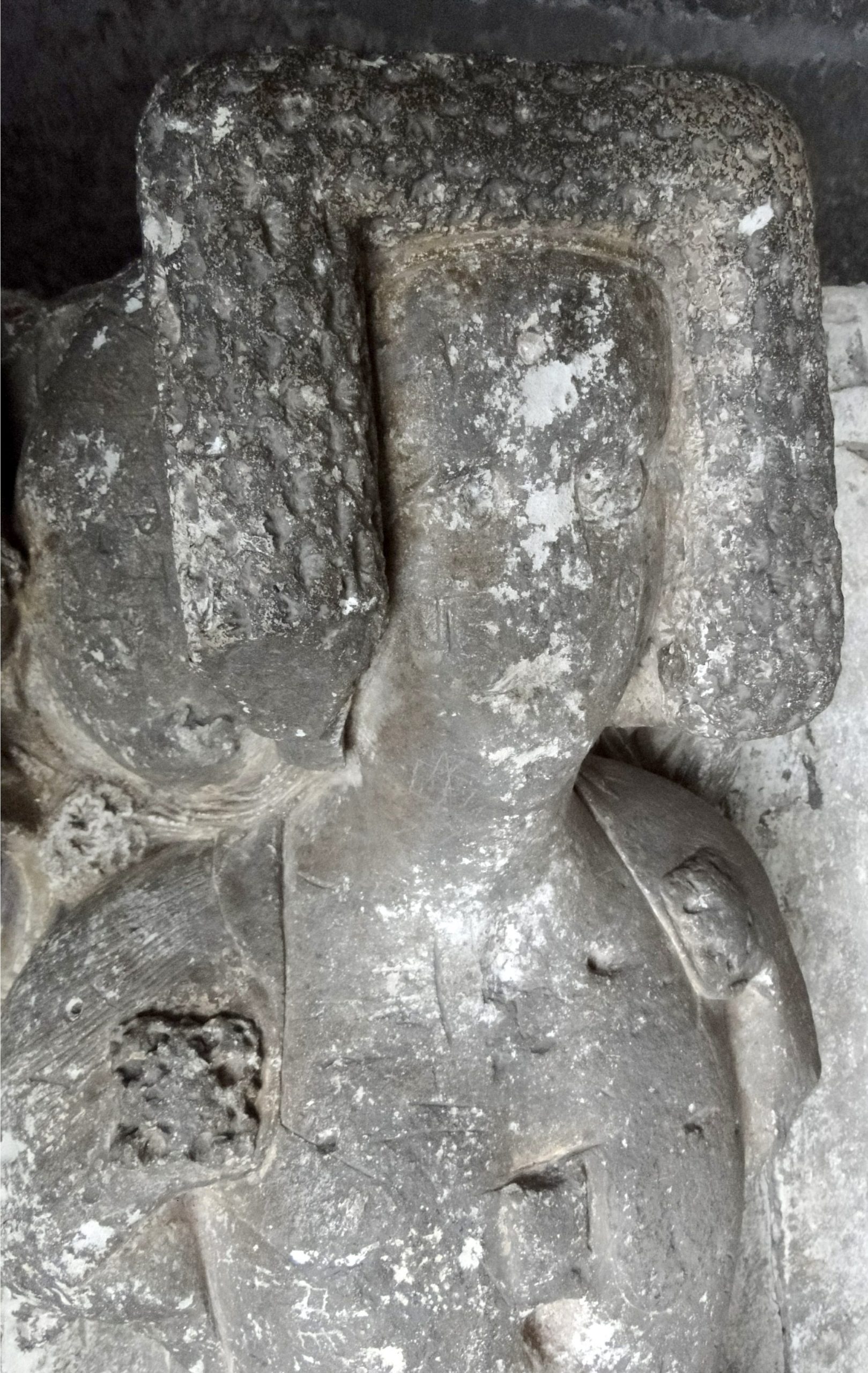
His monument is one of the finest surviving knightly effigies in Devon. Though the original paint has long since been removed, the facial detail of both Sir John and his wife Lady Isobel remains remarkably strong. Their full noses and lips are still clearly visible despite later tooling and surface alteration, preserving what many observers identify as the unmistakable features of a swarthy noble couple.
Sir John Sully was born around 1282 and died in 1388, reaching an extraordinary age that medieval testimony places at over one hundred years. His military career spanned some of the most dramatic conflicts of medieval England. He served under Edward II and Edward III, fought in the Scottish campaigns, and was present at the Battle of Halidon Hill.
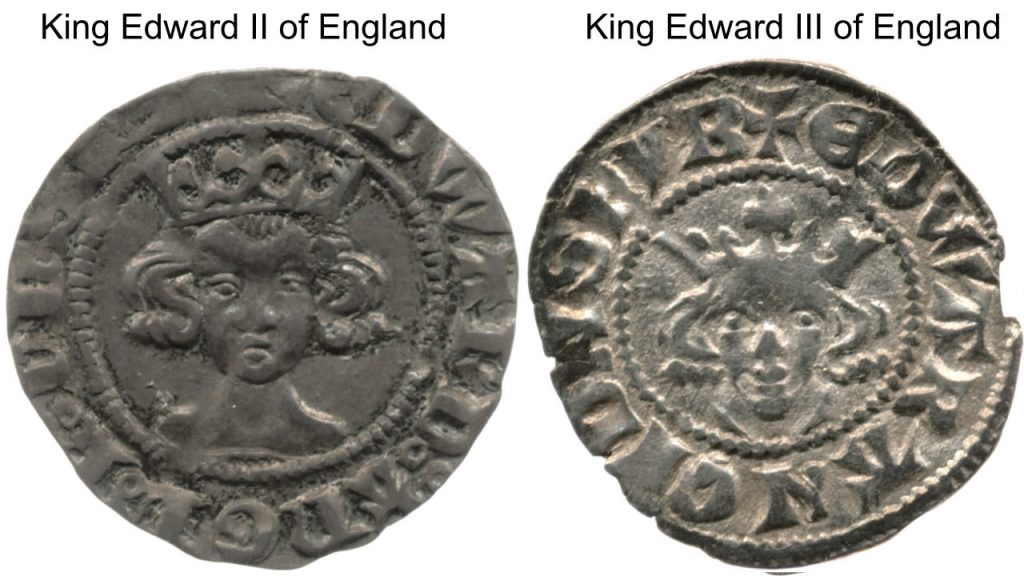
Sully served for both King Edward II and King Edward III
His distinguished service brought him into the company of the famous Edward of Woodstock, heir to Edward III and one of medieval Europe’s most renowned military commanders.
Sully accompanied the Black Prince to Gascony in 1365 and fought at the Battle of Nájera, one of the defining battles of the prince’s continental campaigns. Remarkably, in 1370, when he was already nearing ninety years of age, he again received letters of protection for military service in Aquitaine. Such longevity in active warfare was exceptional even in medieval England.
His achievements earned him appointment as a Knight of the Garter, one of the kingdom’s highest honours and a distinction reserved only for the Crown’s most trusted military men.
Sir John was also among Devon’s great landholders. His principal estates included Ruxford near Crediton, Iddesleigh Manor, and additional holdings across Devon, placing the Sully family firmly among the county’s medieval aristocracy.
Their wealth came through extensive landownership, feudal service, and royal favour.
He married Lady Isobel, whose effigy lies beside his, and together they represent one of Devon’s notable noble households. Their elaborate tomb reflects both their social standing and the lasting influence of the Sully family.
Later Devon tradition also remembered Sir John as a crusader. According to the antiquary Sir William Pole, after years of campaigning in the Holy Land against the Saracens, Sir John returned home wounded but triumphant. Pole recounts that when his officers presented him with the accumulated rents from his estates, he spread his cloth-of-gold cloak upon the floor, ordered the money poured onto it, and cast himself into the pile so that it could be said he had once “tumbled in gold and silver.”
He then distributed the wealth between his wife, his officers and tenants, and the poor.
Whether literal truth or noble legend, the story reflects the extraordinary reputation Sir John Sully held in Devon memory.
Sir John Sully’s reported campaigns in the Holy Land suggest a knight deeply engaged with the religious world of medieval Christendom. Later tradition remembered him as a warrior whose life extended beyond England’s borders into the sacred geography of medieval Christian imagination.
At his feet rests a lion, a symbol traditionally understood in medieval funerary art to represent noble courage, authority, vigilance, and martial strength.
Yet the lion also carries profound biblical significance, most notably as the emblem of the Tribe of Judah and the Israelites through the image of the Lion of Judah.
This broader scriptural resonance reminds us that medieval symbolism often carried layered meanings.
While no surviving records explicitly confirm Sir John’s intended interpretation of the symbol, its presence invites deeper reflection on the spiritual imagery familiar to a knight who had reportedly journeyed to the Holy Land.
The monument itself is housed within the Church of the Holy Cross, one of Devon’s most historically significant ecclesiastical buildings.
Crediton Parish Church stands on the site of Devon’s original Saxon cathedral, established before the bishopric was transferred to Exeter.
Its vast Gothic structure, soaring arches, medieval stonework, and ancient monuments give it an almost cathedral-like grandeur.
For Sir John Sully to be buried here reflects the immense prestige he held in Devon society.
At the east end of the south choir aisle, Sir John and Lady Isobel remain preserved in stone.
Though the monument has undergone alteration over the centuries, enough survives to reveal the strength of the original sculptor’s work.
The paint has been stripped away. Parts of the surface have been worked down. Yet the underlying contours remain visible.
The broad nose and full lips of both figures still emerge from the stone, preserving their identity despite attempts to soften or obscure the original detail.
Stone remembers.
Sir John Sully’s monument stands as testimony to military greatness, noble wealth, and the enduring power of medieval memory.
The Church of the Holy Cross continues to preserve his legacy, allowing visitors to encounter one of England’s most remarkable knights exactly where he chose to rest.
“Though paint may be stripped and stone reworked, the monument of Sir John Sully still speaks with the authority of a knight who rode with the Black Prince and whose legacy could never be erased.”
Guinevere Jackson
Image citation Flickr and Wikipedia
 Donate