Robert de Bingham and the Effigy at Salisbury Cathedral 13c
- Guinevere Jackson
- 7 March 2026
- 0 Comment
Robert de Bingham: Bishop of Salisbury, Cathedral Builder, and the Monument That Still Speaks
Robert de Bingham served as Bishop of Salisbury during one of the most important periods in the history of Salisbury Cathedral. His episcopate (1229–1246) occurred during the critical early construction phases of one of the greatest Gothic architectural achievements in medieval Europe.
Cathedral Builder and Spiritual Leader
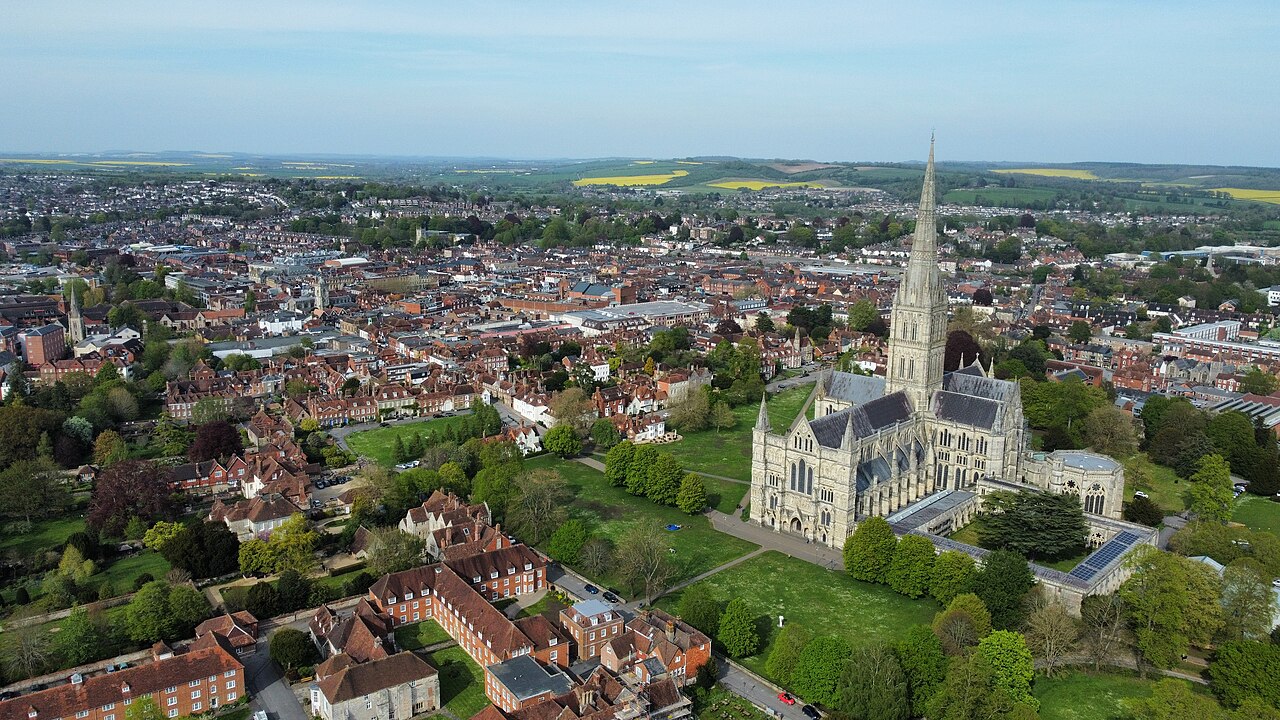
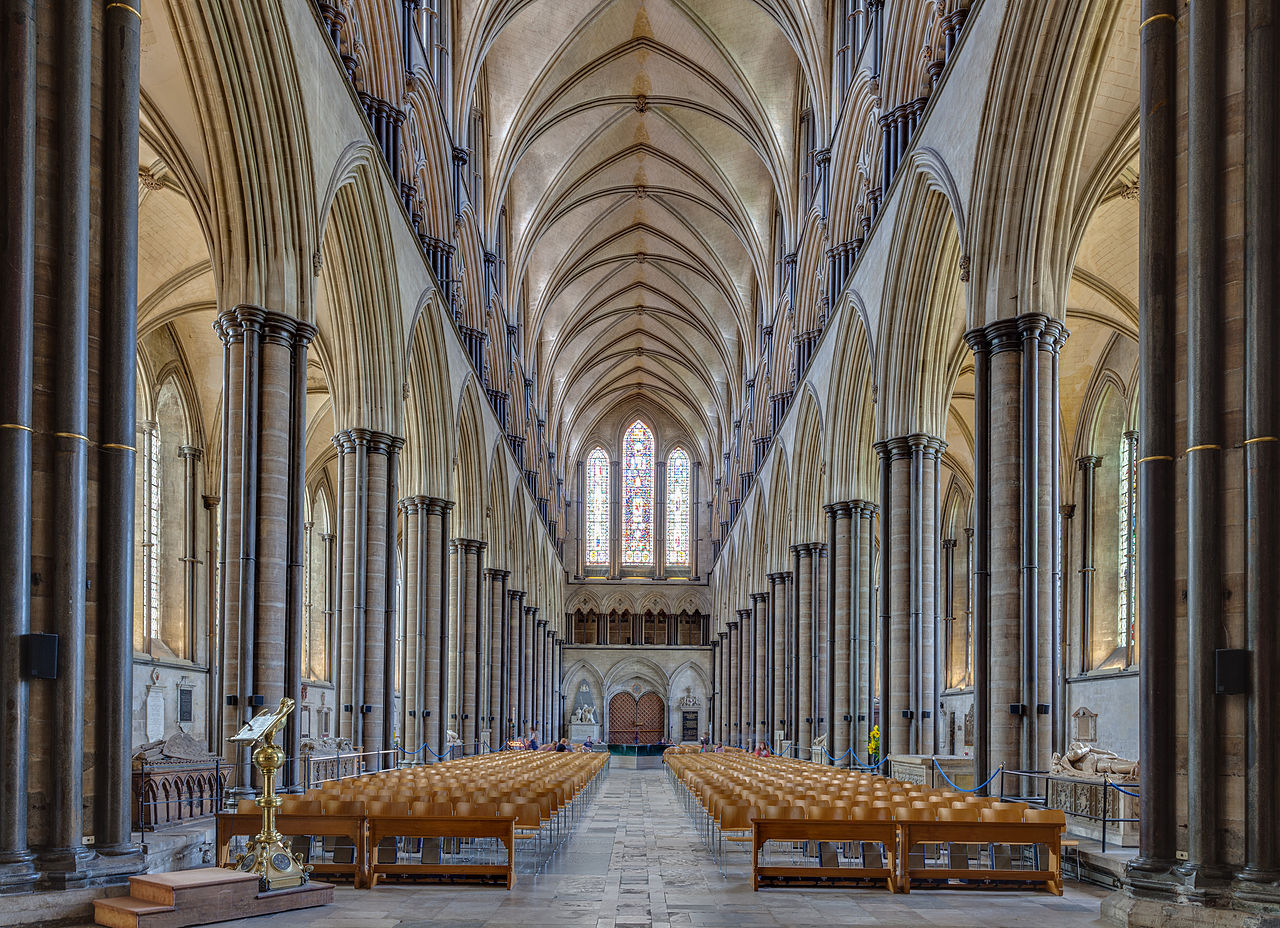
The construction of Salisbury Cathedral began in 1220 under Richard Poore, who oversaw the decision to move the cathedral from the fortified hilltop settlement of Old Sarum to the open plains of Salisbury. This relocation symbolized a shift toward a new era of ecclesiastical architecture and spiritual authority.
During Robert de Bingham’s leadership, construction continued at remarkable speed. Medieval cathedral building often took centuries, yet Salisbury Cathedral advanced rapidly due to strong administrative organization, skilled craftsmen, and sustained financial and ecclesiastical support.
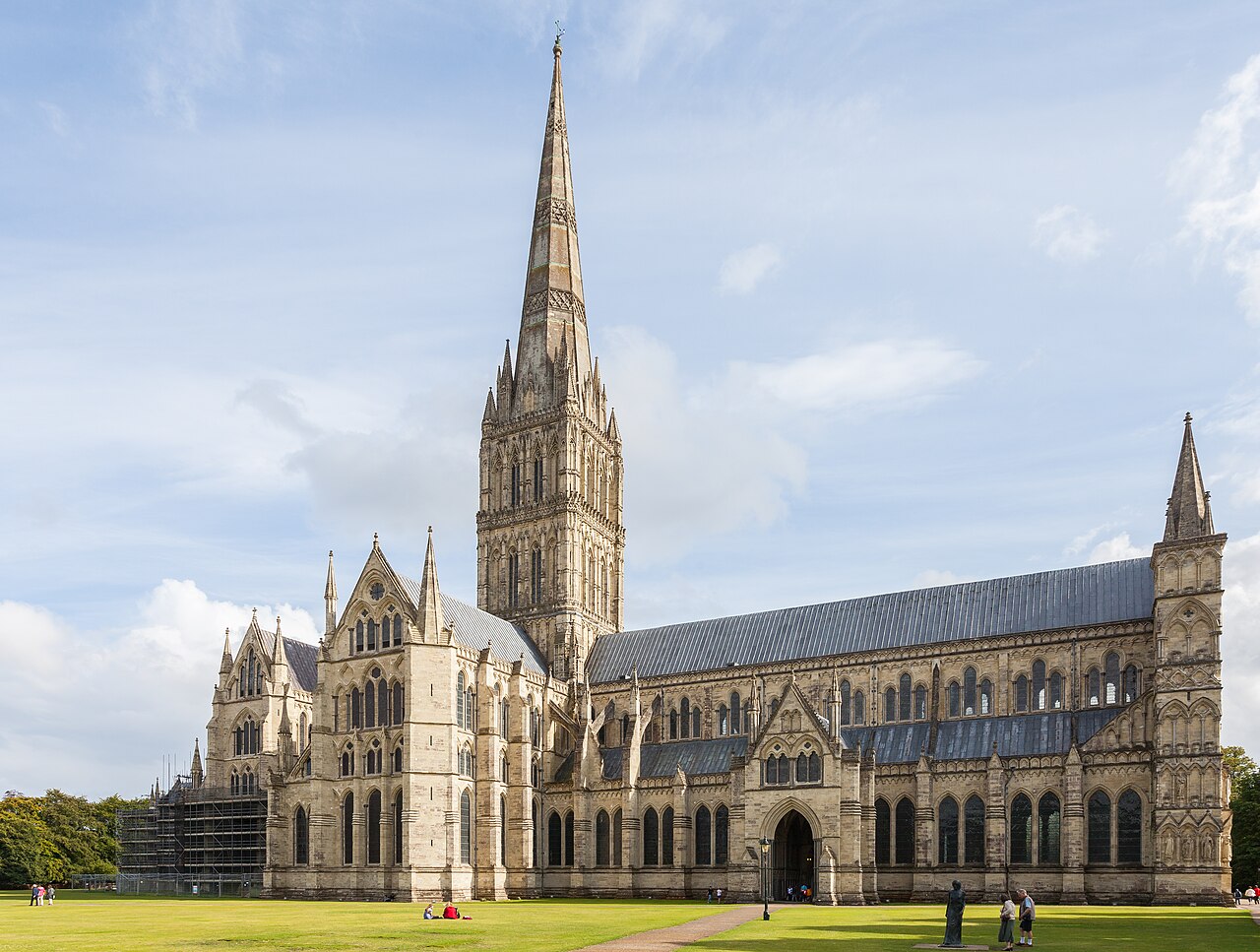
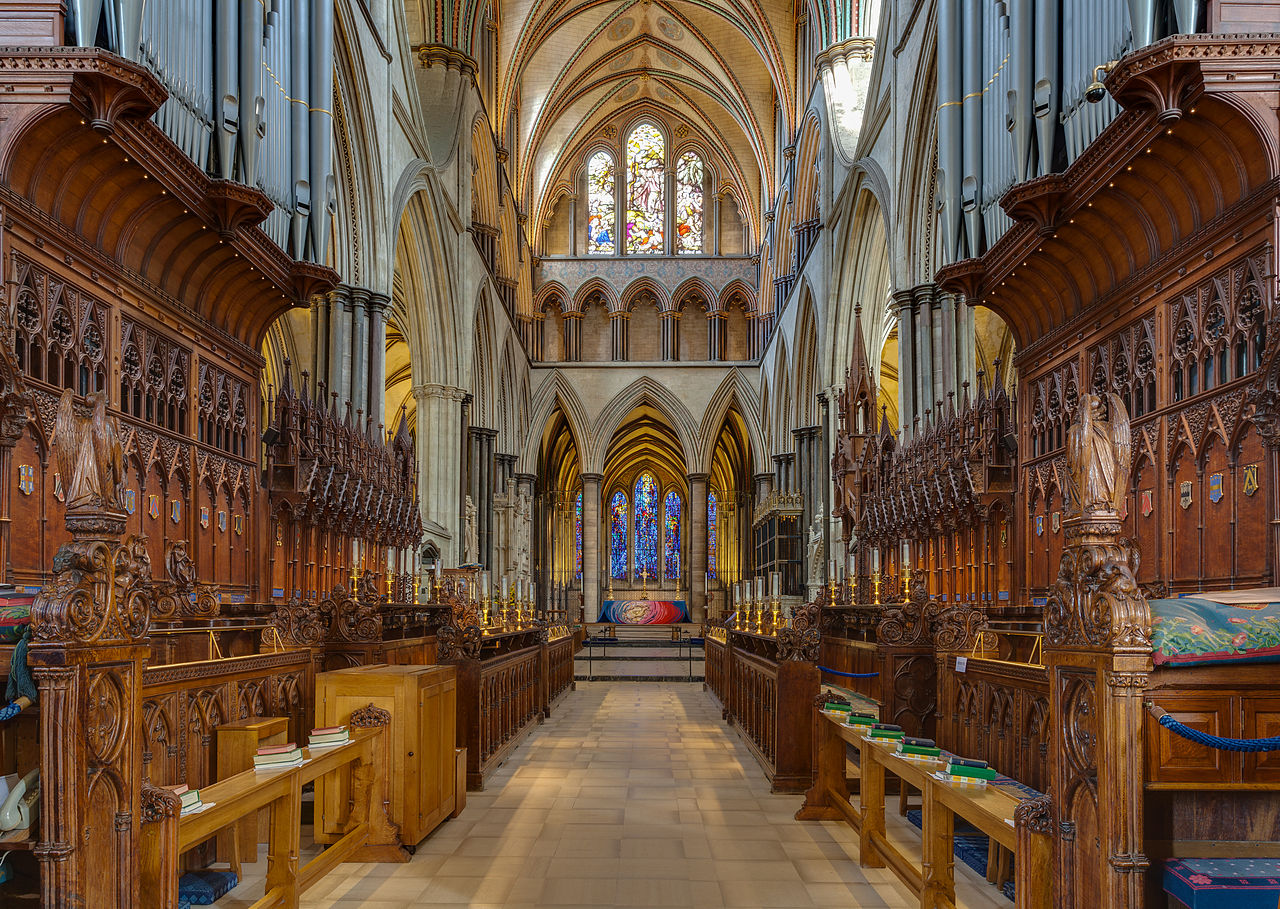
The cathedral stands today as one of the finest examples of Early English Gothic architecture, characterized by:
• Tall lancet windows
• Clean vertical lines
• Elegant structural symmetry
• The famous later addition of the tallest church spire in Britain
Bishop Bingham’s leadership helped maintain continuity during a period when political, religious, and financial pressures could easily halt such monumental projects.
Family and Origins
Robert de Bingham likely came from the region associated with Bingham, Nottinghamshire, suggesting origins within a landholding or clerical family able to support ecclesiastical education.
Like many high-ranking church officials of the medieval period, Bingham would have been educated in theological and administrative studies, possibly through early university networks such as University of Oxford.
By the time of his appointment as bishop, he had already risen through ecclesiastical ranks, demonstrating the political and spiritual influence held by senior church leaders in thirteenth-century England.
The Effigy at Salisbury Cathedral
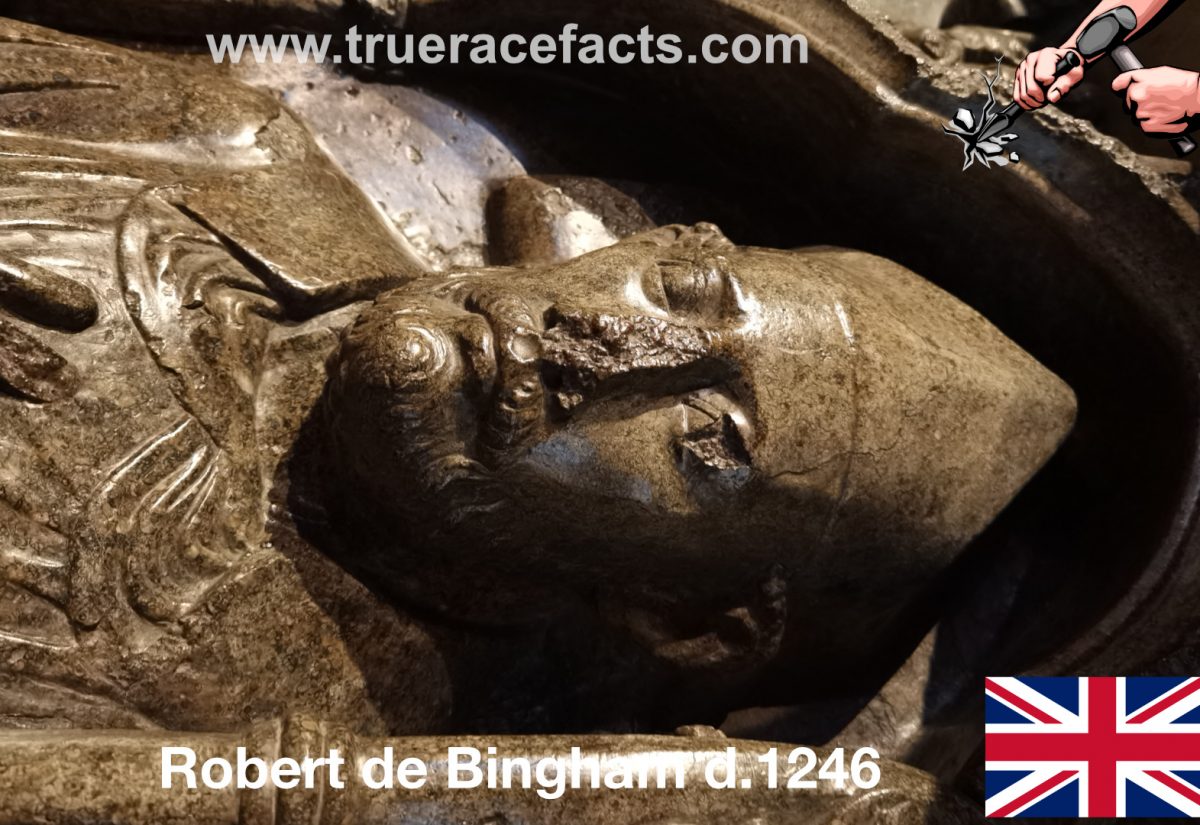
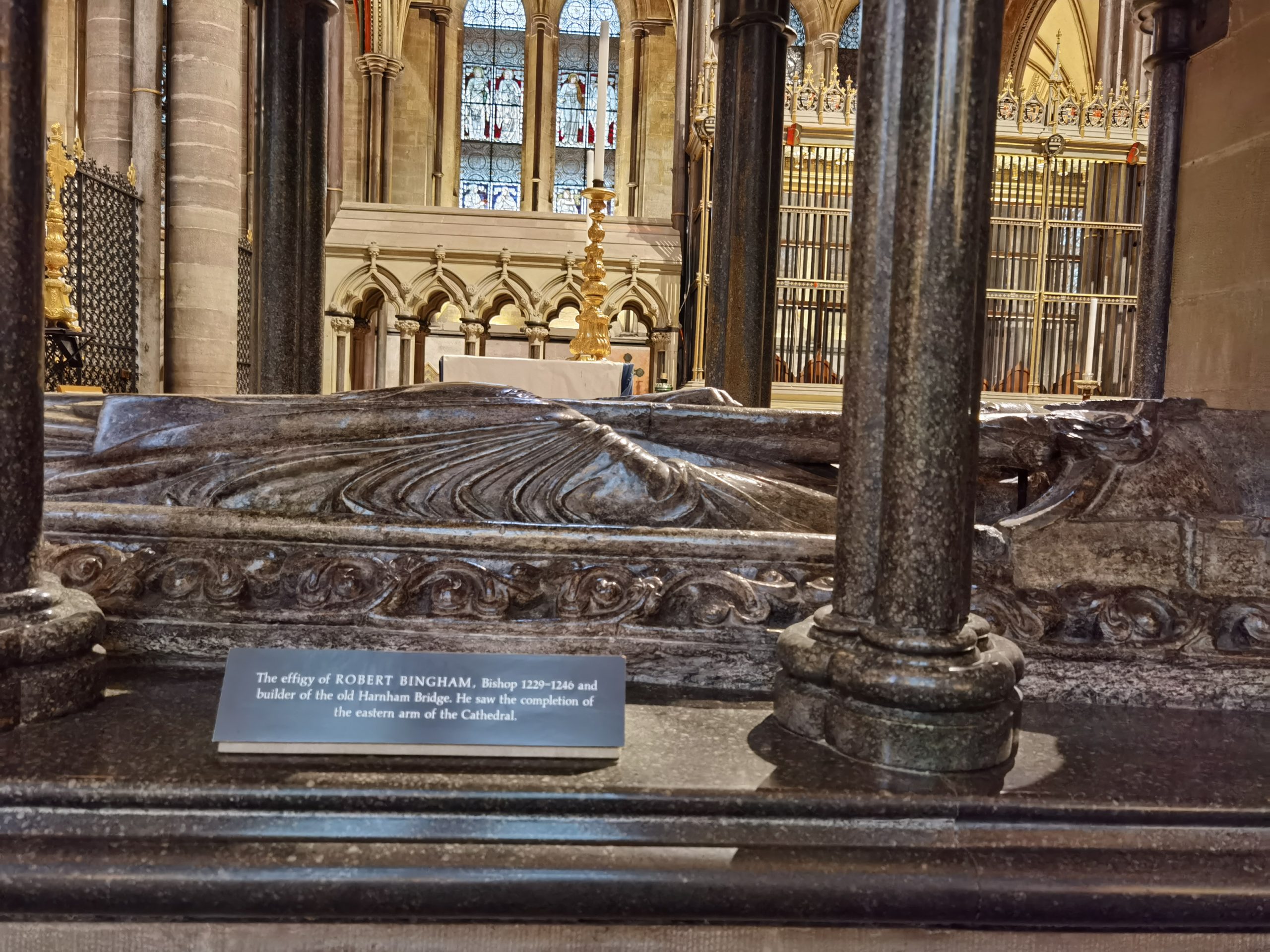
Within Salisbury Cathedral lies an effigy traditionally associated with Robert de Bingham. Medieval effigies were not simply decorative memorials — they were visual statements of authority, faith, and identity.
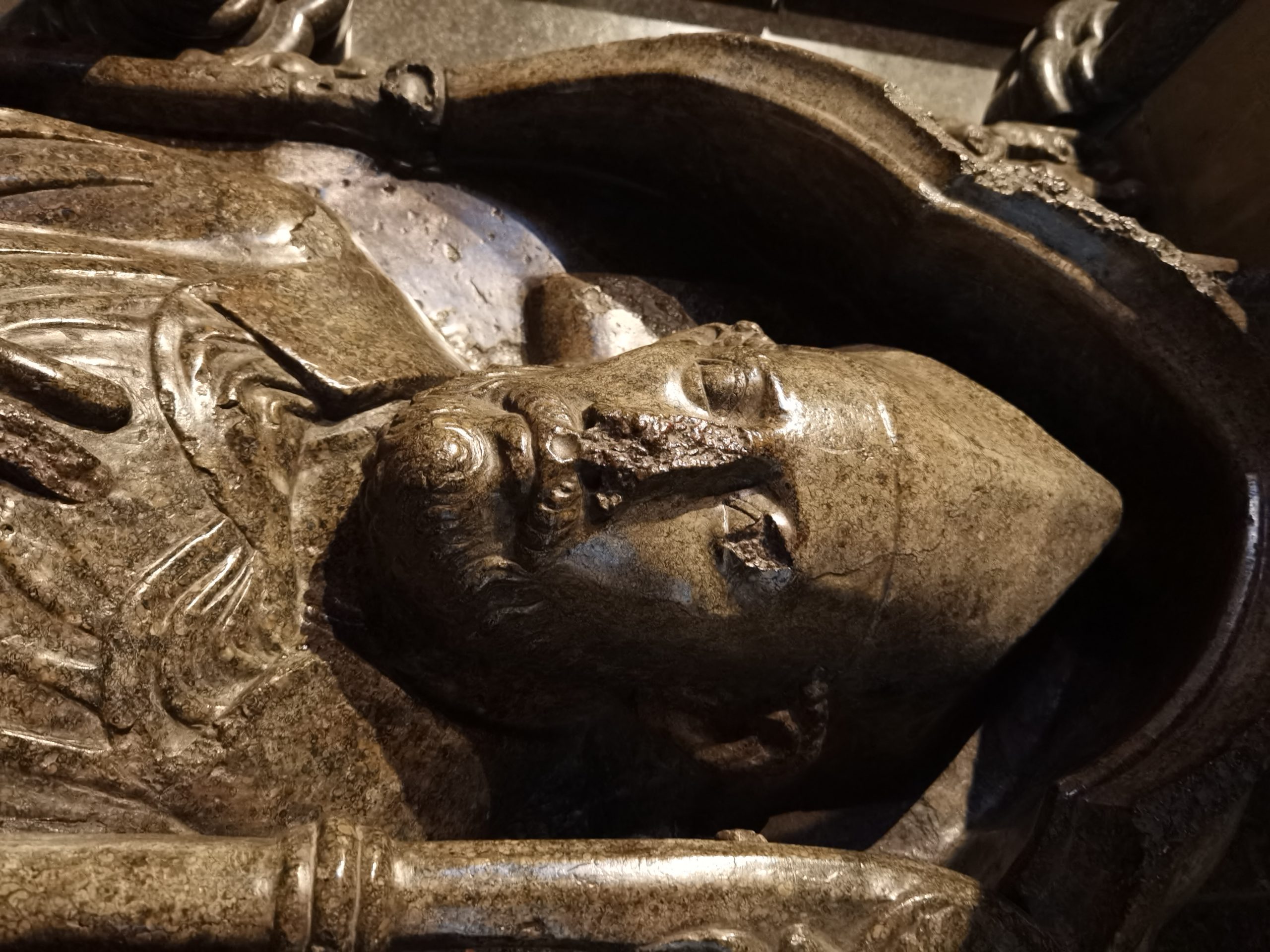
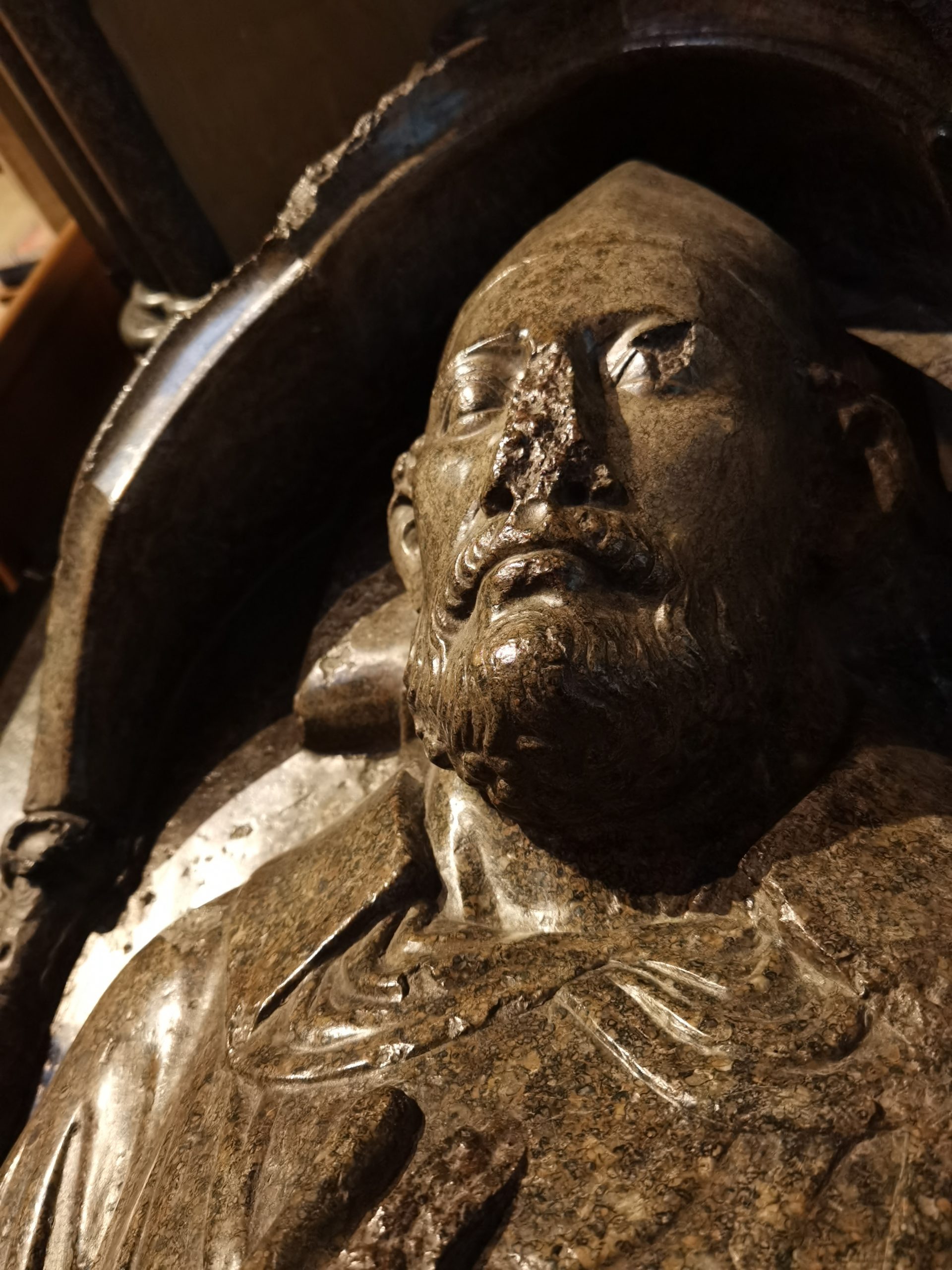
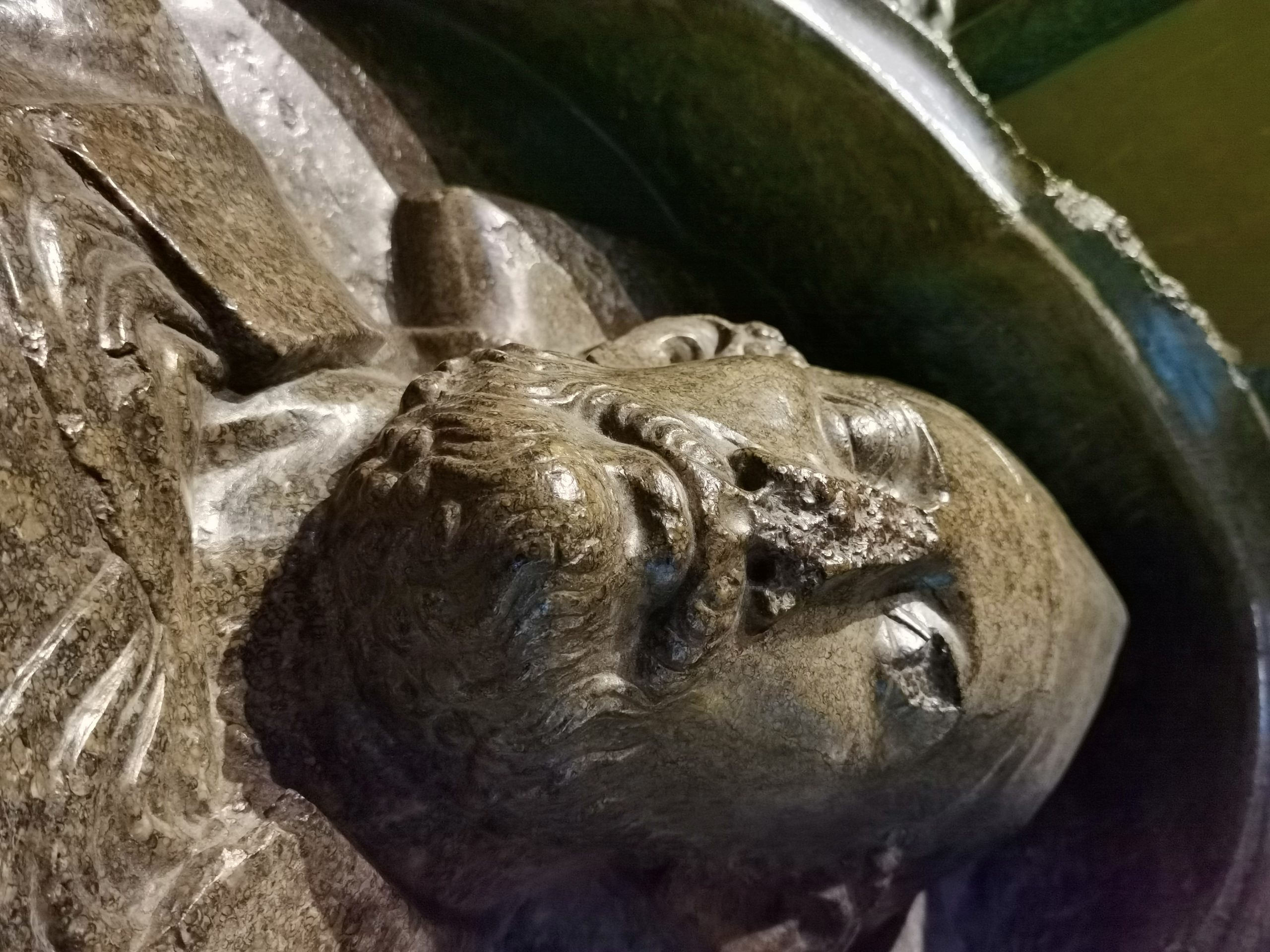
The monument depicts the bishop lying in repose, wearing full episcopal vestments and a mitre. The carving across the monument is remarkably well preserved. Robes, hands, and ceremonial details remain sharply defined, suggesting the monument itself has survived in excellent condition.
One feature, however, stands out dramatically.
The nose of the effigy has been deliberately chiselled down. The damage is highly localized. The surrounding stonework remains intact, sharply carved, and well preserved, suggesting that the damage was not caused by general weathering.
The outline of the original nose structure is still visible beneath the alteration. This gives the impression of intentional modification rather than natural deterioration.
The lips remain full and clearly defined. Hair texture is visible emerging beneath the bishop’s mitre at the sides of the head, suggesting a more textured hair pattern preserved by the original sculptor.
The Question of Intentional Monument Damage
While the full story behind such alterations may never be known with certainty, the effigy continues to invite deeper examination.
What is very clear throughout history is this:
You do not destroy what does not look like you.
Upon close observation, many monuments that have suffered intentional damage reveal, beneath centuries of wear, features that appear swarthy in appearance.
One or two instances of damage to noses or lips can reasonably be attributed to natural wear and tear. Stone erodes. Monuments weather. Accidental damage happens.
But when this pattern appears across hundreds of monuments, across multiple regions and centuries, the question shifts from coincidence to intention.
These repeated patterns raise difficult questions about historical memory and visual representation. If faces are removed from monuments, then identities become easier to erase from collective history.
The preservation of certain historical narratives may have required the visual suppression of others — including narratives suggesting that swarthy peoples were present among medieval European nobility and clergy.
Legacy of Robert de Bingham
Robert de Bingham died in 1246, but his legacy remains tied to the cathedral he helped nurture during its most important developmental period.
Today, Salisbury Cathedral remains one of the most complete examples of Early English Gothic architecture in Europe. While later additions such as the famous 14th-century spire expanded the cathedral’s skyline, the foundational work completed during Bingham’s episcopate helped secure its long-term success.
The effigy of Robert de Bingham remains more than a historical marker. It stands as a silent witness to medieval craftsmanship, identity, and history — inviting modern observers to look closely, question deeply, and reconsider what has been preserved and what may have been altered.
“Stone preserves what history sometimes tries to hide — but if you look closely enough, the truth is still there, waiting to be seen.”
Guinevere Jackson
Image citation Monument image taken by author – Cathedral images Wikipedia
 Donate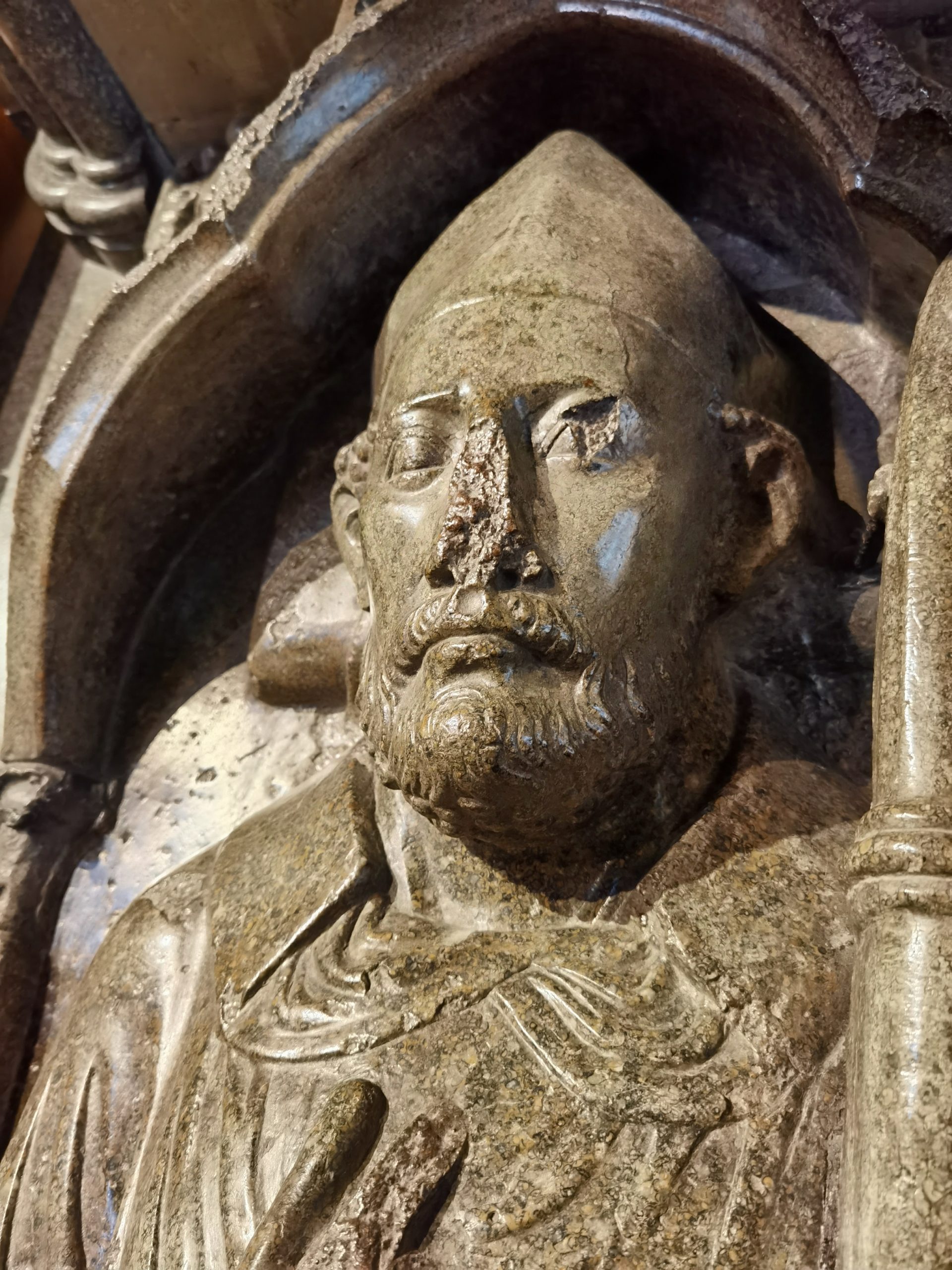
- ancient briton
- Anglo Saxon
- baron
- bishop
- Black
- black man
- Black Nobility
- classical
- Deception
- England
- Hebrew
- hidden history
- historical
- iconoclasm
- identity theft
- Israel
- Israelite
- Knight
- Lady
- Landowner
- lies
- Lion of Judah
- medieval
- music
- Negro
- Nobility
- northern kingdom
- Politician
- swarthy
- Theft
- truth
- Wales
- wealthy
- welsh
- welsh black nobility