Lord, Soldier, Landowner and the Face That Survived
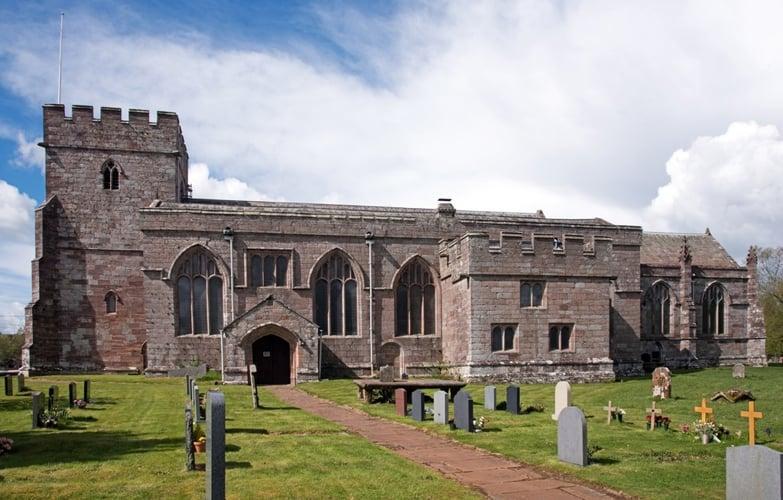
Inside the ancient parish church of St Andrew at Greystoke in Cumbria lies the alabaster effigy of a man who died more than six and a half centuries ago. His name was William de Greystoke, 2nd Baron Greystoke, and during his short life he belonged to one of the important landed families of medieval northern England. He possessed extensive estates, inhabited a world of castles and fortified houses, fought in the wars of Edward III and became involved in the turbulent politics of the Anglo-Scottish border. Through marriage and blood he was connected with some of the great aristocratic families of his age.
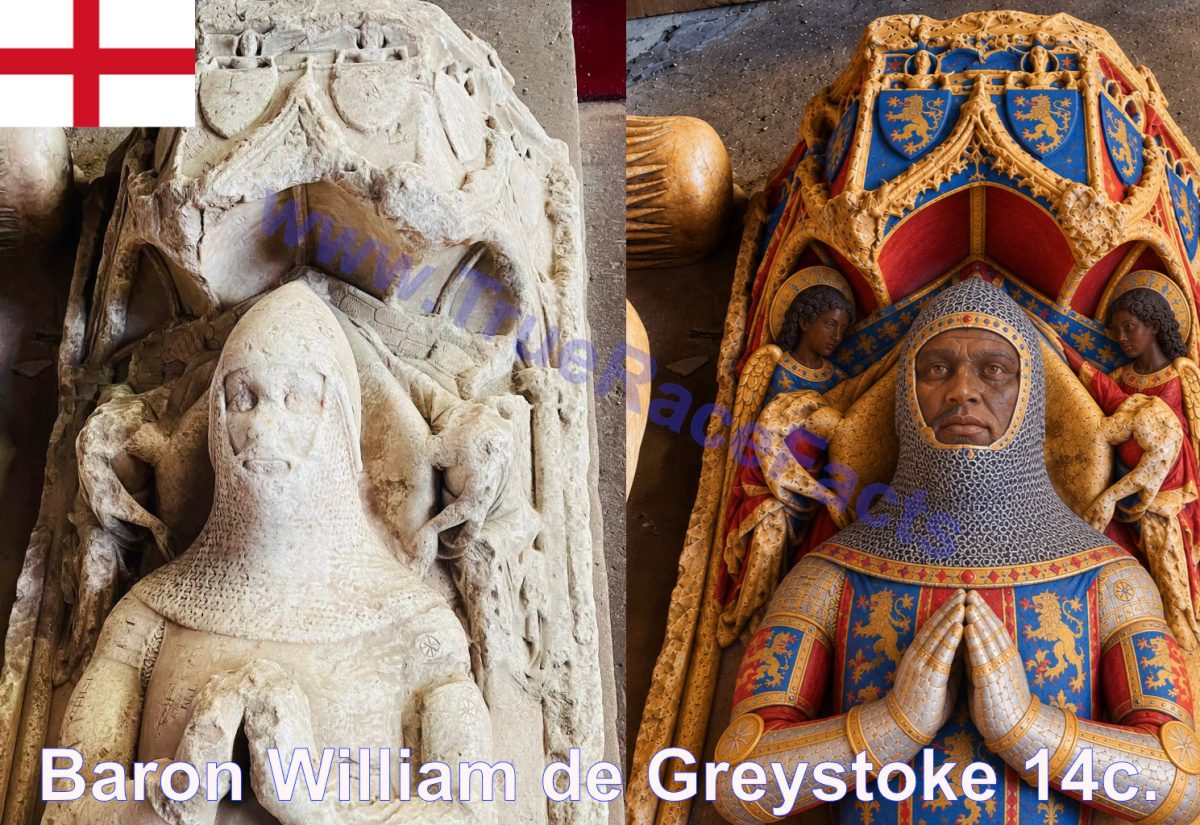
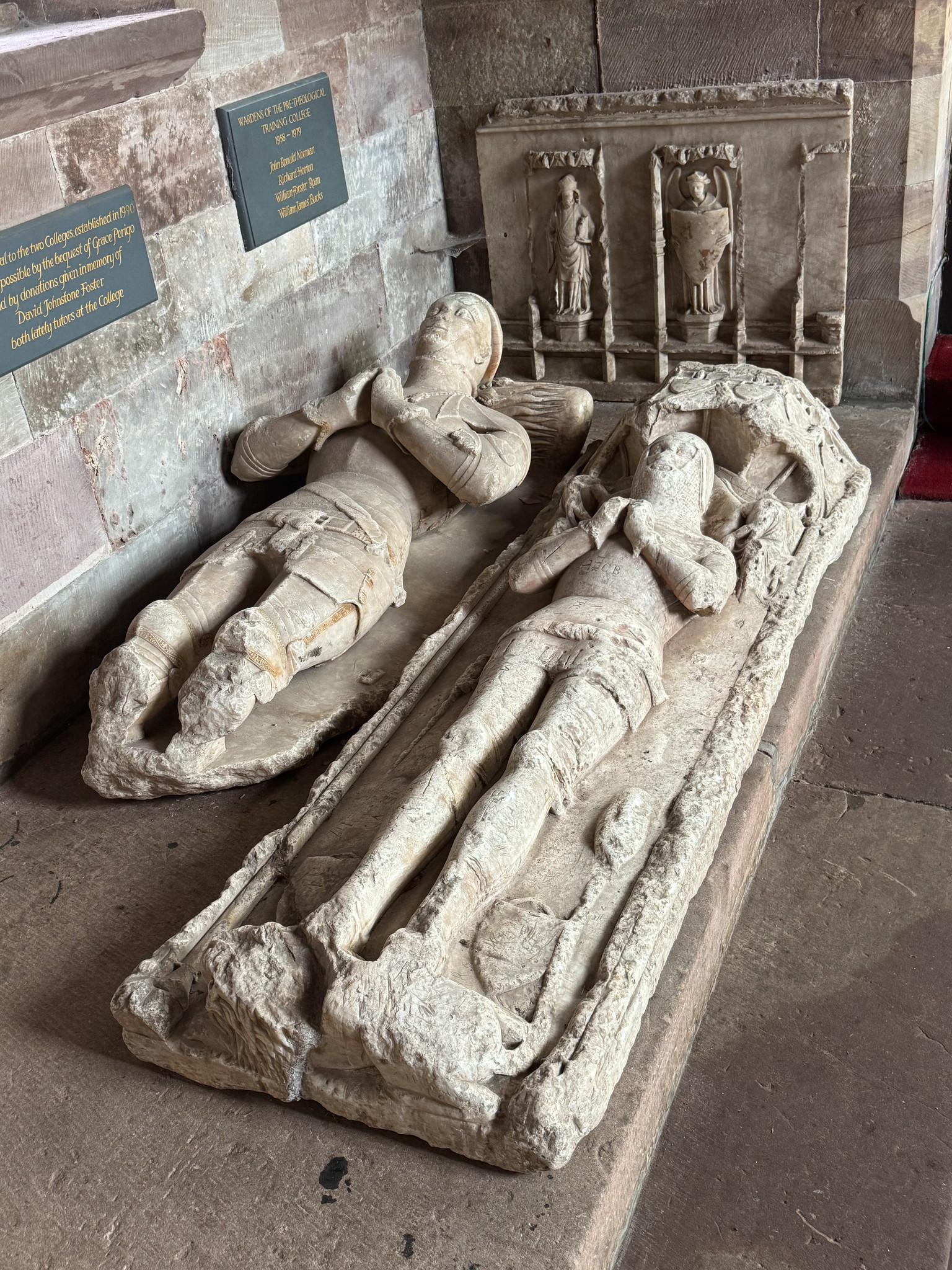
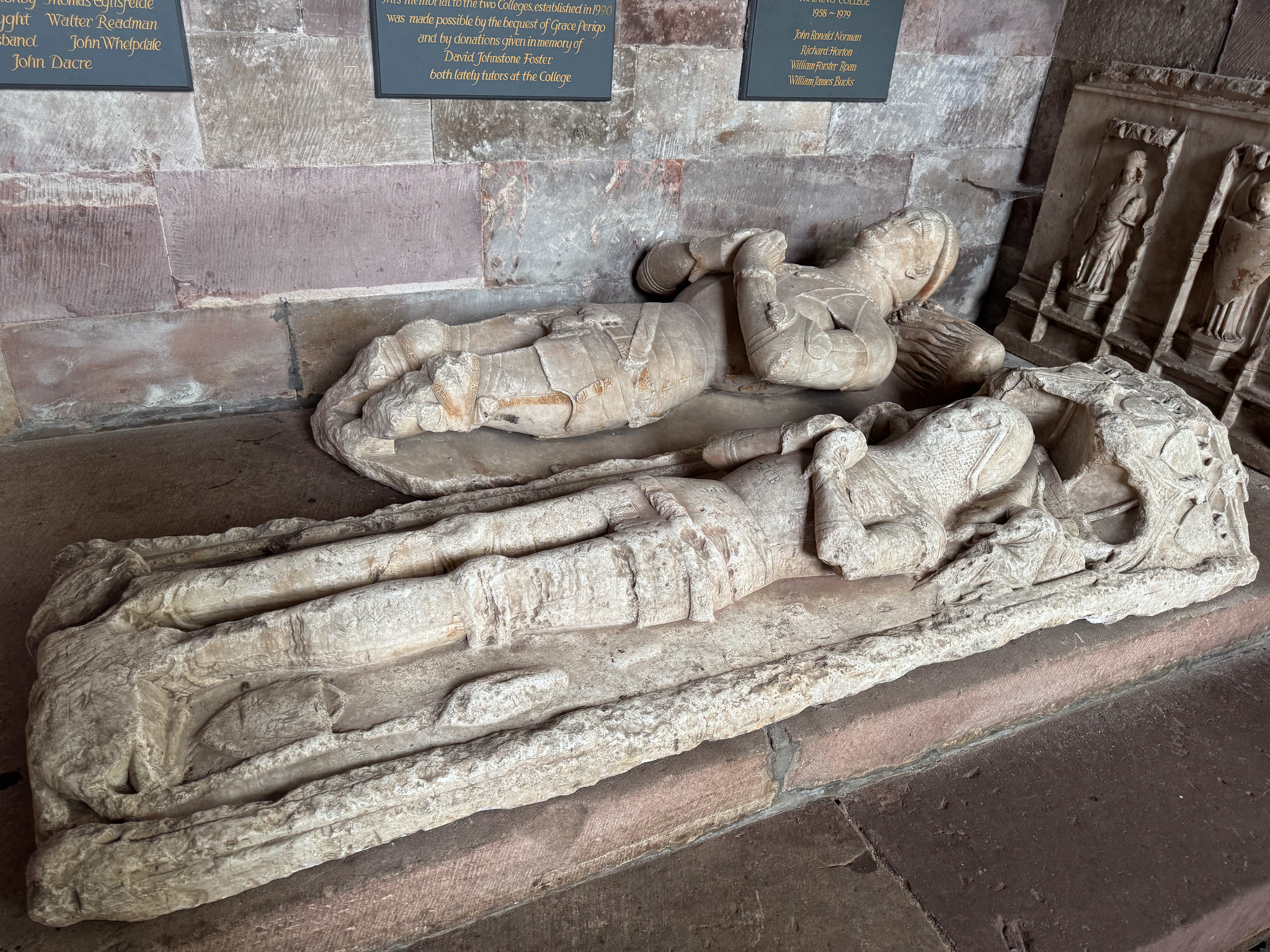
Today, however, it is not simply William’s titles or military career that make his story so interesting. His physical representation still survives. His effigy remains inside the church associated with his family, although its face has suffered conspicuous damage. Nevertheless, when the monument is examined closely, not everything has disappeared. In my view, enough of the original facial modelling survives to reveal particularly interesting characteristics, including the broad structure of the nose and comparatively full lips. These are features I will return to later, because William’s monument forms part of a much wider investigation into the surviving physical evidence of medieval Britain’s ruling families.
William’s story begins not in Cumbria but in Yorkshire.
Born Into the Greystoke Dynasty
William was born on 6 January 1321 at Grimthorpe in Yorkshire, the son of Ralph de Greystoke, 1st Baron Greystoke, and Alice de Audley. From birth he belonged to a world in which family, land and political power were inseparable. His mother came from the Audley family, while his father’s inheritance placed William within the network of northern lords whose estates stretched across several counties and whose position brought them repeatedly into both royal service and warfare.
His childhood was nevertheless marked by tragedy. William was only about two years old when his father died in 1323. He inherited the Greystoke estates while still an infant and therefore could not immediately exercise control over the lands that had descended to him. His mother subsequently married Ralph Neville, Lord Neville of Raby, bringing the young Greystoke heir into the household and influence of another formidable northern dynasty.
The Neville connection is important. Long before the family became famous for its role in the Wars of the Roses, the Nevilles were already substantial northern landowners with extensive political and military influence. William therefore grew up surrounded not simply by wealth, but by the machinery of medieval aristocratic power: estates, marriages, wardships, castles, military obligations and relationships with the Crown.
When William finally reached his majority in 1342, he was able to assume control of the inheritance that had been waiting for him since childhood. He was only twenty-one, but he now stood at the head of a substantial landed dynasty.
The Wealth Behind the Title
To understand William de Greystoke, we have to understand what medieval wealth actually meant. It is tempting to imagine treasure chests, jewellery and luxurious possessions, but the real foundation of aristocratic wealth was the land itself. A great estate was an economic system. Fields produced crops, meadows supported livestock, woodland provided resources, tenants paid rents, mills generated income, courts produced fees, and control of forests and manorial rights could continue producing wealth generation after generation.
The surviving evidence for the Greystoke inheritance reveals precisely this sort of world. The estates associated with the family contained demesne arable and meadow, parks, cottages and tenant holdings, while income was generated from rents and manorial rights. There were corn mills and fulling mills, showing that the estate economy extended beyond simply collecting rent from agricultural land. Forest interests included Grinsdale and Matterdale, while payments and rents were associated with communities including Motherby, Newbiggin, Johnby, Berrier, Watermillock and Blencow.
Even apparently minor details reveal how deeply medieval wealth was embedded in the landscape. Tenants might owe traditional payments in commodities as well as money, while courts, mills, woodland and grazing rights all formed part of the economic structure controlled by a lord. When we describe William simply as a “wealthy nobleman,” therefore, we risk missing the scale of what that meant. His family’s power rested upon an interconnected network of land, tenants, rents, forests, mills, manorial rights and fortified residences.
And at the heart of this inheritance stood the place that still bears his family’s name: Greystoke.
Building Greystoke Castle
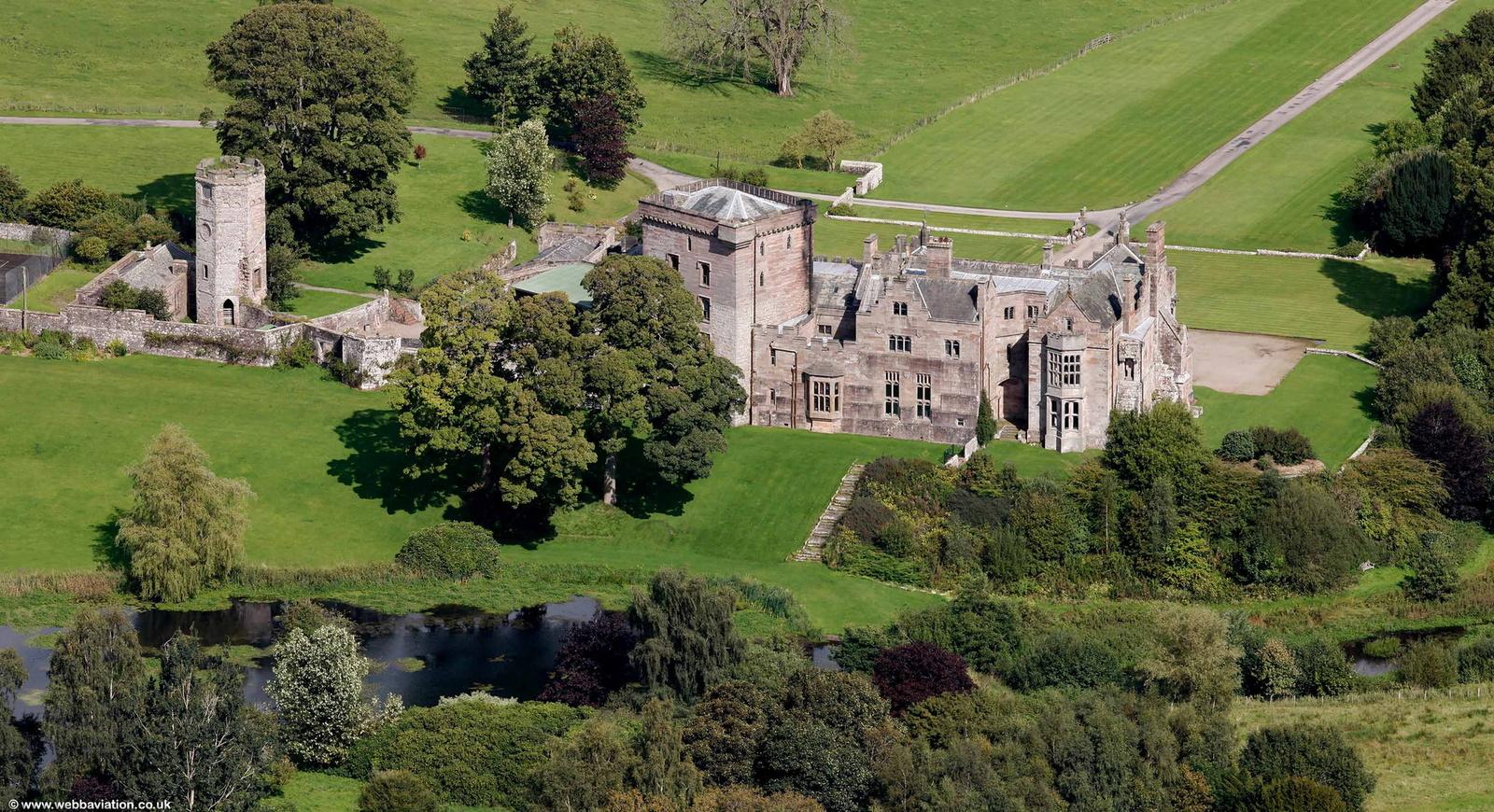
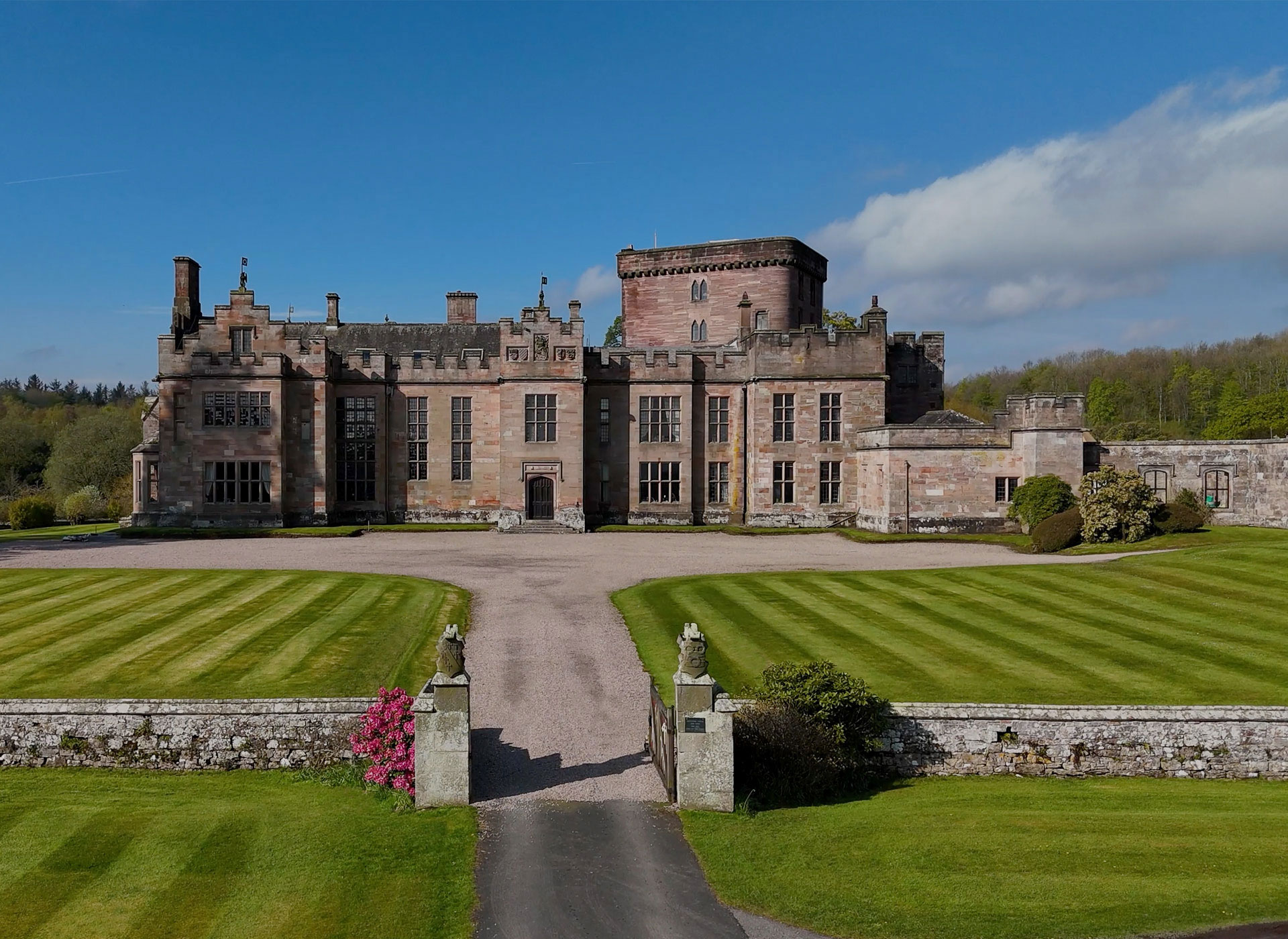
On 5 October 1353, King Edward III granted William de Greystoke royal permission to fortify his residence at Greystoke. The surviving record allowed William to crenellate his dwelling with a wall of stone and lime. It is an extraordinary document because it takes us directly back into William’s lifetime. This was not a later tradition claiming that William had once lived in a castle; here was the king himself granting the Baron of Greystoke permission to strengthen his residence.
The resulting fortified complex developed into what became known as Greystoke Castle. Although the building visible today has undergone enormous alteration and rebuilding, portions of its medieval fabric survive within the later structure. The castle should therefore be understood not merely as an impressive family residence but as a physical expression of the Greystokes’ position. William lived close to the Scottish frontier during a period in which northern England was repeatedly affected by warfare, raiding and shifting political fortunes. A fortified seat was both a home and a statement of authority.
The family’s interests were not confined to Greystoke. Their wider connections and properties reached into other parts of northern England, including Yorkshire, Northumberland and Durham, while Morpeth Castle also became associated with William. His world therefore extended across a broad northern landscape rather than being confined to a single Cumbrian village.
That geographical reach was matched by the reach of his family connections. Through the Audleys and Nevilles, and later through his own marriages, William belonged to an interconnected aristocracy whose members repeatedly appear beside one another in military expeditions, royal service, marriage settlements and inheritance disputes.
From the Northern Estates to the Wars of Edward III
William came of age at precisely the moment when Edward III’s ambitions in France were transforming the lives of England’s military aristocracy. The conflict that would later become known as the Hundred Years’ War offered men of William’s rank both obligation and opportunity, and before long the young Baron of Greystoke was participating in military campaigns far from his northern estates.
He appears to have campaigned in Gascony during 1345–46 and subsequently took part in the English operations surrounding Calais in 1346–47. These were not minor episodes. Edward III’s campaigns in France belonged to one of the defining military struggles of the fourteenth century, and William was moving in the same martial world as some of the most famous commanders of medieval England.
There is also evidence that he may have accompanied Henry of Grosmont, Duke of Lancaster, on an expedition to Prussia in 1351–52. Whether travelling through France, fighting overseas or returning to the north of England, William’s life demonstrates just how mobile the medieval aristocracy could be. The image of a medieval lord permanently sitting inside his castle bears little resemblance to the life of a man such as Greystoke.
His military responsibilities also brought him directly into the long struggle between England and Scotland.
The Scottish king David II had been captured by the English at the Battle of Neville’s Cross in 1346. Years later, William became involved in negotiations concerning the king’s release, participating in discussions in 1353 and 1354. In September 1354 he received another significant responsibility when he was appointed captain of Berwick-upon-Tweed, one of the most strategically important towns on the Anglo-Scottish frontier.
Berwick had changed hands repeatedly between the two kingdoms, and command of it was not an insignificant appointment. Yet William’s obligations in France complicated his position. While he was away campaigning, Berwick fell to the Scots in 1355. Once again his story shows the extraordinary geographical range of the responsibilities imposed upon a fourteenth-century northern baron: Greystoke, Berwick, Scotland, Gascony, Calais and perhaps even Prussia all belonged to the same relatively short adult life.
Marriage, Children and the Continuation of the Family
William married twice. His first wife was Lucy de Lucy, another connection with an important northern family, but the marriage produced no surviving heir. His second marriage, to Joan, ensured the continuation of the Greystoke line. Their children included the future Ralph de Greystoke, 3rd Baron Greystoke, who inherited his father’s position and estates.
Marriage among families of William’s rank was never merely a private affair. It could bind estates and political interests together for generations. Through marriage the Greystokes became connected with families whose names recur throughout medieval English history, and in later generations marriage would ultimately determine what happened to the entire Greystoke inheritance.
William, however, did not live long enough to see that later story unfold.
On 10 July 1359, while still only thirty-eight years old, William died at Brancepeth Castle, a place closely associated with his Neville connections. His body was brought back to Greystoke, where his funeral reflected the status he had attained. The ceremony was conducted by Gilbert Welton, Bishop of Carlisle, while figures associated with prominent northern families and religious houses were present. The names connected with his funeral included the Cliffords, Scropes and Musgraves, alongside representatives of important monastic institutions such as Holmcultram and Shap.
William was laid to rest at St Andrew’s Church, Greystoke, close to the centre of the world his family had controlled.
And there he remains.
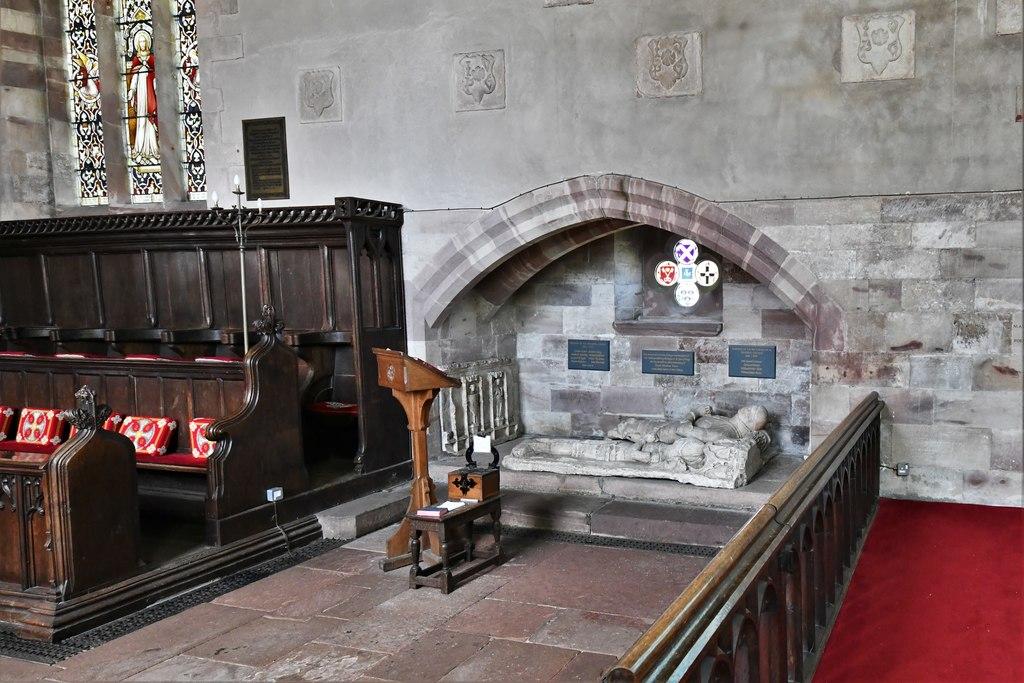
The Man Inside St Andrew’s Church
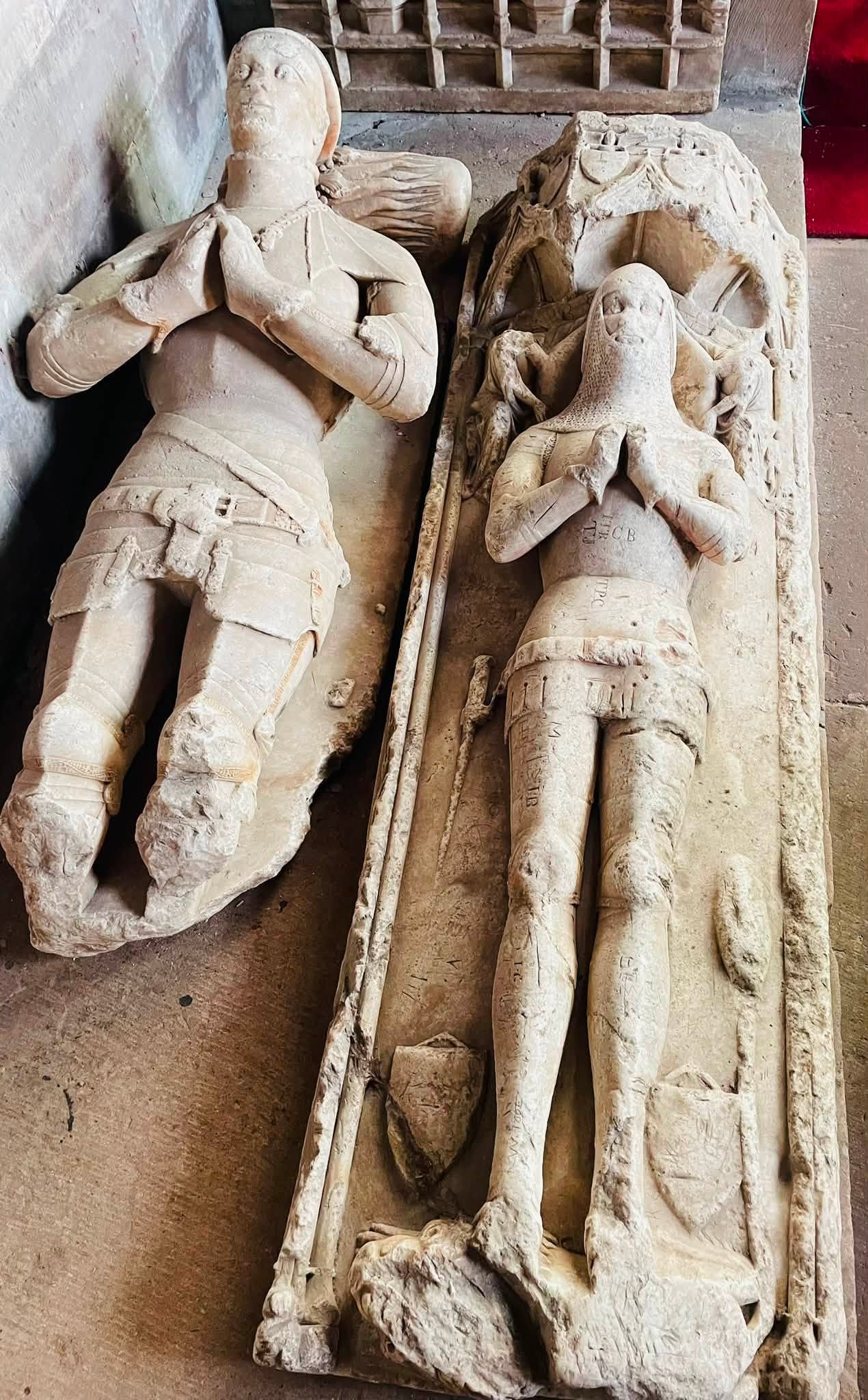
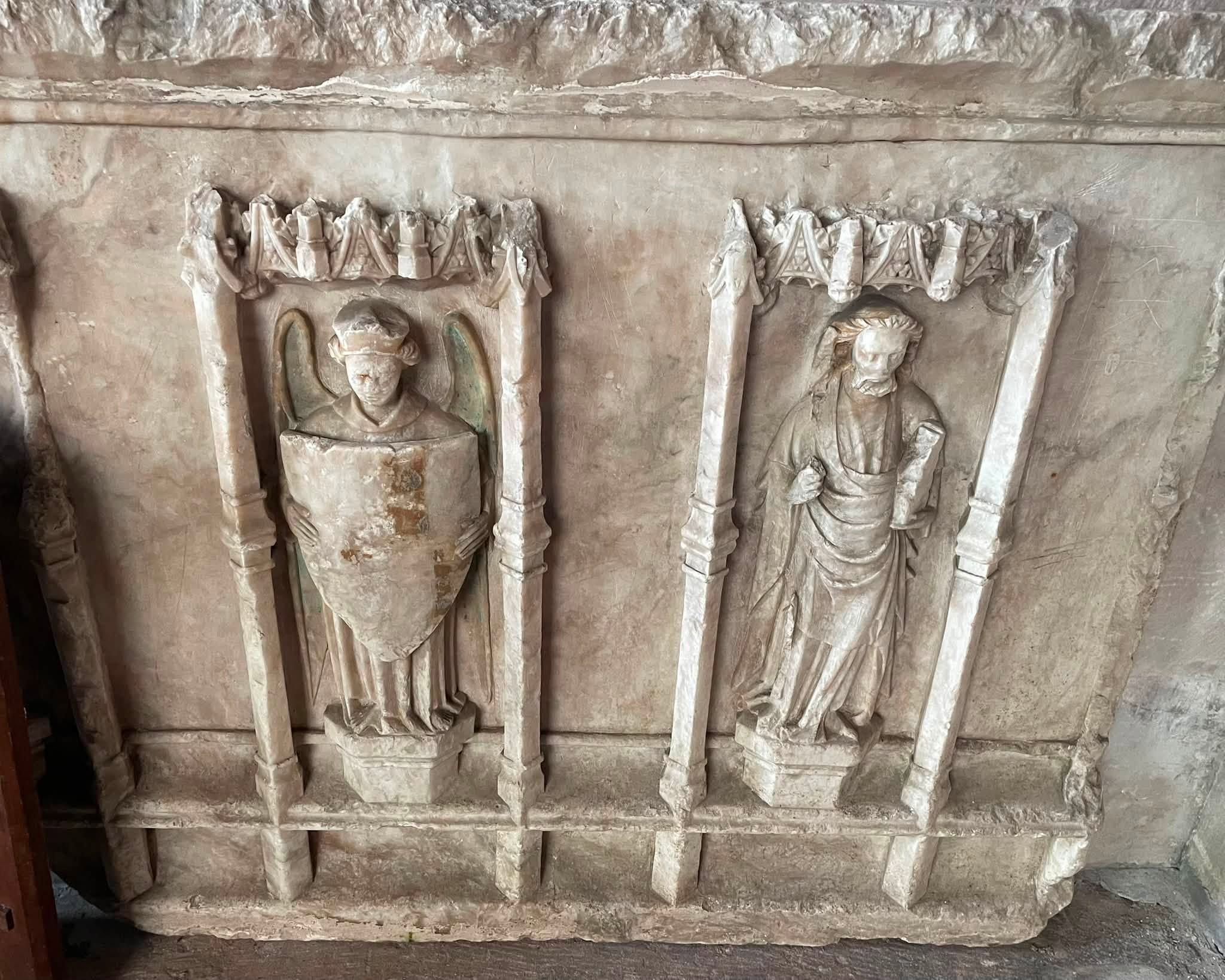
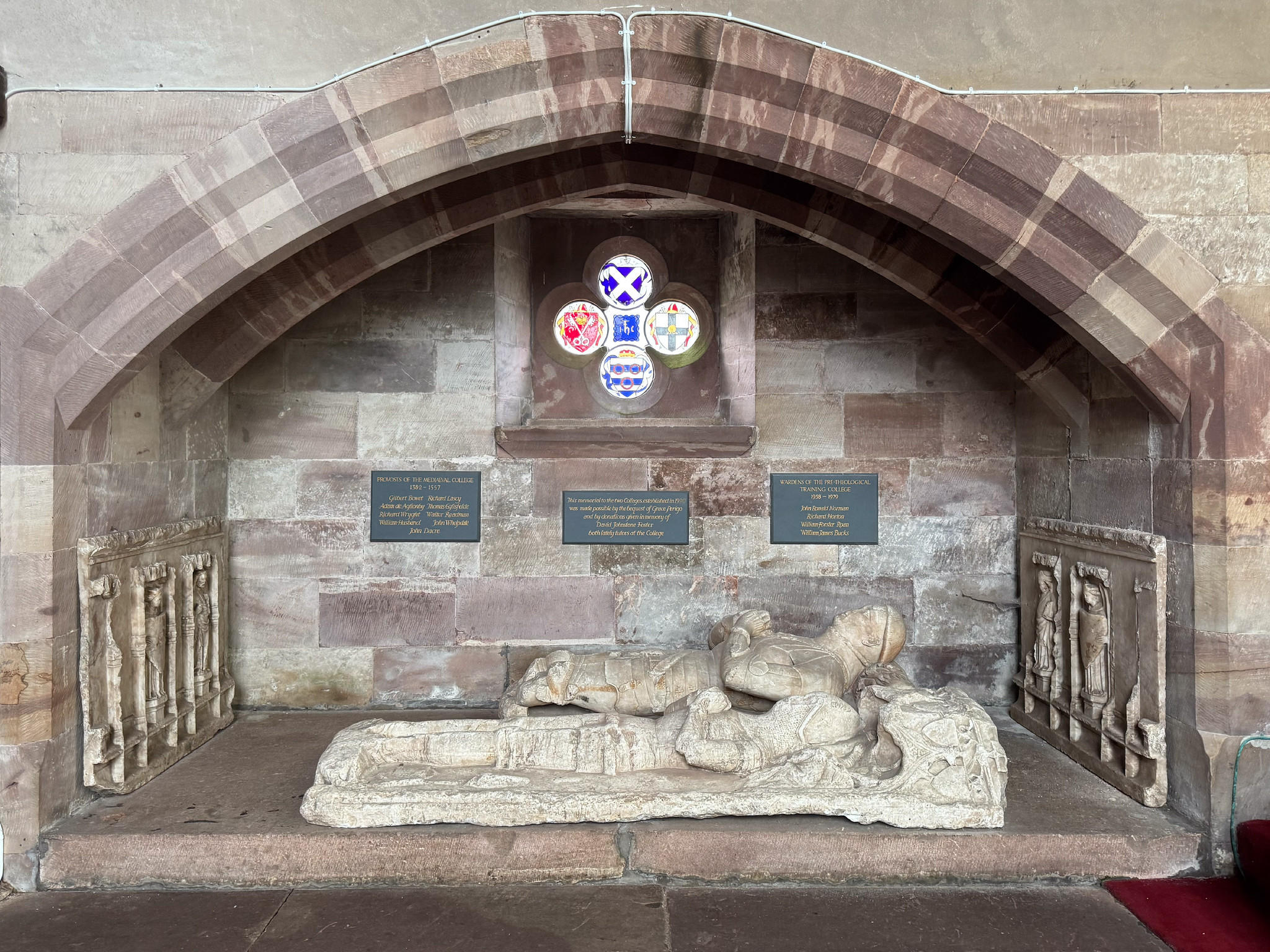
St Andrew’s Church has itself lived through centuries of alteration and restoration, yet it still preserves remarkable physical links with the medieval Greystokes. Among them are alabaster effigies identified with William Lord Greystoke, who died in 1359, and John Lord Greystoke, who died in 1436.
For me, William’s effigy is one of the most important surviving pieces of evidence connected with his story because it takes us away from later imagination and brings us face to face with a medieval representation associated directly with the man and his burial place.
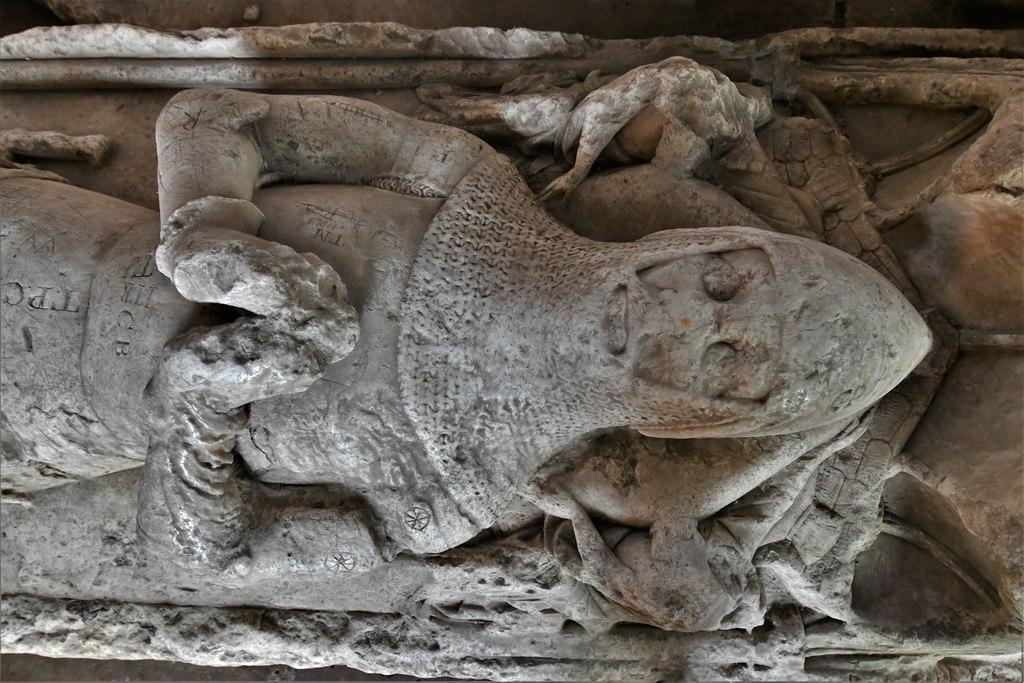
The figure presents William as the warrior aristocrat he had been in life. His armour belongs to the visual language of the fourteenth-century knight, and the monument was intended to preserve both his identity and his status. But when we reach the face, something immediately changes.
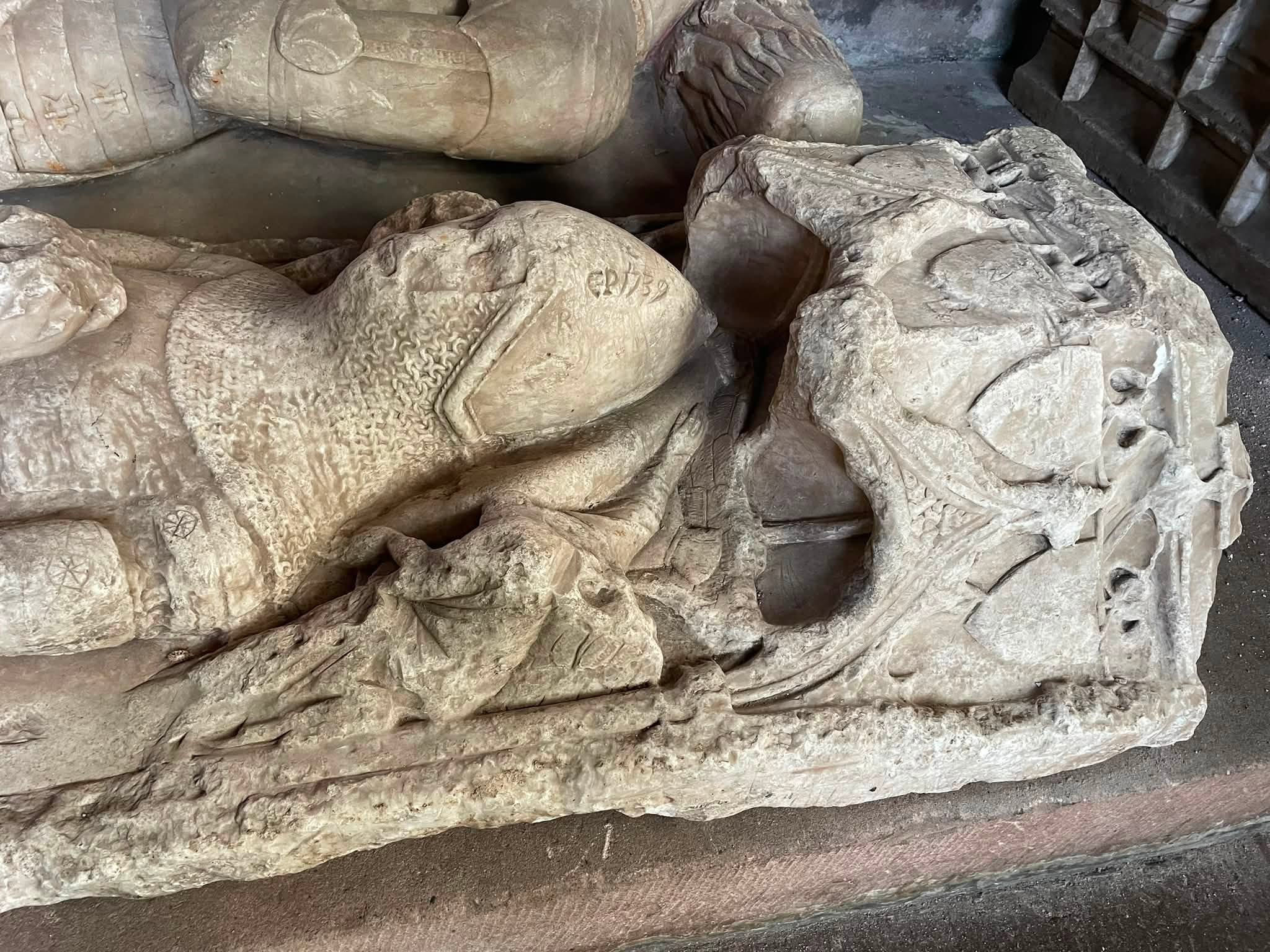
The face has suffered considerable damage.
This is important because the damage has not completely erased the original modelling. When I examine the effigy closely, the surviving structure of the nose appears broad, while the remaining modelling of the mouth suggests comparatively full lips. Those characteristics deserve careful attention precisely because they are visible on the surviving medieval object rather than supplied by a modern reconstruction.
I am particularly interested in this because William’s monument does not stand alone within my wider research. I have repeatedly encountered medieval representations where faces have been damaged, altered, weathered or restored while substantial portions of the surrounding monument remain. The reasons are not necessarily identical in every case, and each object must be examined individually, but the recurring condition of the facial evidence deserves investigation rather than dismissal.
This is why I prefer to place the photographs before the reader. Look closely at William’s face. Examine the surviving nose and mouth. Consider what remains around the damaged areas and compare it with the other medieval representations and artefacts presented throughout this research. The purpose is not to replace one unquestioned image of medieval Britain with another. It is to return to the surviving evidence and ask whether the familiar picture we have inherited adequately explains what is actually there.
What Happened to the Greystokes?
William’s death did not bring the family’s power to an end. His son Ralph inherited the barony, and the Greystokes continued for generations as substantial northern landowners. Eventually, however, the direct line reached an heiress, Elizabeth de Greystoke, born in 1471. Her marriage to Thomas Dacre, 2nd Baron Dacre, carried the Greystoke inheritance into another powerful northern dynasty.
This is an important part of the story because the disappearance of the Greystoke surname from possession of the estate did not mean that the bloodline or property had simply vanished. Medieval and early-modern aristocratic inheritances frequently travelled through daughters, and Greystoke provides a particularly clear example. The lands moved into the Dacre family and, after the death of the young George Dacre in 1569, the inheritance was divided among his sisters. Through Anne Dacre’s marriage to Philip Howard, Greystoke subsequently became connected with the Howard family.
The names had changed, but the old landed inheritance remained.
Then England entered the seventeenth century, and the political landscape changed violently.
The Howards associated with Greystoke were Catholic and Royalist at a time when England was being torn apart by Civil War. In 1648 Parliamentarian forces under General John Lambert devastated Greystoke Castle. Historic England records the Civil War damage and the later rebuilding of the property. The history published by Greystoke Castle itself goes further, describing the castle as having been “destroyed by Cromwell,” although its chronology places the destruction in 1660, whereas the account involving Lambert places the devastation in 1648.
The difference in dating should not obscure what happened to the building. The ancient fortified seat associated with the Greystoke inheritance was devastated during the period of Parliamentarian and Cromwellian ascendancy.
By then the castle represented centuries of accumulated family history. William had received royal authority to fortify his residence in 1353. The property survived his death, passed through generations of Greystokes, travelled through the Dacre inheritance and entered the Howard family. Then, amid the enormous upheavals of the seventeenth century, the old stronghold was laid waste.
That history forms part of a much larger investigation that I pursue elsewhere in TRUE RACE FACTS: the wars, confiscations, displacement, destruction and transfers of property that transformed Britain and Ireland during the Cromwellian period. I do not need to resolve that entire history within William de Greystoke’s biography. What happened at Greystoke can simply be placed alongside the other surviving evidence and allowed to speak for itself.
What Survived
Perhaps that is ultimately what makes William’s story so compelling. We are looking at a man born more than seven hundred years ago, yet fragments of his world remain remarkably tangible. The medieval records still preserve his name. The landscape still carries the name of his family. Parts of the castle associated with the Greystoke inheritance survive within later construction. St Andrew’s Church still contains the monuments of the dynasty, and William’s alabaster figure still lies within it.
But survival and destruction sit beside one another throughout the story. His dynasty eventually disappeared under other surnames. His great fortified residence was devastated during the Civil War. His church underwent later alteration and restoration. His monument survived, but his face was damaged.
And yet the damage did not erase everything.
When I stood before William’s effigy, what interested me most was precisely what remained visible. The breadth of the surviving nose, the treatment of the mouth and the overall modelling of the face deserve to be looked at carefully rather than unconsciously replaced with the appearance that later generations have taught us to expect from a medieval English baron.
This is why the surviving artefacts matter so much. Written histories can be rewritten. Interpretations can change. Names can disappear through marriage. Buildings can be rebuilt until their medieval origins become difficult to recognise. But physical objects can preserve details that later narratives overlook.
William de Greystoke was not an obscure figure standing outside medieval English society. He was born into a powerful landed dynasty, inherited extensive property, fortified a castle with royal permission, served Edward III’s England in war, became captain of Berwick, participated in negotiations concerning a Scottish king and was buried with the ceremony appropriate to a great northern lord.
William de Greystoke was not an obscure figure standing outside medieval English society. He was born into a powerful landed dynasty, inherited extensive property, fortified a castle with royal permission, served Edward III’s England in war, became captain of Berwick, participated in negotiations concerning a Scottish king and was buried with the ceremony appropriate to a great northern lord.
More than six centuries later, we can still stand before his monument. We can examine his armour, trace the lands and castles his family once controlled, and piece together the world in which he lived. The Greystoke name eventually disappeared from the direct line, their great inheritance passed into other families, and their ancient castle was later devastated. Yet William’s monument survived. And despite the destruction inflicted upon his effigy, we can still examine what remains of his face.
That is where I believe the reader should begin—not with what we have been told William de Greystoke ought to have looked like, but with the surviving evidence of the man himself.
“When the face is destroyed but the monument survives, we must ask why. History can be rewritten with words, but sometimes the damaged stone still remembers what the written record would have us forget.”
Guinevere Jackson
Image citation: Wikipedia, Flickr & Facebook
 Donate